A Man That Will Have on the Skin of His Flesh a Se’es, a Sapachas, or a Baheres
Ohr Hachaim Hakadosh | April 09, 2024
Print This Article
View Original PDF

A Man That Will Have on the Skin of His Flesh a Se’es, a Sapachas, or a Baheres

Ohr Hachaim Hakadosh | June 27, 2025

A man that will have on the skin of his flesh a se’es, a sapachas, or a baheres.

The Mishna tells us that there are two main shades of tzara’as – the se’es and the baheres. The baheres is as white as freshly fallen snow and the se’es is as the membrane of an egg.

Chazal tell us that tzara’as is visited on a person as a punishment for speaking Lashon Hara. The Rambam writes, ‘Lashon Hara is when a person speaks about someone else’s detriment, even if he is telling the truth. However, if he is telling lies, misrepresenting the facts, he is called a Motzi shem ra.’

The Ohr Hachaim deduces from here that there are two types of evil talk, and each one has its own punishment. A person who tells lies about someone else is punished by a se’es. The word שְׂאֵת is similar to the word לֹא תִשָּׂא שֵמַע שָׁוְׂא – do not bring up a false rumor. It is appropriate that the punishment would be a se’es.

However, someone who speaks Lashon Hara about someone else is talking the truth. Yet he is supposed to keep quiet about it, and not tell others the truth. His words are clear and true, alluded to with the word בַהֶרֶת, which means clarity. A person is punished for both of these kinds of speech, but the punishment is different.
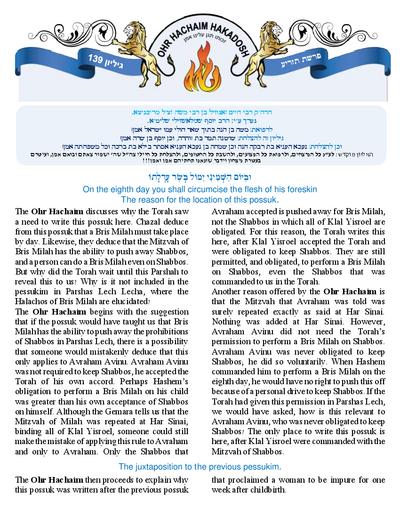
A man that will have on the skin of his flesh a se’es, a sapachas, or a baheres.

The Mishna tells us that there are two main shades of tzara’as – the se’es and the baheres. The baheres is as white as freshly fallen snow and the se’es is as the membrane of an egg.

Chazal tell us that tzara’as is visited on a person as a punishment for speaking Lashon Hara. The Rambam writes, ‘Lashon Hara is when a person speaks about someone else’s detriment, even if he is telling the truth. However, if he is telling lies, misrepresenting the facts, he is called a Motzi shem ra.’

The Ohr Hachaim deduces from here that there are two types of evil talk, and each one has its own punishment. A person who tells lies about someone else is punished by a se’es. The word שְׂאֵת is similar to the word לֹא תִשָּׂא שֵמַע שָׁוְׂא – do not bring up a false rumor. It is appropriate that the punishment would be a se’es.

However, someone who speaks Lashon Hara about someone else is talking the truth. Yet he is supposed to keep quiet about it, and not tell others the truth. His words are clear and true, alluded to with the word בַהֶרֶת, which means clarity. A person is punished for both of these kinds of speech, but the punishment is different.

PDF Preview