Chasidic Insights on Tzaraat of Homes
Project Likkutei Sichos | April 26, 2025
Print This Article
View Original PDF

Chasidic Insights on Tzaraat of Homes

Project Likkutei Sichos | June 27, 2025

Chasidic Insights on Tzara’at of Homes

In most cases, the occupation of these homes by their new owners, God’s holy people, together with the holiness of the commandments that began to be observed in these homes (beginning with the fastening of mezuzot to their doorposts) was enough to dispel the absorbed evil. If, however, the former inhabitants were especially depraved—even by Canaanite standards—the introduction of Jewish holiness into their homes was not sufficient to rid these homes of their evil ambiance; these homes had to be partially or wholly demolished. They therefore broke out in tzara’at.

It thus follows that it was specifically the most depraved of the Canaanites who hid their gold in the walls of their homes. Indeed, it stands to reason that only the worst Canaanites would not resign themselves to God’s plan for the Jewish people to take possession of the land and stubbornly harbor hopes of eventually driving them out.

It further follows that Divine providence also arranged that the exceptionally righteous Jews be drawn to inhabit specifically the homes of the most depraved Canaanites. This, too, stands to reason, for the preternatural evil internalized in these homes could only be outmatched by the preternatural righteousness of these individuals (through the outbreak of tzara’at that affected them specifically).

This pairing of the highest levels of holiness with the lowest levels of evil is in fact characteristic of tzara’at in general. As we have noted, the repercussions of contracting tzara’at are the most severe of all types of ritual impurity, necessitating ostracism from society. On the other hand, the purpose of tzara’at is to purify the individual to a degree unattainable by human effort, and therefore, this affliction is “awarded” only to those who have spiritually refined themselves to the maximum extent humanly possible.

In other words: As we have seen, sincere repentance (teshuvah) elevates us to degrees of Divine consciousness inaccessible to wholly righteous individuals. Thus, tzara’at enables the wholly righteous to achieve the closeness to God normally reserved for the penitent.

Although this dynamic characterizes tzara’at in general, it is most evident in the tzara’at of homes, where the sufferer’s reward is openly manifest in the form of his sudden accrual of worldly wealth. The reason for this is that, as has been pointed out above, of the three “venues” for tzara’at—skin, clothing, and home—the home is the most external, and is therefore the physical correlate of the most sublime aspect of the soul, which is the most removed from our normative consciousness. This is the quintessential core of the soul, termed the yechidah (“unique one”), whose consciousness is entirely that of being one with God. It is from the perspective of this level of the soul, which is synonymous with God’s own perspective, that the true nature of tzara’at—a gift-tool for transcendent spiritual refinement—is most evident.
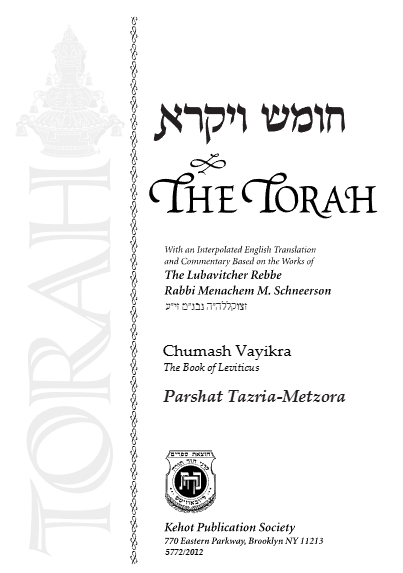

Chasidic Insights on Tzara’at of Homes

In most cases, the occupation of these homes by their new owners, God’s holy people, together with the holiness of the commandments that began to be observed in these homes (beginning with the fastening of mezuzot to their doorposts) was enough to dispel the absorbed evil. If, however, the former inhabitants were especially depraved—even by Canaanite standards—the introduction of Jewish holiness into their homes was not sufficient to rid these homes of their evil ambiance; these homes had to be partially or wholly demolished. They therefore broke out in tzara’at.

It thus follows that it was specifically the most depraved of the Canaanites who hid their gold in the walls of their homes. Indeed, it stands to reason that only the worst Canaanites would not resign themselves to God’s plan for the Jewish people to take possession of the land and stubbornly harbor hopes of eventually driving them out.

It further follows that Divine providence also arranged that the exceptionally righteous Jews be drawn to inhabit specifically the homes of the most depraved Canaanites. This, too, stands to reason, for the preternatural evil internalized in these homes could only be outmatched by the preternatural righteousness of these individuals (through the outbreak of tzara’at that affected them specifically).

This pairing of the highest levels of holiness with the lowest levels of evil is in fact characteristic of tzara’at in general. As we have noted, the repercussions of contracting tzara’at are the most severe of all types of ritual impurity, necessitating ostracism from society. On the other hand, the purpose of tzara’at is to purify the individual to a degree unattainable by human effort, and therefore, this affliction is “awarded” only to those who have spiritually refined themselves to the maximum extent humanly possible.

In other words: As we have seen, sincere repentance (teshuvah) elevates us to degrees of Divine consciousness inaccessible to wholly righteous individuals. Thus, tzara’at enables the wholly righteous to achieve the closeness to God normally reserved for the penitent.

Although this dynamic characterizes tzara’at in general, it is most evident in the tzara’at of homes, where the sufferer’s reward is openly manifest in the form of his sudden accrual of worldly wealth. The reason for this is that, as has been pointed out above, of the three “venues” for tzara’at—skin, clothing, and home—the home is the most external, and is therefore the physical correlate of the most sublime aspect of the soul, which is the most removed from our normative consciousness. This is the quintessential core of the soul, termed the yechidah (“unique one”), whose consciousness is entirely that of being one with God. It is from the perspective of this level of the soul, which is synonymous with God’s own perspective, that the true nature of tzara’at—a gift-tool for transcendent spiritual refinement—is most evident.

PDF Preview

