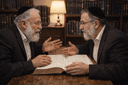
Rabbi Yosef Dov Halevi Soleveitchik ztl
Inspired by a Story | May 02, 2025
Print This Article
View Original PDF

Rabbi Yosef Dov Halevi Soleveitchik ztl

Inspired by a Story | June 27, 2025

Rabbi of Slutzk and Brisk

Author: Beis Haleivi

4 Iyar 5652 (1892)

By nature, Rabbi Yosef Dov was a man of truth. He never demonstrated any partiality towards anyone, and he fought against every powerful and wealthy person who wanted to use it over people. One day in Slutzk, it happened that a Reform Jew was called up to the Torah. He ascended the Bimah and began to recite the blessing for the Torah reading with the intonation of a religious, G-d fearing Jew: “...Who has chosen us from among all the peoples and given us His Torah.”

Upon hearing this, Rabbi Yosef Dov began to laugh. He said, “He certainly did not recite this blessing in vain, for if the Torah had been given to the other peoples, he would have felt obliged to carry it out in its smallest detail so he could be viewed as a perfect goy! However since the Torah was given to Klal Yisrael, he feels free to reject its yoke, and that’s why he said the blessing with such sincerity by emphasizing, ‘and given us His Torah’ – to us, not to non-Jews – because he doesn’t feel obliged to carry it out!”

Rabbi Yosef Dov had a caring heart that was open to all who were poor or dejected. He faithfully cared for the needs of the community and did much for the city’s poor. During one year of scarcity, he established an organization called “Food for the Poor” which he himself directed. He went from house to house collecting money for the needy, and his home was open wide to the downhearted and every soul in pain. Even when he himself was lacking, he spent his last cent on charity.

One day a very poor Rav from a small town appeared at his home. Rabbi Yosef Dov warmly welcomed him and invited him to eat something, during which time they spoke in Torah. After Bircas Hamazon, the guest arose and Rabbi Yosef Dov noticed that his shoes were torn. He then called one of his sons over and whispered in his ear, “Take off your shoes and give them to this Rav.”

Rabbi Yosef Dov also studied Torah in great depth and with razor-sharp acuity. He carried out the mitzvah of Tzeddakah with detailed aforethought and he treated the poor wisely.

Once before Passover, someone came to him with the following question: “Rabbi, can a person fulfill the obligation of drinking the four glasses at the Seder with milk?”

“Are you ill?” the Rav asked him.

“No,” the man replied. “Thank G-d, I’m in good health, but wine is very expensive this year and I have no money for it.”

The Rav took out 25 rubles from his pocket and gave them to him. However the man did not want to accept it, and he said, “Rabbi, I came to ask a question, not to ask for charity!”

“This money,” said the Rav, “is a loan until Hashem helps you. You can pay me back after the holiday.”

The man took the money, thanked the Rav, and went back home. As soon as he left, the Rebbetzin asked her husband, “Why did you give him 25 rubbles? Enough wine for four glasses costs only one or two rubbles!”

Rabbi Yosef Dov smiled and said, “You heard his question? Is it permissible to fulfill the obligation of drinking the four glasses at the Seder with milk? If he was going to have meat during the Seder, he wouldn’t be able to drink milk. I understood from what he said that he had nothing for the holiday, so I gave him enough that nothing would be lacking for him.”

Prior to becoming the Rav in Brisk, he had formed an opinion regarding a certain din of treifos (that would render the meat to be not Kosher). Rabbi Yosef Dov was of the opinion that it was a treifeh despite the fact that the Shach, who was considered one of the most authoritative commentators on the Shulchan Aruch, had ruled that it was kosher.

After Rabbi Yosef Dov became the Rav of Brisk, a question arose for the town butcher regarding this particular din, and of course, Rabbi Yosef Dov stated his ruling that it was treif. However, the Rav told the butcher that since the Shach rules differently, it’s not right that he should have to suffer a loss because of my opinion, so the Rav compensated the butcher from his own pocket.

Rabbi of Slutzk and Brisk

Author: Beis Haleivi

4 Iyar 5652 (1892)

By nature, Rabbi Yosef Dov was a man of truth. He never demonstrated any partiality towards anyone, and he fought against every powerful and wealthy person who wanted to use it over people. One day in Slutzk, it happened that a Reform Jew was called up to the Torah. He ascended the Bimah and began to recite the blessing for the Torah reading with the intonation of a religious, G-d fearing Jew: “...Who has chosen us from among all the peoples and given us His Torah.”

Upon hearing this, Rabbi Yosef Dov began to laugh. He said, “He certainly did not recite this blessing in vain, for if the Torah had been given to the other peoples, he would have felt obliged to carry it out in its smallest detail so he could be viewed as a perfect goy! However since the Torah was given to Klal Yisrael, he feels free to reject its yoke, and that’s why he said the blessing with such sincerity by emphasizing, ‘and given us His Torah’ – to us, not to non-Jews – because he doesn’t feel obliged to carry it out!”

Rabbi Yosef Dov had a caring heart that was open to all who were poor or dejected. He faithfully cared for the needs of the community and did much for the city’s poor. During one year of scarcity, he established an organization called “Food for the Poor” which he himself directed. He went from house to house collecting money for the needy, and his home was open wide to the downhearted and every soul in pain. Even when he himself was lacking, he spent his last cent on charity.

One day a very poor Rav from a small town appeared at his home. Rabbi Yosef Dov warmly welcomed him and invited him to eat something, during which time they spoke in Torah. After Bircas Hamazon, the guest arose and Rabbi Yosef Dov noticed that his shoes were torn. He then called one of his sons over and whispered in his ear, “Take off your shoes and give them to this Rav.”

Rabbi Yosef Dov also studied Torah in great depth and with razor-sharp acuity. He carried out the mitzvah of Tzeddakah with detailed aforethought and he treated the poor wisely.

Once before Passover, someone came to him with the following question: “Rabbi, can a person fulfill the obligation of drinking the four glasses at the Seder with milk?”

“Are you ill?” the Rav asked him.

“No,” the man replied. “Thank G-d, I’m in good health, but wine is very expensive this year and I have no money for it.”

The Rav took out 25 rubles from his pocket and gave them to him. However the man did not want to accept it, and he said, “Rabbi, I came to ask a question, not to ask for charity!”

“This money,” said the Rav, “is a loan until Hashem helps you. You can pay me back after the holiday.”

The man took the money, thanked the Rav, and went back home. As soon as he left, the Rebbetzin asked her husband, “Why did you give him 25 rubbles? Enough wine for four glasses costs only one or two rubbles!”

Rabbi Yosef Dov smiled and said, “You heard his question? Is it permissible to fulfill the obligation of drinking the four glasses at the Seder with milk? If he was going to have meat during the Seder, he wouldn’t be able to drink milk. I understood from what he said that he had nothing for the holiday, so I gave him enough that nothing would be lacking for him.”

Prior to becoming the Rav in Brisk, he had formed an opinion regarding a certain din of treifos (that would render the meat to be not Kosher). Rabbi Yosef Dov was of the opinion that it was a treifeh despite the fact that the Shach, who was considered one of the most authoritative commentators on the Shulchan Aruch, had ruled that it was kosher.

After Rabbi Yosef Dov became the Rav of Brisk, a question arose for the town butcher regarding this particular din, and of course, Rabbi Yosef Dov stated his ruling that it was treif. However, the Rav told the butcher that since the Shach rules differently, it’s not right that he should have to suffer a loss because of my opinion, so the Rav compensated the butcher from his own pocket.

PDF Preview