Collateral for our Sins
BET Journal | February 21, 2026
Print This Article
View Original PDF

Collateral for our Sins

BET Journal | February 21, 2026

ויקחו לי תרומה (לג‘ ז‘)
And you should take for me a terumah (33:7)

Regarding this passuk, the Medrash says, it is written תורה צוה לנו משה, “Moshe commanded us to keep the (mitzvos of the) Torah.” The Medrash continues, Rav Simlai says, six hundred and thirteen mitzvos were given to the Jewish people, the same numerical value as the word תורה .תורה, however, only amounts to six hundred and eleven; the two missing are the two mitzvos we heard directly from Hashem. Hence, we heard תורה, six hundred and eleven mitzvos, צוה לנו משה, from Moshe Rabbeinu.

The Zera Shimshon asks the obvious question: What connection is there between the passuk of collecting terumah from the Jewish people to build a Mishkan for Hashem and the passuk of תורה צוה לנו משה?

The Zera Shimshon answers with another Medrash. The Medrash says (Shir HaShirim 1:4) when the Jewish people heard Hashem say אנכי ה‘ אלקיך, “I am Hashem your G-d,” and, לא יהיה לך וגו‘, “You shall not have other gods,” the yetzer hara was instantly uprooted from their hearts. However, when they asked Moshe Rabbeinu to serve as their intermediary, the yetzer hara reentered their hearts. Nonetheless, had the Jewish people not sinned during those forty days, they would have merited being entirely freed from the yetzer hara. Unfortunately, though, the Jewish people did sin, and the yetzer hara remained inside them.

Another point the Zera Shimshon prefaces to his answer is the Medrash that explains why the structure that the Jewish people built for Hashem was called a ‘Mishkan.’ The Medrash (Bamidbar Rabba 12:14) says that the word Mishkan comes from the word mashkon, collateral, since Hashem took it as payment for the Jewish people’s sins. With this, the Zera Shimshon now explains the connection between the two aforementioned pessukim.

The Medrash is coming to address why this collection is called a תרומה when it just as well could have been called a נדבה. The Zera Shimshon explains based on a Tikkunay HaZohar (17) that says that the word תרומה is made up of the words תורה מ , the Torah that was given in forty days. The reason that it took forty days was because תורה צוה לנו משה, we asked Moshe Rabbeinu to serve as the intermediary for the rest of the six hundred and eleven mitzvos (תורה). This is when the yetzer hara came back into us. We had a forty-day trial to live without sin (until Moshe Rabbeinu came back after serving as our intermediary to get the rest of the Torah and transmit it to us), then the yetzer hara would have left us for good. However, since we did not succeed, we now needed a Mishkan to serve as collateral for our sins since, with the yetzer hara in the world, we would eventually sin.

This is why this donation is called תרומה, to explain why this dwelling built for Hashem would be taken as collateral for our sins, since תורה מ, the Torah was given in forty days. Had they not asked Moshe Rabbeinu to serve as their intermediary and rather had heard it directly from Hashem, they would have been free from the yetzer hara, free from sin, and there would have been no need for collateral for their sins. However, since תורה מ (תרומה), Moshe Rabbeinu now went to receive the rest of the six hundred and eleven mitzvos to give over to us instead of us hearing them directly from Hashem, and during the forty days it took to receive the rest of the mitzvos, we sinned, we then needed a Mishkan to serve as collateral for our sins.

RABBI PINCHAS KASNETT OHR.EDU
ZERA SHIMSHON
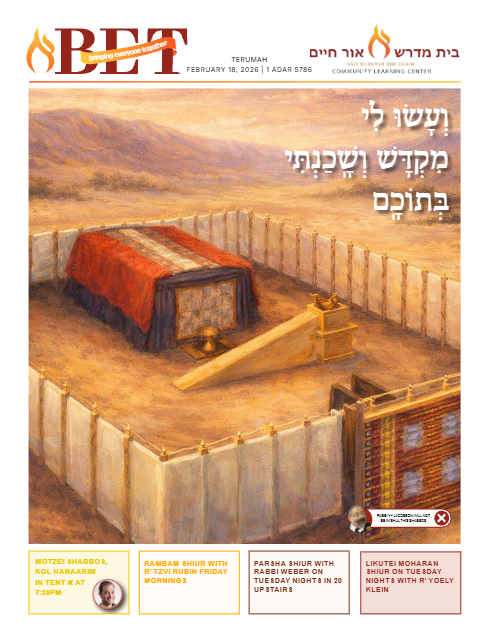
ויקחו לי תרומה (לג‘ ז‘)
And you should take for me a terumah (33:7)

Regarding this passuk, the Medrash says, it is written תורה צוה לנו משה, “Moshe commanded us to keep the (mitzvos of the) Torah.” The Medrash continues, Rav Simlai says, six hundred and thirteen mitzvos were given to the Jewish people, the same numerical value as the word תורה .תורה, however, only amounts to six hundred and eleven; the two missing are the two mitzvos we heard directly from Hashem. Hence, we heard תורה, six hundred and eleven mitzvos, צוה לנו משה, from Moshe Rabbeinu.

The Zera Shimshon asks the obvious question: What connection is there between the passuk of collecting terumah from the Jewish people to build a Mishkan for Hashem and the passuk of תורה צוה לנו משה?

The Zera Shimshon answers with another Medrash. The Medrash says (Shir HaShirim 1:4) when the Jewish people heard Hashem say אנכי ה‘ אלקיך, “I am Hashem your G-d,” and, לא יהיה לך וגו‘, “You shall not have other gods,” the yetzer hara was instantly uprooted from their hearts. However, when they asked Moshe Rabbeinu to serve as their intermediary, the yetzer hara reentered their hearts. Nonetheless, had the Jewish people not sinned during those forty days, they would have merited being entirely freed from the yetzer hara. Unfortunately, though, the Jewish people did sin, and the yetzer hara remained inside them.

Another point the Zera Shimshon prefaces to his answer is the Medrash that explains why the structure that the Jewish people built for Hashem was called a ‘Mishkan.’ The Medrash (Bamidbar Rabba 12:14) says that the word Mishkan comes from the word mashkon, collateral, since Hashem took it as payment for the Jewish people’s sins. With this, the Zera Shimshon now explains the connection between the two aforementioned pessukim.

The Medrash is coming to address why this collection is called a תרומה when it just as well could have been called a נדבה. The Zera Shimshon explains based on a Tikkunay HaZohar (17) that says that the word תרומה is made up of the words תורה מ , the Torah that was given in forty days. The reason that it took forty days was because תורה צוה לנו משה, we asked Moshe Rabbeinu to serve as the intermediary for the rest of the six hundred and eleven mitzvos (תורה). This is when the yetzer hara came back into us. We had a forty-day trial to live without sin (until Moshe Rabbeinu came back after serving as our intermediary to get the rest of the Torah and transmit it to us), then the yetzer hara would have left us for good. However, since we did not succeed, we now needed a Mishkan to serve as collateral for our sins since, with the yetzer hara in the world, we would eventually sin.

This is why this donation is called תרומה, to explain why this dwelling built for Hashem would be taken as collateral for our sins, since תורה מ, the Torah was given in forty days. Had they not asked Moshe Rabbeinu to serve as their intermediary and rather had heard it directly from Hashem, they would have been free from the yetzer hara, free from sin, and there would have been no need for collateral for their sins. However, since תורה מ (תרומה), Moshe Rabbeinu now went to receive the rest of the six hundred and eleven mitzvos to give over to us instead of us hearing them directly from Hashem, and during the forty days it took to receive the rest of the mitzvos, we sinned, we then needed a Mishkan to serve as collateral for our sins.

RABBI PINCHAS KASNETT OHR.EDU
ZERA SHIMSHON

PDF Preview