Parshas Terumah The Perfect Gift
Facebuker Shabbos Table Talk | February 16, 2024
Print This Article
View Original PDF

Parshas Terumah The Perfect Gift

Facebuker Shabbos Table Talk | December 10, 2025

The Parsha begins by saying that Moshe should tell the Jews to offer donations to Hashem and the Mishkan. It then says, “And this is the offering you shall accept from them: gold, silver and copper.”

The words for these metals allude to the days throughout the year upon which we read the Torah publicly in the synagogue:

זהב - The days of the week: 7th, 5th and 2nd - Shabbos, Thursday and Monday
כסף - (Yom) Kippur, Sukkos, Pesach/Purim
נחשת - Nairot (Chanukah), (Rosh) Chodesh, Shavuos/Shmini Atzeres, Taanis (fast days).

Why is this? Why does the Torah allude to Torah-reading days?

Perhaps it is because one cannot give a gift until he gets to know the recipient. In order for a gift to bring a closer relationship between two parties, it must be thoughtful and geared towards that which the receiver would value and enjoy.

Therefore, the very first thing to do when donating to Hashem is to study His Torah so we get to know Him and understand Him and what he wants from us. Because everything in the Universe is His, the desire to come close to Hashem and the wish to do His will is the only thing we can “give” to Him.

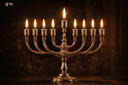
The Menorah was to be made out of a single piece of pure gold, and not bits and pieces cobbled together. Though it was much harder to do, the gold was to be hammered in such a way that the material of the block was formed into the various branches, cups, and flowers.

The Menorah symbolizes Torah, and this concept fits perfectly with the requirements of how to construct it.

The Chasam Sofer comments on the words, “its cups and flowers shall be from it,” that we are not to interpret or expound Torah based on external sources. Rather, the drashos we make shall be based on the original Torah itself. We do not glorify Torah by bringing outside ideas and attaching them to it.

This also can explain, he says, the Gemara’s comment (Megilla 32a) that one who holds a Torah barehanded will be buried naked. It explains that this refers to being “naked” of good deeds. The Chasam Sofer explains: One who feels Torah is “naked,” and requires the assistance of outside sources to “dress” it, is already leaning towards heresy and will die bereft of Torah and mitzvos. At the very least, he gains no reward for those explanations of Torah which he based on foreign sources.

The Parsha begins by saying that Moshe should tell the Jews to offer donations to Hashem and the Mishkan. It then says, “And this is the offering you shall accept from them: gold, silver and copper.”

The words for these metals allude to the days throughout the year upon which we read the Torah publicly in the synagogue:

זהב - The days of the week: 7th, 5th and 2nd - Shabbos, Thursday and Monday
כסף - (Yom) Kippur, Sukkos, Pesach/Purim
נחשת - Nairot (Chanukah), (Rosh) Chodesh, Shavuos/Shmini Atzeres, Taanis (fast days).

Why is this? Why does the Torah allude to Torah-reading days?

Perhaps it is because one cannot give a gift until he gets to know the recipient. In order for a gift to bring a closer relationship between two parties, it must be thoughtful and geared towards that which the receiver would value and enjoy.

Therefore, the very first thing to do when donating to Hashem is to study His Torah so we get to know Him and understand Him and what he wants from us. Because everything in the Universe is His, the desire to come close to Hashem and the wish to do His will is the only thing we can “give” to Him.

The Menorah was to be made out of a single piece of pure gold, and not bits and pieces cobbled together. Though it was much harder to do, the gold was to be hammered in such a way that the material of the block was formed into the various branches, cups, and flowers.

The Menorah symbolizes Torah, and this concept fits perfectly with the requirements of how to construct it.

The Chasam Sofer comments on the words, “its cups and flowers shall be from it,” that we are not to interpret or expound Torah based on external sources. Rather, the drashos we make shall be based on the original Torah itself. We do not glorify Torah by bringing outside ideas and attaching them to it.

This also can explain, he says, the Gemara’s comment (Megilla 32a) that one who holds a Torah barehanded will be buried naked. It explains that this refers to being “naked” of good deeds. The Chasam Sofer explains: One who feels Torah is “naked,” and requires the assistance of outside sources to “dress” it, is already leaning towards heresy and will die bereft of Torah and mitzvos. At the very least, he gains no reward for those explanations of Torah which he based on foreign sources.

PDF Preview