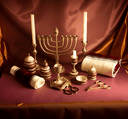
Parshas Terumah Three Gifts Three Pillars
Ben Chamesh L'Mikra | February 12, 2024
Print This Article
View Original PDF

Parshas Terumah Three Gifts Three Pillars

Ben Chamesh L'Mikra | December 10, 2025

G-d instructs the Jewish people to erect the Tabernacle in the desert, and to donate funds for its purposes. The instructions for these donations vary, however. This Sicha explores the differences of each, and brings a deeper understanding to the three modes of serving the Almighty.

This week’s Torah portion begins with G-d commanding the Jewish people concerning the Mishkan (Tabernacle) that was to be erected. The Jewish people were instructed to donate both materials and funds toward the construction of this G-dly sanctuary.

Text 1

Speak to the children of Israel, and have them take (for) Me an offering; from every person whose heart inspires him to generosity, you shall take My offering. And this is the offering that you shall take from them: gold, silver, and copper...
Shemos 25:2-3

In delineating how the Israelites should consecrate their possessions to provide the materials for this sanctuary, the verse repeats the term “offering” (terumah) three times. The verses state: “take (for) Me an offering,” “you shall take My offering,” and again repeats, “And this is the offering that you shall take.” The Sages explain that each of these three expressions alludes to a different type of donation needed for the building and upkeep of the Mishkan.

Text 2

[The word terumah, mentioned three times, denotes that] three offerings are mentioned here. One is the offering of a beka [half-shekel] per head, from which they made the sockets, as is delineated in (Parshas) V’eileh Pekudei. Another is the offering of a beka per head for the [community] coffers, from which to purchase the communal sacrifices, and another is the offering for the Mishkan, each one’s [Israelite’s] donation.
Rashi, Shemos 25:2

Each mention of the word “offering” (terumah) refers to a separate type of donation that was given for the building of the Mishkan. The first mention of the word is in reference to the half-shekel of silver that every individual donated. These were used to build sockets that were to serve as foundations for the walls. The second use of the word “offering” was in reference to another half-shekel, which was donated for the purpose of communal sacrifices. The third reference of the word “offering” is mentioned in regard to any other materials that were needed for the construction of the Tabernacle.

Why only hints?

Although all three of these various offerings are mentioned in Parshas Terumah, there is a distinctly different manner in which they are each enumerated. While all three types of offering are stated in the parsha, only the last is focused on in detail. The first two types of offerings are only hinted to in the words, “take for Me an offering,” and “you shall take My offering.” The third category however, expressed in the words, “And this is the offering that you shall take,” is enumerated with its particularities.

The Torah says:

Text 3

And this is the offering that you shall take from them: gold, silver, and copper; blue, purple, and crimson wool; linen and goat hair; ram skins dyed red, tachash skins, and acacia wood; oil for lighting, spices for the anointing oil and for the incense; shoham stones and filling stones for the ephod and for the choshen.
Shemos 25:3-7

All the specific materials that the Israelites were to bring for the building of the Tabernacle are mentioned in great detail. While the Torah brushes over the other forms of offerings to the Mishkan, it discusses this one at great length. Notwithstanding the brevity in which the Torah mentions the first two types of offerings, all three of these donations were in fact exceedingly important for the Mishkan to properly function.

The donation for the sockets: These were an actual element in the edifice of the Tabernacle. The donation of the half-shekel: The purpose of the Mishkan was for it to be a place that was “prepared for sacrifices to be offered within it.”
Rambam, Beis Habechirah 1:1.

The half-shekel that was donated for the purpose of communal sacrifices enabled the Mishkan to serve in this capacity. The donations to the Mishkan: These included all the various materials that were important for the Mishkan’s assembly and for fashioning the priests’ special garments.

This begs the question: If all three expressions found in the beginning of Parshas Terumah were indeed important for the construction of the Mishkan, why then, is the contribution regarding the actual materials of the Mishkan the only one clearly enumerated in the parsha and the rest only hinted to?

It cannot be said that the reason for this was that the Torah wished to recount only those details that were important for the actual building of the Mishkan—and for that reason it only hinted to the donations that were to be given towards the communal sacrifices—as that was not the only offering that was left out. The sockets were integral to the construction of the actual edifice and they too were only alluded to and not explicitly stated.

It is therefore understood that there must be another reason as to why only one form of donation was clearly expressed and the others were only inferred from the extra words “offering” mentioned in the verse.

Variant expressions

Upon observing the language that the Torah employs when mentioning the various donations, one notices distinctions between each of the three expressions. The expressions, “take (for) Me an offering (li terumah),” “you shall take My offering (terumasi),” and “this is the offering that you shall take,” are each worded slightly differently.

Each of them mentions G-d in a variant manner. Take (for) Me an offering: In reference to the half-shekel that was used for the sockets, the verse says, “(for) Me an offering.” In Hebrew this is stated as, “li terumah,” the expressions for “Me” and “offering” are separated as two different words. You shall take My offering: Concerning the donation for communal sacrifices, the Torah calls it, “My offering.” The Hebrew word that is used here is, “terumasi.” In this case, the terms “My” and “offering” create one word. This is the offering that you shall take: In regard to the materials that were used for the construction of the Mishkan, all reference to G-d is completely left out.

What is the significance of the structural differences that the Torah uses in referencing these various offerings?

The Medrash

Pertaining to the materials for the Mishkan’s construction (gold, silver, copper, etc.), the Medrash explains that the specific substances that were used correlate to the various exiles that the Jewish people endured.

Text 4

Gold, corresponding to the Babylonian Empire, as it says, “You [Nevuchadnetzar] are the head of gold.” Silver, corresponding to the Persian Empire, as it is written, “ten thousand silver talents [which Haman offered to Achashveirosh, on behalf of the destruction of the Jewish people].” Copper, corresponding to the Greek Empire, for it is the least valued of all of them, and ram skins dyed red, corresponding to the Edomite Empire, as it says, “And the first one [Esav] emerged ruddy.”
Daniel 2:38. Esther 3:9. Bereishis 25:25. Medrash Tanchuma, Terumah 7

The association between the materials used to build the Mishkan and the various exiles seems extremely perplexing. Why, when discussing the substances that were used in building of Mishkan, the forerunner of the Temple, would we reference those very nations that later brought about the Temple’s destruction?!

Three pillars

While G-d specifically commanded the Jewish people to erect a sanctuary for Him in the form of the Mishkan, G-d as well wished that we should create a sanctuary for Him within the entire world. G-d desires that we should transform the Earth completely, and make it into a “dwelling place” for Himself.

In order to create a dwelling place for G-d here in the physical world, there are three ways through which this is attained: the study of Torah, the service of G-d and the performance of kind deeds.

Text 5

Shimon the Righteous was among the last surviving members of the Great Assembly. He would say: The world stands on three things: Torah, the service of G-d, and deeds of kindness.
Pirkei Avos 1:2

These three facets through which the world is transformed into a G-dly place are hinted to in the three offerings through which the physical sanctuary for G-d, the Mishkan, was built as well. It was for this reason that the Almighty did not simply request that the Jewish people give one large donation to provide for all of the Mishkan’s needs. Instead, He divided the gifts into three diverse types, as each of these three donations were indicative of a separate way by which to transform the world.

The connections between the three donations and the three manners of spiritual service are as follows:

  • Sockets: These served as the foundation of the Mishkan’s structure. The basis and foundation of all of Judaism is rooted in the Torah. All the various ways of serving G-d stem from the Torah. Similar to the sockets that upheld the walls of the Mishkan, the Torah upholds all of Jewish life.
  • Communal offerings: The purchase of the communal sacrifices represents the concept of the service of G-d. The concept of prayer as well relates to the service of the Almighty, as it was instituted in place of the communal sacrifices.

G-d instructs the Jewish people to erect the Tabernacle in the desert, and to donate funds for its purposes. The instructions for these donations vary, however. This Sicha explores the differences of each, and brings a deeper understanding to the three modes of serving the Almighty.

This week’s Torah portion begins with G-d commanding the Jewish people concerning the Mishkan (Tabernacle) that was to be erected. The Jewish people were instructed to donate both materials and funds toward the construction of this G-dly sanctuary.

Text 1

Speak to the children of Israel, and have them take (for) Me an offering; from every person whose heart inspires him to generosity, you shall take My offering. And this is the offering that you shall take from them: gold, silver, and copper...
Shemos 25:2-3

In delineating how the Israelites should consecrate their possessions to provide the materials for this sanctuary, the verse repeats the term “offering” (terumah) three times. The verses state: “take (for) Me an offering,” “you shall take My offering,” and again repeats, “And this is the offering that you shall take.” The Sages explain that each of these three expressions alludes to a different type of donation needed for the building and upkeep of the Mishkan.

Text 2

[The word terumah, mentioned three times, denotes that] three offerings are mentioned here. One is the offering of a beka [half-shekel] per head, from which they made the sockets, as is delineated in (Parshas) V’eileh Pekudei. Another is the offering of a beka per head for the [community] coffers, from which to purchase the communal sacrifices, and another is the offering for the Mishkan, each one’s [Israelite’s] donation.
Rashi, Shemos 25:2

Each mention of the word “offering” (terumah) refers to a separate type of donation that was given for the building of the Mishkan. The first mention of the word is in reference to the half-shekel of silver that every individual donated. These were used to build sockets that were to serve as foundations for the walls. The second use of the word “offering” was in reference to another half-shekel, which was donated for the purpose of communal sacrifices. The third reference of the word “offering” is mentioned in regard to any other materials that were needed for the construction of the Tabernacle.

Why only hints?

Although all three of these various offerings are mentioned in Parshas Terumah, there is a distinctly different manner in which they are each enumerated. While all three types of offering are stated in the parsha, only the last is focused on in detail. The first two types of offerings are only hinted to in the words, “take for Me an offering,” and “you shall take My offering.” The third category however, expressed in the words, “And this is the offering that you shall take,” is enumerated with its particularities.

The Torah says:

Text 3

And this is the offering that you shall take from them: gold, silver, and copper; blue, purple, and crimson wool; linen and goat hair; ram skins dyed red, tachash skins, and acacia wood; oil for lighting, spices for the anointing oil and for the incense; shoham stones and filling stones for the ephod and for the choshen.
Shemos 25:3-7

All the specific materials that the Israelites were to bring for the building of the Tabernacle are mentioned in great detail. While the Torah brushes over the other forms of offerings to the Mishkan, it discusses this one at great length. Notwithstanding the brevity in which the Torah mentions the first two types of offerings, all three of these donations were in fact exceedingly important for the Mishkan to properly function.

The donation for the sockets: These were an actual element in the edifice of the Tabernacle. The donation of the half-shekel: The purpose of the Mishkan was for it to be a place that was “prepared for sacrifices to be offered within it.”
Rambam, Beis Habechirah 1:1.

The half-shekel that was donated for the purpose of communal sacrifices enabled the Mishkan to serve in this capacity. The donations to the Mishkan: These included all the various materials that were important for the Mishkan’s assembly and for fashioning the priests’ special garments.

This begs the question: If all three expressions found in the beginning of Parshas Terumah were indeed important for the construction of the Mishkan, why then, is the contribution regarding the actual materials of the Mishkan the only one clearly enumerated in the parsha and the rest only hinted to?

It cannot be said that the reason for this was that the Torah wished to recount only those details that were important for the actual building of the Mishkan—and for that reason it only hinted to the donations that were to be given towards the communal sacrifices—as that was not the only offering that was left out. The sockets were integral to the construction of the actual edifice and they too were only alluded to and not explicitly stated.

It is therefore understood that there must be another reason as to why only one form of donation was clearly expressed and the others were only inferred from the extra words “offering” mentioned in the verse.

Variant expressions

Upon observing the language that the Torah employs when mentioning the various donations, one notices distinctions between each of the three expressions. The expressions, “take (for) Me an offering (li terumah),” “you shall take My offering (terumasi),” and “this is the offering that you shall take,” are each worded slightly differently.

Each of them mentions G-d in a variant manner. Take (for) Me an offering: In reference to the half-shekel that was used for the sockets, the verse says, “(for) Me an offering.” In Hebrew this is stated as, “li terumah,” the expressions for “Me” and “offering” are separated as two different words. You shall take My offering: Concerning the donation for communal sacrifices, the Torah calls it, “My offering.” The Hebrew word that is used here is, “terumasi.” In this case, the terms “My” and “offering” create one word. This is the offering that you shall take: In regard to the materials that were used for the construction of the Mishkan, all reference to G-d is completely left out.

What is the significance of the structural differences that the Torah uses in referencing these various offerings?

The Medrash

Pertaining to the materials for the Mishkan’s construction (gold, silver, copper, etc.), the Medrash explains that the specific substances that were used correlate to the various exiles that the Jewish people endured.

Text 4

Gold, corresponding to the Babylonian Empire, as it says, “You [Nevuchadnetzar] are the head of gold.” Silver, corresponding to the Persian Empire, as it is written, “ten thousand silver talents [which Haman offered to Achashveirosh, on behalf of the destruction of the Jewish people].” Copper, corresponding to the Greek Empire, for it is the least valued of all of them, and ram skins dyed red, corresponding to the Edomite Empire, as it says, “And the first one [Esav] emerged ruddy.”
Daniel 2:38. Esther 3:9. Bereishis 25:25. Medrash Tanchuma, Terumah 7

The association between the materials used to build the Mishkan and the various exiles seems extremely perplexing. Why, when discussing the substances that were used in building of Mishkan, the forerunner of the Temple, would we reference those very nations that later brought about the Temple’s destruction?!

Three pillars

While G-d specifically commanded the Jewish people to erect a sanctuary for Him in the form of the Mishkan, G-d as well wished that we should create a sanctuary for Him within the entire world. G-d desires that we should transform the Earth completely, and make it into a “dwelling place” for Himself.

In order to create a dwelling place for G-d here in the physical world, there are three ways through which this is attained: the study of Torah, the service of G-d and the performance of kind deeds.

Text 5

Shimon the Righteous was among the last surviving members of the Great Assembly. He would say: The world stands on three things: Torah, the service of G-d, and deeds of kindness.
Pirkei Avos 1:2

These three facets through which the world is transformed into a G-dly place are hinted to in the three offerings through which the physical sanctuary for G-d, the Mishkan, was built as well. It was for this reason that the Almighty did not simply request that the Jewish people give one large donation to provide for all of the Mishkan’s needs. Instead, He divided the gifts into three diverse types, as each of these three donations were indicative of a separate way by which to transform the world.

The connections between the three donations and the three manners of spiritual service are as follows:

  • Sockets: These served as the foundation of the Mishkan’s structure. The basis and foundation of all of Judaism is rooted in the Torah. All the various ways of serving G-d stem from the Torah. Similar to the sockets that upheld the walls of the Mishkan, the Torah upholds all of Jewish life.
  • Communal offerings: The purchase of the communal sacrifices represents the concept of the service of G-d. The concept of prayer as well relates to the service of the Almighty, as it was instituted in place of the communal sacrifices.

PDF Preview