The Eternal Sanctuary and the Divine Presence
Print This Article
View Original PDF

The Eternal Sanctuary and the Divine Presence

הפצת המיינות חוצה | December 10, 2025

The Possuk says: וְעָשׂוּ לִי מִקְדָשׁ וְשָׁכַנְתִי בְתוֹכָם “They shall make for Me a sanctuary and I will dwell in them”.

The Medrash says, wherever the Torah uses the word לִי meaning ‘Me’ it signifies that it is something that will never change, neither in this world nor in the world to come.

Regarding the Beis HaMikdosh the Torah uses this word לִי when it says: “They shall make Me a sanctuary and I will dwell in them”.

The Sanctuary is the Mishkon which is called the sanctuary. Yet it did have changes. The first Beis Hamikdosh that Shlomoh HaMelech built, as well as the second Beis Hamikdosh, were both destroyed. So not only did they have changes, but, it would appear they were completely annihilated. So how can the Medrash say, that the Sanctuary and the Beis Hamikdosh will never change when we see clearly that there is change?

The Tzemach Tzedek explains in the Sefer ‘Ohr HaTorah’: “The Upper Beis Hamikdosh in the spiritual realm is Mamosh connected with the Beis Hamikdosh of the lowly material world”.

As the Possuk states: יִם הַבְנוּיָה כְעִיר שֶׁׁחֻבְרָה יְרוּשָׁלַ לָהּ יַחְדָו “The built-up Yerushalayim is like a city that was joined together within itself”. This Possuk means that the physical city of Yerushalayim is connected to the spiritual aspect of Yerushalayim in the Upper Realm. This never changes. Even right now the spiritual sanctuary shines forth.

However, it appears this all concerns the spiritual sanctuary. However, how is this relevant to the material sanctuary, which the Torah instructs ‘Make for Me a sanctuary’ which never changes?

It can be said that this is the very reason why the Tzemach Tzedek brings another explanation to this quandary. That according to the Possuk in the Prophets that states: וָאֱהִי לָהֶׁם לְמִקְדָשׁ מְעַט “I have become for them a minor sanctuary” our sages of blessed memory tell us this alludes to Synagogues & Torah study halls.

This includes all locations, and all times. It also includes now, the era of exile. All Synagogues and all Torah study halls are ‘minor sanctuaries’. It never changes.

We can add to the answer that this is what is meant when stating that “it” never moves away from the supernal Yerushalayim. Since it never moves away from the supernal Yerushalayim above, it therefore never moves away from the material city of Yerushalayim down below.

Even though there was a destruction where HaShem’s anger, so to speak, was let out on the wood and on the stones, nevertheless, the sanctuary of the lower realm still remains. That every synagogue and Torah study hall is a ‘minor sanctuary’.

However, we need to understand what is it that is novel in the Divine presence resting specifically in the sanctuary? There is already a Possuk that states: הֲלוֹא אֶׁת־הַשָמַיִם וְאֶׁת־הָאָרֶׁץ אֲנִי מָלֵא “Do I not fill the heavens and the earth?” that the presence of HaShem Blessed be He is everywhere.

This Possuk does not just include the level of G-dliness that can be described as ‘pervades’ which is the state of: ‘Memalei-Kol-Almin’.

It also refers to the state of ‘I’ Which is the state of: ‘Sovev-Kol-Almin’ and even greater levels of Gdliness. Even these lofty levels of G-dliness also can be found in every place. So, what is this great novelty that the Divine presence resides in the sanctuary?

And even if one were to say that the Divine presence needs to be brought down by human intervention through man’s Avodah, why is this connected specifically to the instruction of making a sanctuary for HaShem?

The matter is as follows: The Alter Rebbe explains at length in the Tanya, that the novelty of the Beis HaMikdosh is that there shall be a specific place where the Divine presence is revealed.

This is analogous to the soul that pervades the body. The soul is an undefinable essence, which is to be found in all limbs of the body equally. The same soul pervades the Two Hundred and Forty-Eight limbs as well as the Three Hundred and Sixty-Five sinews.

Nevertheless, the manner in which HaShem created man, is that the place for the revealed nestling of the soul is specifically in man’s brain, in his head. And from there the vitality extends to all areas of the body.

Similarly, in the Beis Hamikdosh the Divine Presence is in a revealed state and from there it extends vitality to the whole world.

There are two opinions as to exactly how connected the revelation of the Divine presence is to its location of revelation. Whether the Divine presence illuminates from the outside in, or whether there is an internal pervasion of the Divine presence.

Our Sages of Blessed memory say about the verse: וְעָשׂוּ לִי מִקְדָשׁ וְשָׁכַנְתִי בְתוֹכָם “They shall make Me a sanctuary and I will dwell in them”.

The Possuk does not say: “make Me a sanctuary and I will dwell in it.” It says rather “make Me a sanctuary and I will dwell in them”. By inference this includes the ‘making of a sanctuary’ including all the details of the Beis Hamikdosh, inside each and every Jewish person. As is explained in several places (and in the Tzemach Tzedek’s Sefer HaMitzvohs) that the Mishkon...
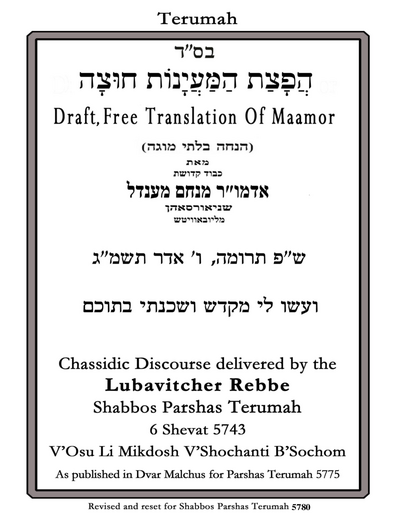
The Possuk says: וְעָשׂוּ לִי מִקְדָשׁ וְשָׁכַנְתִי בְתוֹכָם “They shall make for Me a sanctuary and I will dwell in them”.

The Medrash says, wherever the Torah uses the word לִי meaning ‘Me’ it signifies that it is something that will never change, neither in this world nor in the world to come.

Regarding the Beis HaMikdosh the Torah uses this word לִי when it says: “They shall make Me a sanctuary and I will dwell in them”.

The Sanctuary is the Mishkon which is called the sanctuary. Yet it did have changes. The first Beis Hamikdosh that Shlomoh HaMelech built, as well as the second Beis Hamikdosh, were both destroyed. So not only did they have changes, but, it would appear they were completely annihilated. So how can the Medrash say, that the Sanctuary and the Beis Hamikdosh will never change when we see clearly that there is change?

The Tzemach Tzedek explains in the Sefer ‘Ohr HaTorah’: “The Upper Beis Hamikdosh in the spiritual realm is Mamosh connected with the Beis Hamikdosh of the lowly material world”.

As the Possuk states: יִם הַבְנוּיָה כְעִיר שֶׁׁחֻבְרָה יְרוּשָׁלַ לָהּ יַחְדָו “The built-up Yerushalayim is like a city that was joined together within itself”. This Possuk means that the physical city of Yerushalayim is connected to the spiritual aspect of Yerushalayim in the Upper Realm. This never changes. Even right now the spiritual sanctuary shines forth.

However, it appears this all concerns the spiritual sanctuary. However, how is this relevant to the material sanctuary, which the Torah instructs ‘Make for Me a sanctuary’ which never changes?

It can be said that this is the very reason why the Tzemach Tzedek brings another explanation to this quandary. That according to the Possuk in the Prophets that states: וָאֱהִי לָהֶׁם לְמִקְדָשׁ מְעַט “I have become for them a minor sanctuary” our sages of blessed memory tell us this alludes to Synagogues & Torah study halls.

This includes all locations, and all times. It also includes now, the era of exile. All Synagogues and all Torah study halls are ‘minor sanctuaries’. It never changes.

We can add to the answer that this is what is meant when stating that “it” never moves away from the supernal Yerushalayim. Since it never moves away from the supernal Yerushalayim above, it therefore never moves away from the material city of Yerushalayim down below.

Even though there was a destruction where HaShem’s anger, so to speak, was let out on the wood and on the stones, nevertheless, the sanctuary of the lower realm still remains. That every synagogue and Torah study hall is a ‘minor sanctuary’.

However, we need to understand what is it that is novel in the Divine presence resting specifically in the sanctuary? There is already a Possuk that states: הֲלוֹא אֶׁת־הַשָמַיִם וְאֶׁת־הָאָרֶׁץ אֲנִי מָלֵא “Do I not fill the heavens and the earth?” that the presence of HaShem Blessed be He is everywhere.

This Possuk does not just include the level of G-dliness that can be described as ‘pervades’ which is the state of: ‘Memalei-Kol-Almin’.

It also refers to the state of ‘I’ Which is the state of: ‘Sovev-Kol-Almin’ and even greater levels of Gdliness. Even these lofty levels of G-dliness also can be found in every place. So, what is this great novelty that the Divine presence resides in the sanctuary?

And even if one were to say that the Divine presence needs to be brought down by human intervention through man’s Avodah, why is this connected specifically to the instruction of making a sanctuary for HaShem?

The matter is as follows: The Alter Rebbe explains at length in the Tanya, that the novelty of the Beis HaMikdosh is that there shall be a specific place where the Divine presence is revealed.

This is analogous to the soul that pervades the body. The soul is an undefinable essence, which is to be found in all limbs of the body equally. The same soul pervades the Two Hundred and Forty-Eight limbs as well as the Three Hundred and Sixty-Five sinews.

Nevertheless, the manner in which HaShem created man, is that the place for the revealed nestling of the soul is specifically in man’s brain, in his head. And from there the vitality extends to all areas of the body.

Similarly, in the Beis Hamikdosh the Divine Presence is in a revealed state and from there it extends vitality to the whole world.

There are two opinions as to exactly how connected the revelation of the Divine presence is to its location of revelation. Whether the Divine presence illuminates from the outside in, or whether there is an internal pervasion of the Divine presence.

Our Sages of Blessed memory say about the verse: וְעָשׂוּ לִי מִקְדָשׁ וְשָׁכַנְתִי בְתוֹכָם “They shall make Me a sanctuary and I will dwell in them”.

The Possuk does not say: “make Me a sanctuary and I will dwell in it.” It says rather “make Me a sanctuary and I will dwell in them”. By inference this includes the ‘making of a sanctuary’ including all the details of the Beis Hamikdosh, inside each and every Jewish person. As is explained in several places (and in the Tzemach Tzedek’s Sefer HaMitzvohs) that the Mishkon...

PDF Preview