Aharon HaKohen Wanted to Take the Blame for the Cheit HaEigel and Remove the Stench and Stain from the People of Yisrael
Shvilei Pinchas | February 21, 2024
Print This Article
View Original PDF

Aharon HaKohen Wanted to Take the Blame for the Cheit HaEigel and Remove the Stench and Stain from the People of Yisrael

Shvilei Pinchas | December 10, 2025

Let us begin our investigation by introducing a teaching in the Gemara (Arachin 16a): "אפוד מכפר על עבודה זרה, דכתיב אין אפוד ותרפים"—the Eiphod atones for avodah-zarah, as it is written (Hoshea 3, 4): “And without Eiphod or teraphim.” As Rashi explains, this means that when there is no Eiphod, the sin of teraphim, i.e., idol worship, is present. In this light, the Panim Yafos interprets the passuk related to the Eiphod (Shemos 28, 8): "וחשב אפודתו אשר עליו כמעשהו ממנו יהיה"—the belt with which it is emplaced, which is on it, shall be of the same workmanship. He relies on the teaching in the Gemara (Kiddushin 39b) that with regards to avodah zarah, even a negative thought is considered like an action. Let us plug this fact into the words of the passuk: "וחשב אפודתו"—even the mere thought of avodah-zarah, for which the Eiphod atones—"כמעשהו"—is considered as an act of idol-worship and requires atonement. So, now let us consider: What is the connection between the Eiphod and atonement for the sin of avodah-zarah?

I had a wonderful idea! Chazal teach us in the Midrash (V.R. 10, 3) that Aharon was willing to sacrifice his life and accept upon himself the entire blame for the “cheit ha’eigel” in order to spare Yisrael from the terrible situation in which they would not have had any tikun, chas v’shalom. In that merit, HKB”H appointed Aharon to be the Kohen Gadol to provide Bnei Yisrael with atonement. This is evident from their elucidation of the following passuk (Vayikra 8, 2):

"קח את אהרן ואת בניו אתו וגו', זה שאמר הכתוב אהבת צדק ותשנא רשע... בשעה שעשו ישראל אותו מעשה, בתחילה הלכו אצל חור אמרו לו קום עשה לנו אלהים, כיון שלא שמע להן עמדו עליו והרגוהו... ואחר כך הלכו אצל אהרן אמרו לו קום עשה לנו אלהים, כיון ששמע אהרן כן מיד נתיירא... אמר אהרן מה אעשה, הרי הרגו את חור שהיה נביא, עכשיו אם הורגים אותי שאני כהן, מתקיים עליהם המקרא שכתוב אם יהרג במקדש ה' כהן ונביא ומיד הם גולין... אמר אהרן אם בונין הן [את העגל], אותו הסרחון נתלה בהן, מוטב שיתלה הסרחון בי ולא בישראל... אמר לו הקב"ה לאהרן, 'אהבת צדק' לצדק את בני, ושנאת מלחייבן, 'על כן משחך אלקים אלקיך', אמר לו, חייך שמכל שבטו של לוי לא נבחר לכהונה גדולה אלא אתה, קח את אהרן ואת בניו אתו".

“Take Aharon and his sons with him, etc.” This is the implication of that which is written (Tehillim 45, 8): You love righteousness and hate wickedness” . . . When Yisrael performed that ignoble deed, they originally approached Chur. They asked him to make them a god. When he refused their request, they attacked him and killed him . . . Afterwards, they approached Aharon, asking him to make them a god. Hearing their request, Aharon immediately became fearful. . . He deliberated as to how to proceed. They had already killed Chur, who was a prophet. If they now killed him, a kohen, they would in effect be fulfilling the passuk (Eichah 2, 20): “Should a kohen and a prophet be slain in the sanctuary of Hashem”; they would be exiled immediately. . . Aharon figured that if they make the eigel, they will be held accountable for the despicable act; it is preferable that I be held accountable and not Yisrael. . . HKB”H said to Aharon: For “loving righteousness,” attempting to vindicate My children, and not wishing to hold them accountable (“hating wickedness”), “therefore, Elokim, your G-d, anointed you.” He said to him: From the entire tribe of Levi, only you will be chosen to fill the position of Kohen Gadol.

We will now introduce an incredible insight from the sacred teachings of the Chasam Sofer in Toras Moshe (Ki Sisa). He explains that the concept of “mesirus nefesh” means sacrificing one’s spiritual self to Hashem as well as his physical self. In other words, one has to be willing to also forfeit his portion in Olam HaBa. If a person is only sacrificing his physical body in Olam HaZeh, it would not be termed “mesiras nefesh” but rather “mesiras guf.” Aharon decided to make the “eigel” to spare Yisrael and ensure that they would have the opportunity of tikun via teshuvah. He was willing to have the blame and stench of the “cheit ha’eigel” rest solely on himself, even at the expense of forfeiting his place in Olam HaBa. The Chasam Sofer adds that the Almighty, Who discerns what is truly in a person’s heart, knew that Aharon had acted altruistically for the love of his blessed Maker and to avoid the annihilation of the entire nation for committing an aveirah l’shma. Hence, he and his descendants were chosen to fulfill the role of Kohen Gadol.
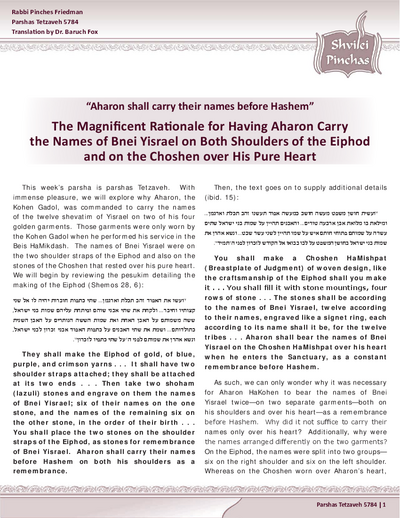

Let us begin our investigation by introducing a teaching in the Gemara (Arachin 16a): "אפוד מכפר על עבודה זרה, דכתיב אין אפוד ותרפים"—the Eiphod atones for avodah-zarah, as it is written (Hoshea 3, 4): “And without Eiphod or teraphim.” As Rashi explains, this means that when there is no Eiphod, the sin of teraphim, i.e., idol worship, is present. In this light, the Panim Yafos interprets the passuk related to the Eiphod (Shemos 28, 8): "וחשב אפודתו אשר עליו כמעשהו ממנו יהיה"—the belt with which it is emplaced, which is on it, shall be of the same workmanship. He relies on the teaching in the Gemara (Kiddushin 39b) that with regards to avodah zarah, even a negative thought is considered like an action. Let us plug this fact into the words of the passuk: "וחשב אפודתו"—even the mere thought of avodah-zarah, for which the Eiphod atones—"כמעשהו"—is considered as an act of idol-worship and requires atonement. So, now let us consider: What is the connection between the Eiphod and atonement for the sin of avodah-zarah?

I had a wonderful idea! Chazal teach us in the Midrash (V.R. 10, 3) that Aharon was willing to sacrifice his life and accept upon himself the entire blame for the “cheit ha’eigel” in order to spare Yisrael from the terrible situation in which they would not have had any tikun, chas v’shalom. In that merit, HKB”H appointed Aharon to be the Kohen Gadol to provide Bnei Yisrael with atonement. This is evident from their elucidation of the following passuk (Vayikra 8, 2):

"קח את אהרן ואת בניו אתו וגו', זה שאמר הכתוב אהבת צדק ותשנא רשע... בשעה שעשו ישראל אותו מעשה, בתחילה הלכו אצל חור אמרו לו קום עשה לנו אלהים, כיון שלא שמע להן עמדו עליו והרגוהו... ואחר כך הלכו אצל אהרן אמרו לו קום עשה לנו אלהים, כיון ששמע אהרן כן מיד נתיירא... אמר אהרן מה אעשה, הרי הרגו את חור שהיה נביא, עכשיו אם הורגים אותי שאני כהן, מתקיים עליהם המקרא שכתוב אם יהרג במקדש ה' כהן ונביא ומיד הם גולין... אמר אהרן אם בונין הן [את העגל], אותו הסרחון נתלה בהן, מוטב שיתלה הסרחון בי ולא בישראל... אמר לו הקב"ה לאהרן, 'אהבת צדק' לצדק את בני, ושנאת מלחייבן, 'על כן משחך אלקים אלקיך', אמר לו, חייך שמכל שבטו של לוי לא נבחר לכהונה גדולה אלא אתה, קח את אהרן ואת בניו אתו".

“Take Aharon and his sons with him, etc.” This is the implication of that which is written (Tehillim 45, 8): You love righteousness and hate wickedness” . . . When Yisrael performed that ignoble deed, they originally approached Chur. They asked him to make them a god. When he refused their request, they attacked him and killed him . . . Afterwards, they approached Aharon, asking him to make them a god. Hearing their request, Aharon immediately became fearful. . . He deliberated as to how to proceed. They had already killed Chur, who was a prophet. If they now killed him, a kohen, they would in effect be fulfilling the passuk (Eichah 2, 20): “Should a kohen and a prophet be slain in the sanctuary of Hashem”; they would be exiled immediately. . . Aharon figured that if they make the eigel, they will be held accountable for the despicable act; it is preferable that I be held accountable and not Yisrael. . . HKB”H said to Aharon: For “loving righteousness,” attempting to vindicate My children, and not wishing to hold them accountable (“hating wickedness”), “therefore, Elokim, your G-d, anointed you.” He said to him: From the entire tribe of Levi, only you will be chosen to fill the position of Kohen Gadol.

We will now introduce an incredible insight from the sacred teachings of the Chasam Sofer in Toras Moshe (Ki Sisa). He explains that the concept of “mesirus nefesh” means sacrificing one’s spiritual self to Hashem as well as his physical self. In other words, one has to be willing to also forfeit his portion in Olam HaBa. If a person is only sacrificing his physical body in Olam HaZeh, it would not be termed “mesiras nefesh” but rather “mesiras guf.” Aharon decided to make the “eigel” to spare Yisrael and ensure that they would have the opportunity of tikun via teshuvah. He was willing to have the blame and stench of the “cheit ha’eigel” rest solely on himself, even at the expense of forfeiting his place in Olam HaBa. The Chasam Sofer adds that the Almighty, Who discerns what is truly in a person’s heart, knew that Aharon had acted altruistically for the love of his blessed Maker and to avoid the annihilation of the entire nation for committing an aveirah l’shma. Hence, he and his descendants were chosen to fulfill the role of Kohen Gadol.

PDF Preview

