Hashem Gives Parnassah
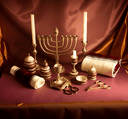
Rashi writes, "The olives were pressed in an olive press. They weren't ground in a mill because there may not be any pulp [of the olives in the menorah lamps]. After the first drop [of oil] came out, the olives were brought to a mill where they were ground. This second oil is disqualified for the menorah, but is kosher for the menachos (meal offerings, made from flour and oil)."
Hashem Gives Parnassah
Rashi, at the beginning of the parashah, writes, למנחות כתית ולא למאור כתית, "Pressed olive oil is used for lighting the menorah, and not for the menachos." כתית (pressed) represents hard work. The Chasam Sofer zt"l explains, למאור כתית, one should toil hard to acquire the light of Torah, למנחות כתית ולא, one doesn’t need to toil very hard to earn his parnassah.
A wealthy man came to Reb Chaim Brisker zt"l, bragging about how wise he is. He said, "Once, there was a fire on my street, and all the houses were burning down. Someone approached me and said, "The entire street is on fire. Soon, your house and store will burn down. You will lose everything. I offer you the offer of a lifetime. Sell me your home and store for half the value." "Do you think I listened to this crook?" the wealthy man asked Reb Chaim Brisker. "I immediately told him that my property wasn't for sale, and I went to pour another bucket of water on the fire. I'm not a fool. I didn’t sell it for half price. "The fire continued to rage. The businessman approached me again and said, 'The fire is reaching your house. Listen to my offer. I'll buy your property for ten percent of its value.' I didn’t sell it to him. "Ten minutes later, the businessman returned and said, "The fire has reached one of your walls. It is now or never. Do you want to remain poor your entire life? I'll buy...