Kriyas Hamegillah
The Way of Emunah | February 22, 2026
Print This Article
View Original PDF

Kriyas Hamegillah

The Way of Emunah | February 24, 2026

Kriyas Hamegillah

Rewarded in Accordance With the Preparations:

The way to ensure that one takes advantage of the benefits of Purim is to properly prepare for the great day. The pasuk states (Esther 1:21): “And the king did like the words of Memuchin.” The Bais Aharon of Karlin zy”a explains that every time the word “the king” is used in the Megillah, it is a reference to Hashem. Accordingly, the pasuk can be understood to be saying that “the King does” – Hashem provides goodness and hashpa’os on this day – according to “Memuchin” – according to the way one prepares (hachanos) for the day.

A New World Above:

The Kav Hayashar (Perek 99) writes about the reading of the Megillah: “You should know that there is a new world above that is extremely holy and awesome. This world is not revealed to the outside because of its great holiness except for once a year. It begins to be revealed when the Megillah is read. And from this world is the root of the soul of Mordechai Hatzadik. We need to arouse Divine mercy to have this world revealed to the outside so that it will provide light on the heads of the nation who gathers to heard the Megillah with pure hearts and devotion.“

Causing Sins to be Forgiven:

The Sar Shalom of Belz zy”a notes that the word “Megillah” has the same gematriah as the word “machol”. This indicates that our sins are forgiven through the reading of the Megillah. This is as stated in the Zohar Hakadosh that when Klal Yisroel says shira to Hashem, He forgives our sins, and the Megillah is as shira, which is akin to Hallel, as is stated in the Gemara (Megillah 14A). Therefore, reading it atones for our sins.

Mordechai Hatzadik Wanted to Save Klal Yisroel Through the Megillah:

Rav Moshe of Kobrin zy”a related that there was a city in the Sefardic lands that was ruled by a pasha who was a terrible rasha who claimed that he descended from Amalek. The pasha forbade the Jews from reading the Megillah and decreed that anyone caught doing so would be punished with death. The Jews were very upset. When it came time to read the Megillah, all they could do was to cry out to Hashem. Suddenly, a very elderly, poor man entered the bais medrash with a sack slung over his shoulders. He asked, “It is time to read the Megillah. Why aren’t you reading it“? They told him about the decree and he responded, “Read the Megillah and don’t be afraid. Not only that, also stamp as much as you can when Haman’s name is read. I will take responsibility“! His words encouraged the people greatly. They trusted the old man and felt no fear of the pasha. They read the Megillah and stamped vigorously when Haman’s name was said. When the recital of the Megillah was completed, everyone was very happy to have been able to fulfill the mitzvah. Everyone wanted to invite the poor man to his home for the seudah to break the fast, but no one could find him. They searched for him all over the city, but he had disappeared. They understood that something extraordinary had occurred. The Rov, who was a great man, made a “shailos chalom” to ask for an explanation, and the elderly man appeared to him in a dream. He told him, “I am Mordechai Hatzadik. I saw how upset you all were about not being able to read the Megillah, so I came to encourage you to read it with no fear. Hashem will help you and no harm will come to you from the wicked pasha.”

The Otzar of Free Gifts:

The Imrei Noam (Purim, Ois 44) writes that the day of Purim is so great that Hashem opens His treasure houses and grants everyone “free gifts”. He quotes Sefarim Hakedoshim that say that the word “Megillah” has the same numerical value as the word “mazla”, which indicates that when we read the Megillah, we can benefit from the “mazalos” from Above, which provide free gifts from Hashem’s treasures. He adds that Haman tried to prevent this. That is why he specifically wanted to pay for the right to “buy” the Jews (Esther 3:9). He wanted to use his money to annul Hashem treasure trove of free gifts and to create a situation wherein Jews would only be rewarded according to their deeds, and not given anything for free. Hashem, however, did not allow this to happen. He had the money returned to Haman, so that he would do his evil act for free, and, in kind, Klal Yisroel can be rewarded for free. For this reason, we give tzedakah on Purim to anyone who stretches out his hand, even if he does not deserve it – as Hashem gives us rewards on this day even if we do not deserve it. In this vein, the Sifsei Tzadik (Purim, Ois 52) relates that his grandfather, the Chiddushei Harim zy”a, once was full of simcha as he sat at his table on Purim, and he said, “I am full of joy right now because although I know that I am a ‘klak’ (unworthy person), I can still receive a free gift, as is stated (Bamidbor 6:25): ‘May Hashem shine His...
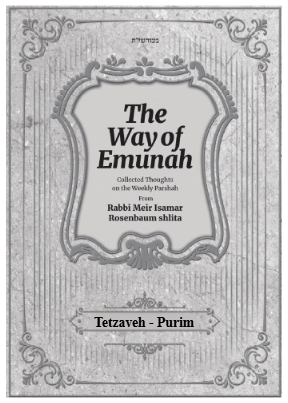
Kriyas Hamegillah

Rewarded in Accordance With the Preparations:

The way to ensure that one takes advantage of the benefits of Purim is to properly prepare for the great day. The pasuk states (Esther 1:21): “And the king did like the words of Memuchin.” The Bais Aharon of Karlin zy”a explains that every time the word “the king” is used in the Megillah, it is a reference to Hashem. Accordingly, the pasuk can be understood to be saying that “the King does” – Hashem provides goodness and hashpa’os on this day – according to “Memuchin” – according to the way one prepares (hachanos) for the day.

A New World Above:

The Kav Hayashar (Perek 99) writes about the reading of the Megillah: “You should know that there is a new world above that is extremely holy and awesome. This world is not revealed to the outside because of its great holiness except for once a year. It begins to be revealed when the Megillah is read. And from this world is the root of the soul of Mordechai Hatzadik. We need to arouse Divine mercy to have this world revealed to the outside so that it will provide light on the heads of the nation who gathers to heard the Megillah with pure hearts and devotion.“

Causing Sins to be Forgiven:

The Sar Shalom of Belz zy”a notes that the word “Megillah” has the same gematriah as the word “machol”. This indicates that our sins are forgiven through the reading of the Megillah. This is as stated in the Zohar Hakadosh that when Klal Yisroel says shira to Hashem, He forgives our sins, and the Megillah is as shira, which is akin to Hallel, as is stated in the Gemara (Megillah 14A). Therefore, reading it atones for our sins.

Mordechai Hatzadik Wanted to Save Klal Yisroel Through the Megillah:

Rav Moshe of Kobrin zy”a related that there was a city in the Sefardic lands that was ruled by a pasha who was a terrible rasha who claimed that he descended from Amalek. The pasha forbade the Jews from reading the Megillah and decreed that anyone caught doing so would be punished with death. The Jews were very upset. When it came time to read the Megillah, all they could do was to cry out to Hashem. Suddenly, a very elderly, poor man entered the bais medrash with a sack slung over his shoulders. He asked, “It is time to read the Megillah. Why aren’t you reading it“? They told him about the decree and he responded, “Read the Megillah and don’t be afraid. Not only that, also stamp as much as you can when Haman’s name is read. I will take responsibility“! His words encouraged the people greatly. They trusted the old man and felt no fear of the pasha. They read the Megillah and stamped vigorously when Haman’s name was said. When the recital of the Megillah was completed, everyone was very happy to have been able to fulfill the mitzvah. Everyone wanted to invite the poor man to his home for the seudah to break the fast, but no one could find him. They searched for him all over the city, but he had disappeared. They understood that something extraordinary had occurred. The Rov, who was a great man, made a “shailos chalom” to ask for an explanation, and the elderly man appeared to him in a dream. He told him, “I am Mordechai Hatzadik. I saw how upset you all were about not being able to read the Megillah, so I came to encourage you to read it with no fear. Hashem will help you and no harm will come to you from the wicked pasha.”

The Otzar of Free Gifts:

The Imrei Noam (Purim, Ois 44) writes that the day of Purim is so great that Hashem opens His treasure houses and grants everyone “free gifts”. He quotes Sefarim Hakedoshim that say that the word “Megillah” has the same numerical value as the word “mazla”, which indicates that when we read the Megillah, we can benefit from the “mazalos” from Above, which provide free gifts from Hashem’s treasures. He adds that Haman tried to prevent this. That is why he specifically wanted to pay for the right to “buy” the Jews (Esther 3:9). He wanted to use his money to annul Hashem treasure trove of free gifts and to create a situation wherein Jews would only be rewarded according to their deeds, and not given anything for free. Hashem, however, did not allow this to happen. He had the money returned to Haman, so that he would do his evil act for free, and, in kind, Klal Yisroel can be rewarded for free. For this reason, we give tzedakah on Purim to anyone who stretches out his hand, even if he does not deserve it – as Hashem gives us rewards on this day even if we do not deserve it. In this vein, the Sifsei Tzadik (Purim, Ois 52) relates that his grandfather, the Chiddushei Harim zy”a, once was full of simcha as he sat at his table on Purim, and he said, “I am full of joy right now because although I know that I am a ‘klak’ (unworthy person), I can still receive a free gift, as is stated (Bamidbor 6:25): ‘May Hashem shine His...

PDF Preview