Parsha Pizzazz Tetsaveh
In last week’s parsha we learned all about how the beautiful Mishkan (sanctuary) was built. But what about the people who would do the special jobs that needed to be done in the Mishkan? This week’s parsha talks about Aharon, who became the Kohein Gadol (High Priest), and his children, the regular Kohanim – the clothes they wore, and the services they provided for the rest of the Jewish people.
Pure Olive Oil
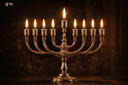
The very first thing the Kohanim were told to do was to always keep the Menorah lit in the Mishkan. They had to use only the purest, clearest oil, and HaShem told Moshe to be in charge of collecting the best olive oil.
“My fellow Jews!” said Moshe. “We need oil for lighting the Menorah. But only the very best oil will do. The finest oil comes from the first pressing of the olive – only the very first drop is pure enough. If anyone has such excellent oil, please bring it to me.”
Once the pure olive oil was collected, it was the job of the Kohanim to prepare the Menorah and light it. Every morning, a Kohein entered the Kadosh (“Holy”) chamber of the Mishkan, where the Menorah stood, and climbed the steps in front of it. He cleaned out the oil cups from the previous day, put in new wicks, and poured in the new oil. And in the afternoon, the Kohein lit the Menorah.
A miracle happened: When the Kohein would go to the Menorah in the morning, he would find the flame in the middle still burning! So he would clean the other six oil cups, and leave the middle one alone. In the afternoon, when the next Kohein would enter, he would find the middle flame still lit! He would use that flame to light the others, and only then would he put out the middle light, clean the cup, put in a new wick, and light it again. This miracle took place every single day!
Special Clothes for the Kohanim
Have you ever noticed that people who have certain jobs often wear uniforms that help you recognize them? Think about the clothes worn by police officers, firefighters, or doctors. Their clothes show that they have a special status, knowledge, and responsibility. For the same reasons, the Kohanim wore special clothes, too -- so that the rest of the people would treat them with great respect, and also so that the Kohanim themselves would feel how important their jobs were.
The Kohein wore four special garments:
- Ketonet – a long, floor-length shirt made of white linen.
- Avnet – a very long, multicolored belt, which was wound many times around the waist.
- Michnasayim – short, white, linen pants, worn under the Kutonet.
- Migba’at – a turban made of a long piece of white linen wrapped many times around the head, forming a point at the top.
Extra-Special Clothes for the Kohein Gadol
The Kohein Gadol had the privilege of wearing a special uniform made of eight beautiful and holy garments. He wore the Ketonet, Avnet, and Michnasayim worn by the “ordinary” Kohanim, plus five more:
- Mitznefet – the Kohein Gadol’s turban was made of white linen and wrapped around the head, like the other Kohanim’s Migba’at, but it was flat on top rather than pointed.
- Eifod – a colorful, woven apron, which draped down the back and tied around the waist in front. It had shoulder straps, each of which had an onyx stone attached to it. The names of six tribes were engraved on each stone.
- Choshen Mishpat – a beautiful, woven breastplate. It was a square piece of material folded over to make a pocket, and inside it was the Urim V’tumim, a piece of parchment with HaShem’s holy 72-letter name. On the front of the Choshen Mishpat were twelve gemstones, one for each tribe.
- Me’il – a coat woven of blue wool. Hanging from the bottom hem, there were little golden bells and woolen decorations shaped like pomegranates. The bells would jingle when the Kohein Gadol walked. This ringing reminded the Kohein Gadol how important his work was, so that he would take extra care to do everything the right way. Also, when the rest of the Jews heard the bells, they knew that the Kohein Gadol was in the Mishkan, and this gave them an awareness of the important work he was doing there, on their behalf.
- Tzitz – a golden headband, which had the words “Kodesh L’HaShem” – Holy to HaShem – engraved on it. (The name used for HaShem was the holy, four-letter name, Yud-Hey-Vav-Hey.)
Did you notice that there seems to be something missing from this list of clothing? What about special shoes for the Kohanim? There weren’t any. HaShem wanted the Kohanim to feel the holy stones of the Mishkan floor – so they kept their feet bare!
(It’s interesting that the clothes of the Kohanim and the Kohein Gadol are described in chapter number 28. The Hebrew letters for the number 28 are kaf-chet, which together spell the word koach, meaning strength. This hints to us that it was through these special garments that the Kohanim had the spiritual strength to perform their difficult service in the Mishkan!).
The Incense Altar
There was one more important piece of equipment needed in the Mishkan – the Mizbach HaKetoret, an altar for burning incense. HaShem told Moshe to make it out of wood covered with pure gold, and put it near the Menorah in the Kodesh section of the Mishkan.
Every morning and afternoon, a Kohein burned incense on the altar, and the fragrant smoke of the spices went straight up to HaShem!
You might think that the description of the Mizbach HaKetoret should have been in last week’s parsha, Terumah, when all of the other objects for the Mishkan were described. But the Torah doesn’t always give information in chronological order. Sometimes certain things are told at unusual times, just for the purpose of setting them apart and showing how important they are. The incense offering was a special sign of the love between HaShem and the Jews!