The Garments of the Kohen Gadol and Their Symbolism
Torah Papers | February 23, 2024
Print This Article
View Original PDF

The Garments of the Kohen Gadol and Their Symbolism

Torah Papers | December 10, 2025

Parshat Tetzaveh usually comes immediately before Purim, and its Haftarah is that of Parshat Zachor, centered on the theme of מְחִיַת עֲמָלֵק – the commandment to obliterate Amalek. Because of the leap year, the topic of Amalek is deferred by a month, and we can focus solely on the garments of the Kohen Gadol after a few brief connections to Purim.

לְכָבוֹד וּלְתִפְאָרֶת׃
וְעָשִׂיתָ בִגְדֵי־קֹדֶשׁ לְאַהֲרֹן אָחִיךָ לְכָבוֹד וּלְתִפְאָרֶת
Make sacred garments for your brother, Aharon, for honor and splendor.

Achashverosh, during his feast that lasted 120 days, donned the attire of the Kohen Gadol, paralleled in language to our Parsha – גְּדוּלָּתוֹ וְתִפְאַרְתוֹ וְאֶת יְקָר. He wore them to signify his belief that the Beit Hamikdash would not be rebuilt, and his feast was meant to showcase this conviction as reality. Thus, at the feast, he displayed the vessels of the Mikdash and adorned himself as if he were the new Kohen Gadol.

לְכָבוֹד וּלְתִפְאֶרֶת – The Ramban notes that the garments were akin to the regal attire worn by royalty and VIP’s during the times of the Torah. The dye of תְּכֵלֶת is repeatedly found in the Mishkan and it appears in Shushan as well. At the royal feast we find כַּרְפַּס וּתְכֵלֶת חוּר – hangings of white cotton and blue wool, as they are something only royalty would presume to display. Fittingly, it reappears when Mordechai was adorned in royal garments as he was paraded around the town by Haman: בִּלְבוּשׁ מַלְכוּת תְּכֵלֶת וָחוּר.

The Ohr HaChaim Hakadosh elaborates that the eight garments worn by the Kohen Gadol consist of four white items (כֻּתֹּנֶת, מִכְנְסַיִם, מִצְנֶפֶת, אַבְנֵט – tunic, pants, turban, sash) and four gold ones (חֹשֶׁן, אֵפוֹד, צִיץ, מְעִיל – breastplate, apron, frontlet, robe). He then poses a question regarding the division into four and four, also asking why garments of honor and splendor were even required for Aharon, when Moshe served in the same role during the initial seven days of the Mishkan’s installation (מִלּוּאִים), wearing only white garments rather than those specifically designated for glory and honor. Why, then, did Aharon require special garments?

The Ohr HaChaim suggests that the requirement was specific only for Aharon and his descendants, who served on a permanent basis, whereas Moshe served for only seven days and for different reasons. Moreover, based on the Zohar, the four gold garments were for לְכָבוֹד, and correspond to the four letters of G-d's name: י and נ-ד-א, whereas the four white garments were לְתִפְאָרֶת, symbolizing the four letters of another of G-d's names: ה and ו-ה-י. The white garments represent the attribute of חֶסֶד (mercy) and atone for transgressions related to sexual immorality, whereas the gold garments represent the attribute of דִּין (judgment) and atone for sins related to idol worship, and most notably, Chet HaEigel.
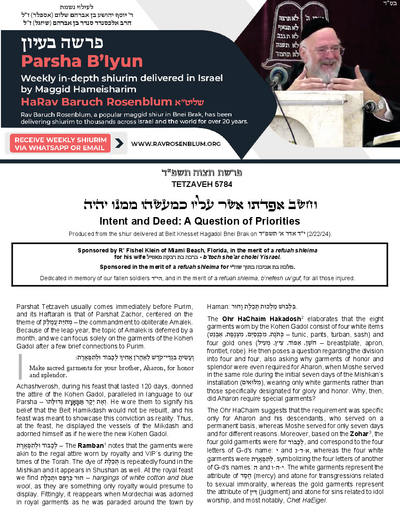

Parshat Tetzaveh usually comes immediately before Purim, and its Haftarah is that of Parshat Zachor, centered on the theme of מְחִיַת עֲמָלֵק – the commandment to obliterate Amalek. Because of the leap year, the topic of Amalek is deferred by a month, and we can focus solely on the garments of the Kohen Gadol after a few brief connections to Purim.

לְכָבוֹד וּלְתִפְאָרֶת׃
וְעָשִׂיתָ בִגְדֵי־קֹדֶשׁ לְאַהֲרֹן אָחִיךָ לְכָבוֹד וּלְתִפְאָרֶת
Make sacred garments for your brother, Aharon, for honor and splendor.

Achashverosh, during his feast that lasted 120 days, donned the attire of the Kohen Gadol, paralleled in language to our Parsha – גְּדוּלָּתוֹ וְתִפְאַרְתוֹ וְאֶת יְקָר. He wore them to signify his belief that the Beit Hamikdash would not be rebuilt, and his feast was meant to showcase this conviction as reality. Thus, at the feast, he displayed the vessels of the Mikdash and adorned himself as if he were the new Kohen Gadol.

לְכָבוֹד וּלְתִפְאֶרֶת – The Ramban notes that the garments were akin to the regal attire worn by royalty and VIP’s during the times of the Torah. The dye of תְּכֵלֶת is repeatedly found in the Mishkan and it appears in Shushan as well. At the royal feast we find כַּרְפַּס וּתְכֵלֶת חוּר – hangings of white cotton and blue wool, as they are something only royalty would presume to display. Fittingly, it reappears when Mordechai was adorned in royal garments as he was paraded around the town by Haman: בִּלְבוּשׁ מַלְכוּת תְּכֵלֶת וָחוּר.

The Ohr HaChaim Hakadosh elaborates that the eight garments worn by the Kohen Gadol consist of four white items (כֻּתֹּנֶת, מִכְנְסַיִם, מִצְנֶפֶת, אַבְנֵט – tunic, pants, turban, sash) and four gold ones (חֹשֶׁן, אֵפוֹד, צִיץ, מְעִיל – breastplate, apron, frontlet, robe). He then poses a question regarding the division into four and four, also asking why garments of honor and splendor were even required for Aharon, when Moshe served in the same role during the initial seven days of the Mishkan’s installation (מִלּוּאִים), wearing only white garments rather than those specifically designated for glory and honor. Why, then, did Aharon require special garments?

The Ohr HaChaim suggests that the requirement was specific only for Aharon and his descendants, who served on a permanent basis, whereas Moshe served for only seven days and for different reasons. Moreover, based on the Zohar, the four gold garments were for לְכָבוֹד, and correspond to the four letters of G-d's name: י and נ-ד-א, whereas the four white garments were לְתִפְאָרֶת, symbolizing the four letters of another of G-d's names: ה and ו-ה-י. The white garments represent the attribute of חֶסֶד (mercy) and atone for transgressions related to sexual immorality, whereas the gold garments represent the attribute of דִּין (judgment) and atone for sins related to idol worship, and most notably, Chet HaEigel.

PDF Preview