And Hashem Said to Moshe
מגדל אור | January 22, 2025
Print This Article
View Original PDF

And Hashem Said to Moshe

מגדל אור | June 27, 2025

“And Hashem said to Moshe, “See that I have made you an overlord to Pharaoh, and Aharon, your brother, will be your spokesman. (Shmos 7:1)

Hashem had chosen Moshe as His messenger and agent to take the Jews from Egypt. However, Moshe still was somewhat uncomfortable and not confident in his personal abilities. At the top of his list was the fact that he had a speech impediment.

As a partial answer to Moshe’s concerns, Hashem told him his brother Aharon, who could speak well, would accompany Moshe. Moshe would be the leader, and Aharon would serve as his prophet, assistant, and spokesman. In this way, Moshe would still carry out Hashem’s wishes, but his concerns that Pharaoh would not listen because of Moshe’s physical limitations were assuaged.

This appointment had another impact as well. The first three plagues were initiated by Aharon’s action, taken at Moshe’s command. Why didn’t Moshe perform them? The plague of blood and frogs required the water of the Nile to be struck with a staff. Similarly, the plague of lice began when the sand was struck.

Were Moshe to hit the water or the sand, it would be a denigration of the gratitude he had to feel for the water which saved him as a baby set afloat, and the sand that saved him when the Egyptian Moshe killed was buried in it. Therefore, he could not do these acts.

Had Pharaoh heard that Moshe could not strike the water or sand because he had hakaras hatov to them, he would have seen this as a sign of weakness. Perhaps he would have argued that Moshe and the Jews owed Pharoah and the Egyptians a debt of gratitude as well. (We do, but not the way they would have demanded it.)

However, now that Moshe had a “prophet,” it seemed that the reason he commanded Aharon to strike the water or sand was because Moshe couldn’t be bothered to do so. To Pharaoh, this was the more familiar behavior of a leader. They delegate and relieve themselves of responsibility. For example, during the famine some two hundred years earlier, Pharaoh told the people, “Go to Yosef, and do whatever he tells you.”

This was a more understandable perception for Pharaoh, and having Aharon there raised Moshe’s stature. Astounding how Moshe’s shortcoming led to a solution which did much more than Moshe even imagined. This is just a small insight into Hashem’s perfect orchestration of the world, so that all the details work out as part of a master plan better than anything we could have imagined ourselves.

The ‘baal agalah,’ the unlearned coach driver of a certain respected Rav, complained to his passenger that while the rabbi enjoyed great honor wherever they went, he was treated like a nobody. The Rav nodded sympathetically, and said, “What can we do?”

The driver suggested that at the next stop, they switch places. The rabbi, understanding his driver’s feelings, agreed. Before they entered the next town, the rabbi put on the leather coat and warm hat of the driver, and took the reins, while the driver donned the silk robe and rabbinic hat, and sat in the back. As they entered the town, a crowd formed and accompanied them to the home of the local Rav, singing and dancing with great joy.

When the ‘baal agalah’ alighted from the coach, he got to enjoy all the honor and prestige. But then, the rabbi of the town came forward and asked the visiting “rabbi” a question he’d been grappling with.

The newly-minted “rabbi,” snorted. “Ha! Such a simple question. Even my wagon driver could answer that!” And with that, he directed his “driver” to respond to the town’s Rav.

©2025 – J. Gewirtz
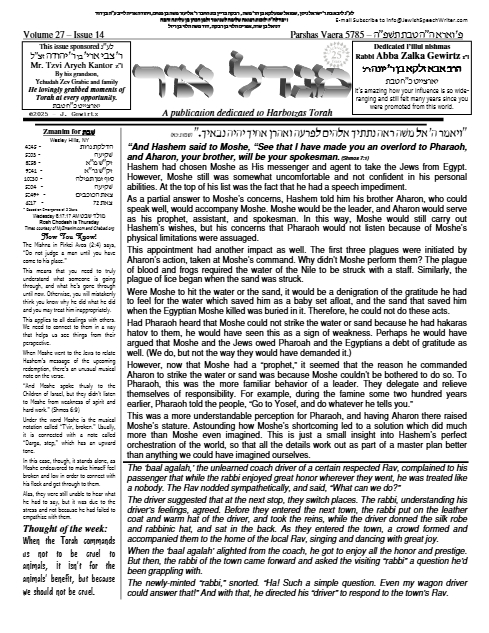
“And Hashem said to Moshe, “See that I have made you an overlord to Pharaoh, and Aharon, your brother, will be your spokesman. (Shmos 7:1)

Hashem had chosen Moshe as His messenger and agent to take the Jews from Egypt. However, Moshe still was somewhat uncomfortable and not confident in his personal abilities. At the top of his list was the fact that he had a speech impediment.

As a partial answer to Moshe’s concerns, Hashem told him his brother Aharon, who could speak well, would accompany Moshe. Moshe would be the leader, and Aharon would serve as his prophet, assistant, and spokesman. In this way, Moshe would still carry out Hashem’s wishes, but his concerns that Pharaoh would not listen because of Moshe’s physical limitations were assuaged.

This appointment had another impact as well. The first three plagues were initiated by Aharon’s action, taken at Moshe’s command. Why didn’t Moshe perform them? The plague of blood and frogs required the water of the Nile to be struck with a staff. Similarly, the plague of lice began when the sand was struck.

Were Moshe to hit the water or the sand, it would be a denigration of the gratitude he had to feel for the water which saved him as a baby set afloat, and the sand that saved him when the Egyptian Moshe killed was buried in it. Therefore, he could not do these acts.

Had Pharaoh heard that Moshe could not strike the water or sand because he had hakaras hatov to them, he would have seen this as a sign of weakness. Perhaps he would have argued that Moshe and the Jews owed Pharoah and the Egyptians a debt of gratitude as well. (We do, but not the way they would have demanded it.)

However, now that Moshe had a “prophet,” it seemed that the reason he commanded Aharon to strike the water or sand was because Moshe couldn’t be bothered to do so. To Pharaoh, this was the more familiar behavior of a leader. They delegate and relieve themselves of responsibility. For example, during the famine some two hundred years earlier, Pharaoh told the people, “Go to Yosef, and do whatever he tells you.”

This was a more understandable perception for Pharaoh, and having Aharon there raised Moshe’s stature. Astounding how Moshe’s shortcoming led to a solution which did much more than Moshe even imagined. This is just a small insight into Hashem’s perfect orchestration of the world, so that all the details work out as part of a master plan better than anything we could have imagined ourselves.

The ‘baal agalah,’ the unlearned coach driver of a certain respected Rav, complained to his passenger that while the rabbi enjoyed great honor wherever they went, he was treated like a nobody. The Rav nodded sympathetically, and said, “What can we do?”

The driver suggested that at the next stop, they switch places. The rabbi, understanding his driver’s feelings, agreed. Before they entered the next town, the rabbi put on the leather coat and warm hat of the driver, and took the reins, while the driver donned the silk robe and rabbinic hat, and sat in the back. As they entered the town, a crowd formed and accompanied them to the home of the local Rav, singing and dancing with great joy.

When the ‘baal agalah’ alighted from the coach, he got to enjoy all the honor and prestige. But then, the rabbi of the town came forward and asked the visiting “rabbi” a question he’d been grappling with.

The newly-minted “rabbi,” snorted. “Ha! Such a simple question. Even my wagon driver could answer that!” And with that, he directed his “driver” to respond to the town’s Rav.

©2025 – J. Gewirtz

PDF Preview