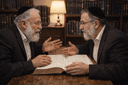
Eighteen Berachos Were Instituted in Shemoneh Esrei Corresponding to the Eighteen Times Moshe and Aharon Are Mentioned Together in the Torah
Shvilei Pinchas | January 10, 2024
Print This Article
View Original PDF

Eighteen Berachos Were Instituted in Shemoneh Esrei Corresponding to the Eighteen Times Moshe and Aharon Are Mentioned Together in the Torah

Shvilei Pinchas | December 10, 2025

In this week’s parsha, parshas Bo, I would like to focus on the choice of HKB”H to send the two exemplary, holy brothers—Moshe and Aharon—on His mission to manage and carry out the exodus of Yisrael from Mitzrayim. Furthermore, the Torah teaches us that Moshe and Aharon were equivalent in importance and status. Here is a pertinent passuk (Shemos 6, 26): "הוא אהרן ומשה אשר אמר ה' להם הוציאו את בני ישראל מארץ מצרים על צבאותם, הם המדברים אל פרעה מלך מצרים להוציא את בני ישראל ממצרים הוא משה ואהרן". This is Aharon and Moshe to whom Hashem said: “Take Bnei Yisrael out of Mitzrayim according to their legions.” They are the ones who spoke to Pharaoh, King of Mitzrayim, to take Bnei Yisrael out of Mitzrayim; this is Moshe and Aharon.

Note that initially, the text mentions Aharon first: “This is Aharon and Moshe.” Yet, it concludes by saying: “This is Moshe and Aharon”—mentioning Moshe first. Rashi comments: There are places where it (the Torah) places Aharon before Moshe, and there are places where it puts Moshe before Aharon, to indicate that they are equivalent. What does knowing that Moshe and Aharon were equivalent teach us? Furthermore, we have an explicit passuk that seems to contradict this fact (Devarim 34, 10): "ולא קם נביא עוד בישראל כמשה אשר ידעו ה' פנים אל פנים"—never again has there arisen in Yisrael a navi like Moshe, whom Hashem had known face to face. This passuk suggests that Moshe was superior to Aharon.

Additionally, it behooves us to consider a fascinating teaching from Chazal: They instituted that we pray Shemoneh Esrei three times a day—Shacharis, Minchah, and Ma’ariv; this tefilah contains eighteen Berachos (excluding “la’malshinim,” which was added afterwards) corresponding to the eighteen times Moshe and Aharon are mentioned together in the Torah. Here is the pertinent Midrash (Bamidbar Rabbah 2, 1): “Hashem spoke to Moshe and Aharon, saying.” In eighteen places (in the Torah), you find Moshe and Aharon addressed as equals corresponding to the eighteen Berachos . . . In eighteen places, Moshe and Aharon are united (addressed jointly by Hashem), alluding to the eighteen Berachos. We will endeavor to explain the deeper significance of this association—the eighteen original Berachos of Shemoneh Esrei and the eighteen times Moshe and Aharon are addressed together as one in the Torah.

Galus Mitzrayim Was Designed to Cleanse Yisrael of the Contamination of the Nachash

We will begin to shed some light on the subject by considering why HKB”H saw fit to subject Yisrael to the difficult servitude and ordeal of galus Mitzrayim. What was their sin? What were they guilty of? The Alshich hakadosh (Shemos) teaches us that the purpose of galus Mitzrayim was to purify Yisrael and cleanse them of the contamination of the “nachash hakadmoni”—the primeval serpent in Gan Eden. It infected all creatures with its perversion by means of the “cheit Eitz HaDa’as.” Until Yisrael were cleansed of this contamination, they were not worthy or capable of receiving the Torah. Therefore, HKB”H subjected them to the hardships and suffering of galus Mitzrayim to purify them, so that they would be worthy to receive the Torah.

The Alshich hakadosh substantiates this assertion by referring to the following passuk (ibid. 4, 20): "ואתכם לקח ה' ויוציא אתכם מכור הברזל ממצרים להיות לו לעם נחלה כיום הזה"—but Hashem has taken you and withdrawn you from the “iron crucible,” from Mitzrayim, to be a nation of heritage for Him, as this very day. Rashi explains that an “iron crucible” (״כור הברזל״) is a vessel in which they refine gold. In other words, just like the impurities adherent to the gold need to be removed by means of melting in an iron crucible; so, too, it was necessary to purify and refine the neshamos of Yisrael from their adherent impurities, by means of the suffering and hard labor in Mitzrayim. This was necessary to prepare them for receiving the Torah, as implied by the conclusion of the passuk: “To be a nation of heritage for Him, as this very day.”

In this manner, the Alshich hakadosh interprets the pronouncement HKB”H makes to Avraham Avinu at the Bris bein HaBesarim (Bereishis 15, 13): "ידוע תדע כי גר יהיה זרעך בארץ לא להם ועבדום וענו אותם ארבע מאות שנה"—know with certainty that your offspring shall be sojourners in a land not their own, they will enslave them, and they will oppress them four hundred years—to refine them of the contamination the nachash introduced into all of creation; "וגם את הגוי אשר יעבודו דן אנכי ואחרי כן יצאו ברכוש גדול"—and also the nation that will enslave them, I shall judge, and afterwards they shall leave with great possessions—this refers to the great wealth inherent in Torah she’b’chsav and Torah she’b’al peh, which they will merit receiving as a result of this arduous purification process they will endure in Mitzrayim. This is the gist of his magnificent explanation.

Galus Mitzrayim Was a Tikun for Both the “Cheit Eitz HaDa’as” and “Mechiras Yosef”

Now, we should point out that the sacred words of the Alshich are based on the teachings of our illustrious teacher, the Arizal (Sha’ar HaPesukim, Shemos). The Arizal teaches us that all of the neshamos of Bnei Yisrael who were subjected to the suffering and hardships of galus Mitzrayim were originally contained within Adam HaRishon when he committed the “cheit Eitz HaDa’as.” To achieve their tikun, they had to go through a refining process of several gilgulim until they were completely free of the infectious contamination of the nachash.

Initially, they reincarnated into the generation of the mabul; however, the evil effects of the nachash still clung to them; consequently, they became extremely corrupt and depraved. Their second reincarnation was into the generation of the dispersion—“dor hapelagah.” Unfortunately, they still behaved wickedly and failed to rectify their impaired, flawed natures. This is evident from the passuk (ibid. 11, 5): "וירד ה' לראות את העיר ואת המגדל אשר בנו בני אדם"—Hashem descended to see the city and the tower which the sons of man (Adam) had built. This passuk emphasizes the fact that they were descendants of Adam (HaRishon). For, as the Arizal teaches us, they were actually part of Adam’s being and essence. Subsequently, they reincarnated a third time into the corrupt people of Sedom. Once again, they did not mend their ways and their inherent flaws. They remained wicked and corrupt, as attested to by the passuk (ibid. 13, 13): "ואנשי סדום רעים וחטאים לה' מאד"—and the people of Sedom were exceedingly wicked and sinful to Hashem.

After failing miserably three times to achieve their tikun—in the generations of the mabul, the dispersion, and Sedom—they reincarnated a fourth time into Bnei Yisrael in Mitzrayim. Due to their suffering and harsh servitude, they were finally cleansed and worthy of receiving the Torah. Corresponding to the generation that was wiped out by the mabul, Pharaoh decreed (Shemos 1, 22): "כל הבן הילוד היאורה תשליכוהו"—every male child that will be born, you shall throw him into the river. Regarding the sins they committed during the generation of the dispersion, it states (Bereishis 11, 3): "ויאמרו איש אל רעהו הבה נלבנה לבנים ונשרפה לשרפה, ותהי להם הלבנה לאבן והחמר היה להם לחומר"—each man said to his fellow, “Come, let us make bricks and burn them in fire.” And the brick served them as stone, and the bitumen served them as plaster. They attempted to ascend to the heavens, deny Hashem’s sovereignty, and wage war against Him. Consequently, they were punished correspondingly in Mitzrayim (Shemos 1, 10): "הבה נתחכמה לו... וימררו את חייהם בעבודה קשה בחומר ובלבנים"—come, let us act wisely toward them. . . They embittered their lives with hard work, with mortar and with bricks. Corresponding to the building of the city and the tower in that previous reincarnation, they were also punished accordingly in Mitzrayim (ibid. 11): "ויבן ערי מסכנות לפרעה את פיתום ואת רעמסס"—they built storage cities for Pharaoh, Pitom and Raamses.

Thus, it is clear from the teachings of the Arizal that all of the neshamos that were in Mitzrayim were involved in the “cheit Eitz HaDa’as.” Accordingly, when the “nachash hakadmoni” infected Adam and Chava with its vileness and perversion, it infected, in effect, all of the neshamos that were incorporated within their beings. Clearly, this coincides magnificently with the explanation of the Alshich hakadosh—that the purpose of the galus in Mitzrayim was to rid the holy nation that had reincarnated into Mitzrayim of the corrupt influence of the nachash.

Now, our blessed sages teach us that there was an additional reason for galus Mitzrayim—namely, the sin of “mechiras Yosef.” As we have learned in the Gemara (Shabbas 10b): "לעולם אל ישנה אדם בנו בין הבנים, שהרי בשביל משקל שני סלעים מילת שנתן יעקב ליוסף יותר משאר בניו נתקנאו בו אחיו, ונתגלגל הדבר וירדו אבותינו למצרים". A person should never treat one son differently than his other sons; for on account of two selas weight of fine wool that Yaakov gave Yosef in excess of his other sons (the “Kestones passim,” striped tunic), his brothers became jealous of him, and the matter evolved such that our forefathers descended to Mitzrayim.

Tosafos (ibid.) write that even though the galus was already decreed at the Bris bein HaBesarim (Bereishis 15, 13): "ועבדום וענו אותם ארבע מאות שנה"—they will enslave them, and they will oppress them four hundred years; nevertheless, if not for the sin of “mechiras Yosef,” they would not have been subjected to such extreme torture. This is taught explicitly in the Midrash (Yalkut Shimoni Tehillim, Mizmor 10, 648): HKB”H said to the shevatim, “You sold Yosef into slavery. By your lives, you will recite annually: “We were slaves to Pharaoh in Mitzrayim.”

Thus, we can conclude that galus Mitzrayim came to atone for two categories of sins. Firstly, it atoned for the sin of partaking from the Eitz HaDa’as, which was a sin between man and G-d—“bein adam laMakom.” For, HKB”H had warned Adam HaRishon and all of the neshamos within him (Bereishis 2, 17): "ומעץ הדעת טוב ורע לא תאכל ממנו כי ביום אכלך ממנו מות תמות"—but of the Eitz HaDa’as Tov VaRa, you must not eat thereof, for on the day you eat of it, you shall surely die. Secondly, it atoned for the sin of “mechiras Yosef, which was a sin between man and his fellow man—“bein adam l’chaveiro.” It resulted from the hatred the brothers bore towards Yosef, which led to his sale.

In this week’s parsha, parshas Bo, I would like to focus on the choice of HKB”H to send the two exemplary, holy brothers—Moshe and Aharon—on His mission to manage and carry out the exodus of Yisrael from Mitzrayim. Furthermore, the Torah teaches us that Moshe and Aharon were equivalent in importance and status. Here is a pertinent passuk (Shemos 6, 26): "הוא אהרן ומשה אשר אמר ה' להם הוציאו את בני ישראל מארץ מצרים על צבאותם, הם המדברים אל פרעה מלך מצרים להוציא את בני ישראל ממצרים הוא משה ואהרן". This is Aharon and Moshe to whom Hashem said: “Take Bnei Yisrael out of Mitzrayim according to their legions.” They are the ones who spoke to Pharaoh, King of Mitzrayim, to take Bnei Yisrael out of Mitzrayim; this is Moshe and Aharon.

Note that initially, the text mentions Aharon first: “This is Aharon and Moshe.” Yet, it concludes by saying: “This is Moshe and Aharon”—mentioning Moshe first. Rashi comments: There are places where it (the Torah) places Aharon before Moshe, and there are places where it puts Moshe before Aharon, to indicate that they are equivalent. What does knowing that Moshe and Aharon were equivalent teach us? Furthermore, we have an explicit passuk that seems to contradict this fact (Devarim 34, 10): "ולא קם נביא עוד בישראל כמשה אשר ידעו ה' פנים אל פנים"—never again has there arisen in Yisrael a navi like Moshe, whom Hashem had known face to face. This passuk suggests that Moshe was superior to Aharon.

Additionally, it behooves us to consider a fascinating teaching from Chazal: They instituted that we pray Shemoneh Esrei three times a day—Shacharis, Minchah, and Ma’ariv; this tefilah contains eighteen Berachos (excluding “la’malshinim,” which was added afterwards) corresponding to the eighteen times Moshe and Aharon are mentioned together in the Torah. Here is the pertinent Midrash (Bamidbar Rabbah 2, 1): “Hashem spoke to Moshe and Aharon, saying.” In eighteen places (in the Torah), you find Moshe and Aharon addressed as equals corresponding to the eighteen Berachos . . . In eighteen places, Moshe and Aharon are united (addressed jointly by Hashem), alluding to the eighteen Berachos. We will endeavor to explain the deeper significance of this association—the eighteen original Berachos of Shemoneh Esrei and the eighteen times Moshe and Aharon are addressed together as one in the Torah.

Galus Mitzrayim Was Designed to Cleanse Yisrael of the Contamination of the Nachash

We will begin to shed some light on the subject by considering why HKB”H saw fit to subject Yisrael to the difficult servitude and ordeal of galus Mitzrayim. What was their sin? What were they guilty of? The Alshich hakadosh (Shemos) teaches us that the purpose of galus Mitzrayim was to purify Yisrael and cleanse them of the contamination of the “nachash hakadmoni”—the primeval serpent in Gan Eden. It infected all creatures with its perversion by means of the “cheit Eitz HaDa’as.” Until Yisrael were cleansed of this contamination, they were not worthy or capable of receiving the Torah. Therefore, HKB”H subjected them to the hardships and suffering of galus Mitzrayim to purify them, so that they would be worthy to receive the Torah.

The Alshich hakadosh substantiates this assertion by referring to the following passuk (ibid. 4, 20): "ואתכם לקח ה' ויוציא אתכם מכור הברזל ממצרים להיות לו לעם נחלה כיום הזה"—but Hashem has taken you and withdrawn you from the “iron crucible,” from Mitzrayim, to be a nation of heritage for Him, as this very day. Rashi explains that an “iron crucible” (״כור הברזל״) is a vessel in which they refine gold. In other words, just like the impurities adherent to the gold need to be removed by means of melting in an iron crucible; so, too, it was necessary to purify and refine the neshamos of Yisrael from their adherent impurities, by means of the suffering and hard labor in Mitzrayim. This was necessary to prepare them for receiving the Torah, as implied by the conclusion of the passuk: “To be a nation of heritage for Him, as this very day.”

In this manner, the Alshich hakadosh interprets the pronouncement HKB”H makes to Avraham Avinu at the Bris bein HaBesarim (Bereishis 15, 13): "ידוע תדע כי גר יהיה זרעך בארץ לא להם ועבדום וענו אותם ארבע מאות שנה"—know with certainty that your offspring shall be sojourners in a land not their own, they will enslave them, and they will oppress them four hundred years—to refine them of the contamination the nachash introduced into all of creation; "וגם את הגוי אשר יעבודו דן אנכי ואחרי כן יצאו ברכוש גדול"—and also the nation that will enslave them, I shall judge, and afterwards they shall leave with great possessions—this refers to the great wealth inherent in Torah she’b’chsav and Torah she’b’al peh, which they will merit receiving as a result of this arduous purification process they will endure in Mitzrayim. This is the gist of his magnificent explanation.

Galus Mitzrayim Was a Tikun for Both the “Cheit Eitz HaDa’as” and “Mechiras Yosef”

Now, we should point out that the sacred words of the Alshich are based on the teachings of our illustrious teacher, the Arizal (Sha’ar HaPesukim, Shemos). The Arizal teaches us that all of the neshamos of Bnei Yisrael who were subjected to the suffering and hardships of galus Mitzrayim were originally contained within Adam HaRishon when he committed the “cheit Eitz HaDa’as.” To achieve their tikun, they had to go through a refining process of several gilgulim until they were completely free of the infectious contamination of the nachash.

Initially, they reincarnated into the generation of the mabul; however, the evil effects of the nachash still clung to them; consequently, they became extremely corrupt and depraved. Their second reincarnation was into the generation of the dispersion—“dor hapelagah.” Unfortunately, they still behaved wickedly and failed to rectify their impaired, flawed natures. This is evident from the passuk (ibid. 11, 5): "וירד ה' לראות את העיר ואת המגדל אשר בנו בני אדם"—Hashem descended to see the city and the tower which the sons of man (Adam) had built. This passuk emphasizes the fact that they were descendants of Adam (HaRishon). For, as the Arizal teaches us, they were actually part of Adam’s being and essence. Subsequently, they reincarnated a third time into the corrupt people of Sedom. Once again, they did not mend their ways and their inherent flaws. They remained wicked and corrupt, as attested to by the passuk (ibid. 13, 13): "ואנשי סדום רעים וחטאים לה' מאד"—and the people of Sedom were exceedingly wicked and sinful to Hashem.

After failing miserably three times to achieve their tikun—in the generations of the mabul, the dispersion, and Sedom—they reincarnated a fourth time into Bnei Yisrael in Mitzrayim. Due to their suffering and harsh servitude, they were finally cleansed and worthy of receiving the Torah. Corresponding to the generation that was wiped out by the mabul, Pharaoh decreed (Shemos 1, 22): "כל הבן הילוד היאורה תשליכוהו"—every male child that will be born, you shall throw him into the river. Regarding the sins they committed during the generation of the dispersion, it states (Bereishis 11, 3): "ויאמרו איש אל רעהו הבה נלבנה לבנים ונשרפה לשרפה, ותהי להם הלבנה לאבן והחמר היה להם לחומר"—each man said to his fellow, “Come, let us make bricks and burn them in fire.” And the brick served them as stone, and the bitumen served them as plaster. They attempted to ascend to the heavens, deny Hashem’s sovereignty, and wage war against Him. Consequently, they were punished correspondingly in Mitzrayim (Shemos 1, 10): "הבה נתחכמה לו... וימררו את חייהם בעבודה קשה בחומר ובלבנים"—come, let us act wisely toward them. . . They embittered their lives with hard work, with mortar and with bricks. Corresponding to the building of the city and the tower in that previous reincarnation, they were also punished accordingly in Mitzrayim (ibid. 11): "ויבן ערי מסכנות לפרעה את פיתום ואת רעמסס"—they built storage cities for Pharaoh, Pitom and Raamses.

Thus, it is clear from the teachings of the Arizal that all of the neshamos that were in Mitzrayim were involved in the “cheit Eitz HaDa’as.” Accordingly, when the “nachash hakadmoni” infected Adam and Chava with its vileness and perversion, it infected, in effect, all of the neshamos that were incorporated within their beings. Clearly, this coincides magnificently with the explanation of the Alshich hakadosh—that the purpose of the galus in Mitzrayim was to rid the holy nation that had reincarnated into Mitzrayim of the corrupt influence of the nachash.

Now, our blessed sages teach us that there was an additional reason for galus Mitzrayim—namely, the sin of “mechiras Yosef.” As we have learned in the Gemara (Shabbas 10b): "לעולם אל ישנה אדם בנו בין הבנים, שהרי בשביל משקל שני סלעים מילת שנתן יעקב ליוסף יותר משאר בניו נתקנאו בו אחיו, ונתגלגל הדבר וירדו אבותינו למצרים". A person should never treat one son differently than his other sons; for on account of two selas weight of fine wool that Yaakov gave Yosef in excess of his other sons (the “Kestones passim,” striped tunic), his brothers became jealous of him, and the matter evolved such that our forefathers descended to Mitzrayim.

Tosafos (ibid.) write that even though the galus was already decreed at the Bris bein HaBesarim (Bereishis 15, 13): "ועבדום וענו אותם ארבע מאות שנה"—they will enslave them, and they will oppress them four hundred years; nevertheless, if not for the sin of “mechiras Yosef,” they would not have been subjected to such extreme torture. This is taught explicitly in the Midrash (Yalkut Shimoni Tehillim, Mizmor 10, 648): HKB”H said to the shevatim, “You sold Yosef into slavery. By your lives, you will recite annually: “We were slaves to Pharaoh in Mitzrayim.”

Thus, we can conclude that galus Mitzrayim came to atone for two categories of sins. Firstly, it atoned for the sin of partaking from the Eitz HaDa’as, which was a sin between man and G-d—“bein adam laMakom.” For, HKB”H had warned Adam HaRishon and all of the neshamos within him (Bereishis 2, 17): "ומעץ הדעת טוב ורע לא תאכל ממנו כי ביום אכלך ממנו מות תמות"—but of the Eitz HaDa’as Tov VaRa, you must not eat thereof, for on the day you eat of it, you shall surely die. Secondly, it atoned for the sin of “mechiras Yosef, which was a sin between man and his fellow man—“bein adam l’chaveiro.” It resulted from the hatred the brothers bore towards Yosef, which led to his sale.

PDF Preview