Paroh’s Response
Parsha Pages | January 24, 2025
Print This Article
View Original PDF

Paroh’s Response

Parsha Pages | June 27, 2025

PAROH’S RESPONSE TO HASHEM

Prior to HaShem’s hardening the heart of Paroh, Paroh took many actions in response to the Jews indicating his true inclinations.

  1. “A new king” – Paroh “forgot” about Yosef and Yaacov
  2. He instituted multiple new decrees against the Jews leading in stages to servitude.
  3. To counter the possibility of the Jewish redeemer being born, Paroh decreed that all male Jewish babies be thrown into the river (opinions range from 10,000 to 600,000 babies were killed).

HaShem arranged for the redemption of the Jews and the punishment of Paroh and the Egyptians.

  1. Lack of gratitude lead to the “forgetting” of the Egyptian empire and leader.
  2. The Plagues were exacted against Egypt measure for measure for the actions of affliction against the Jews.
  3. Paroh ended up raising the Jewish redeemer in his own household after he own daughter saved him from drowning.

Did Paroh deserve these punishments?

To assist our understanding let us review the famous story brought in the Gemara:

Shabbos 119a: A certain man Yosef was known to cherish Shabbos יוסףַמוקירַשבת. Astrologers told a rich Nochri in his neighborhood that Yosef will assume all of his wealth. (Maharsha - Yosef already spent the amount of your wealth to honor Shabbos, and he will be paid back.) The Nochri attempted to avoid this outcome and sold all his possessions and bought a gem in order to keep close his wealth. He made a setting for it in his hat and put it there. When the Nochri was crossing a bridge; a wind blew his hat into the river. A fish ate the gem. The fish was caught on Erev Shabbos. People told the one who caught it to see if Yosef would buy it. He bought it for all the money he had. He found the gem inside. He sold it for gold coins that filled 13 attics. An elder stated, “He who borrows to honor Shabbos is paid back by Shabbos!”

The Gemara could have shortened the story and left out the discussion of the neighbor and only told the allegory of one being rewarded for honoring the Shabbos. What is the intention of the Gemara in telling us the side story of the non-Jewish neighbor?

Chaza”l is telling us that the concept that when Hashem makes a decree then no amount of labor to avert the decree will succeed. Even more, one’s actions to avert the decree will only succeed in hastening the decree to fulfillment. One may only avert the decree by Teshuvah and prayer to HaShem.

Thus, even though Yosef by honoring Shabbos with his money “earned” the reward of the money of his neighbor, the transaction may have occurred gradually, and even after the neighbor died. Further, if the neighbor had properly treated Yosef, he might have received new wealth replacing the current wealth being transferred to Yosef. However, the neighbor attempted to counter the decree and lost it all at one time.

Similarly, Paroh and the Egyptian people had a choice. Their land and prosperity were blessed by the presence of Yosef (and Yisrael). They had the option of continuing to treat the Jews properly for their stay in Egypt. If they had acted properly, the four hundred years would have been a continuing blessing for the Egyptians, even after the Jews left with the Egyptians’ temporary wealth.

Rather Paroh and the Egyptians choose to persecute the Jews. The result was that the Jews left early (before the full 400 years), plus emptying Egypt of money. Further, the land was destroyed for generations and all their animals were lost to them.

Thus, even when G-d "hardened his heart" and deprived Paroh of his free choice, this was only on the superficial level. Deep within, he still had the ability to choose. And since he did not exercise it properly, he deserved to be punished.

Why 13 volumes of gold coins? Rashi states this indicating multitude. Maharsha says 13 is an allusion to holiness, such at the 13 attributes, th year for a bar mitzvah, etc. Yosef Mokir Shabbos used to always purchase for Shabbos in units of 13 and thus, was so rewarded.
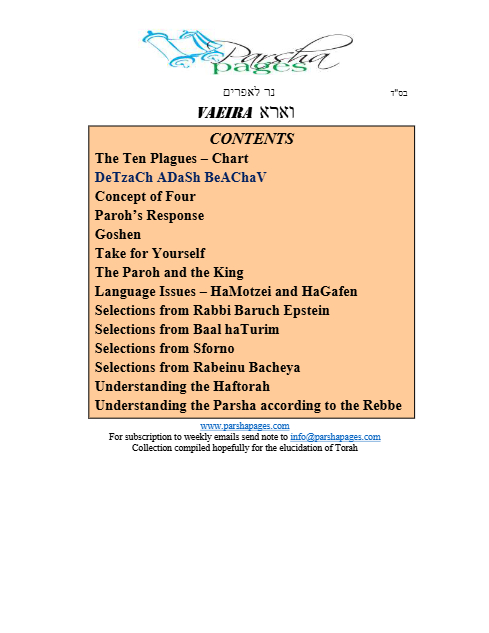

PAROH’S RESPONSE TO HASHEM

Prior to HaShem’s hardening the heart of Paroh, Paroh took many actions in response to the Jews indicating his true inclinations.

  1. “A new king” – Paroh “forgot” about Yosef and Yaacov
  2. He instituted multiple new decrees against the Jews leading in stages to servitude.
  3. To counter the possibility of the Jewish redeemer being born, Paroh decreed that all male Jewish babies be thrown into the river (opinions range from 10,000 to 600,000 babies were killed).

HaShem arranged for the redemption of the Jews and the punishment of Paroh and the Egyptians.

  1. Lack of gratitude lead to the “forgetting” of the Egyptian empire and leader.
  2. The Plagues were exacted against Egypt measure for measure for the actions of affliction against the Jews.
  3. Paroh ended up raising the Jewish redeemer in his own household after he own daughter saved him from drowning.

Did Paroh deserve these punishments?

To assist our understanding let us review the famous story brought in the Gemara:

Shabbos 119a: A certain man Yosef was known to cherish Shabbos יוסףַמוקירַשבת. Astrologers told a rich Nochri in his neighborhood that Yosef will assume all of his wealth. (Maharsha - Yosef already spent the amount of your wealth to honor Shabbos, and he will be paid back.) The Nochri attempted to avoid this outcome and sold all his possessions and bought a gem in order to keep close his wealth. He made a setting for it in his hat and put it there. When the Nochri was crossing a bridge; a wind blew his hat into the river. A fish ate the gem. The fish was caught on Erev Shabbos. People told the one who caught it to see if Yosef would buy it. He bought it for all the money he had. He found the gem inside. He sold it for gold coins that filled 13 attics. An elder stated, “He who borrows to honor Shabbos is paid back by Shabbos!”

The Gemara could have shortened the story and left out the discussion of the neighbor and only told the allegory of one being rewarded for honoring the Shabbos. What is the intention of the Gemara in telling us the side story of the non-Jewish neighbor?

Chaza”l is telling us that the concept that when Hashem makes a decree then no amount of labor to avert the decree will succeed. Even more, one’s actions to avert the decree will only succeed in hastening the decree to fulfillment. One may only avert the decree by Teshuvah and prayer to HaShem.

Thus, even though Yosef by honoring Shabbos with his money “earned” the reward of the money of his neighbor, the transaction may have occurred gradually, and even after the neighbor died. Further, if the neighbor had properly treated Yosef, he might have received new wealth replacing the current wealth being transferred to Yosef. However, the neighbor attempted to counter the decree and lost it all at one time.

Similarly, Paroh and the Egyptian people had a choice. Their land and prosperity were blessed by the presence of Yosef (and Yisrael). They had the option of continuing to treat the Jews properly for their stay in Egypt. If they had acted properly, the four hundred years would have been a continuing blessing for the Egyptians, even after the Jews left with the Egyptians’ temporary wealth.

Rather Paroh and the Egyptians choose to persecute the Jews. The result was that the Jews left early (before the full 400 years), plus emptying Egypt of money. Further, the land was destroyed for generations and all their animals were lost to them.

Thus, even when G-d "hardened his heart" and deprived Paroh of his free choice, this was only on the superficial level. Deep within, he still had the ability to choose. And since he did not exercise it properly, he deserved to be punished.

Why 13 volumes of gold coins? Rashi states this indicating multitude. Maharsha says 13 is an allusion to holiness, such at the 13 attributes, th year for a bar mitzvah, etc. Yosef Mokir Shabbos used to always purchase for Shabbos in units of 13 and thus, was so rewarded.

PDF Preview