The Spiritual Advantage of Blood Over Water
Brooklyn Torah Gazette | January 19, 2025
Print This Article
View Original PDF

The Spiritual Advantage of Blood Over Water

Brooklyn Torah Gazette | June 27, 2025

From the Teachings of the Lubavitcher Rebbe Rabbi Menachem Mendel Schneerson, Zt”l

One of the reasons the Exodus from Egypt is central in Judaism (to the point that we mention it every day in our prayers) is that aside from its historical significance, it represents an ongoing spiritual process on the individual level. "Mitzrayim," the Hebrew for Egypt, is derived from the word meaning straits or limitations. "Going out of Egypt" connotes freeing oneself from anything that prevents spiritual progress, for the purpose of allowing the G-dly soul to fully express itself.

This week's Torah portion, Va'eira, describes the very beginning of the Exodus from Egypt. It thus teaches us the "first step" on the road to true spiritual liberation.

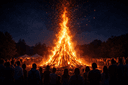
The first of the Ten Plagues was the plague of blood, in which all the water in Egypt was transformed into blood. Similarly, on the individual level, in order to free ourselves of spiritual constraints, we must also seek to turn "water" into "blood." Water is symbolic of coldness, stillness and lack of enthusiasm. By contrast, blood is symbolic of warmth, fervor and fiery passion. If you really want to "go out of Egypt," the Torah tells us, to overcome the fetters that restrict the soul, the first thing to do is abandon your apathy ("water") and replace it with warmth and enthusiasm ("blood").

A person might claim that it is possible to be a "good Jew" even if he is not particularly enthusiastic about Jewish observance. "I already do mitzvot," he might say. "Why should I get all excited over it?" However, the Torah teaches that coldness is the source of all evil. The true meaning of coldness is lack of interest, as demonstrated by the fact that when something truly interests us and "speaks to the heart," it is impossible to remain apathetic. If a person is "cold" toward Judaism, his actions will be dry and done by rote, even if they are technically flawless.

The key to liberating the Jewish soul, therefore, lies changing one's approach, banishing the cold and "turning up the thermostat" - learning Torah, doing mitzvot, praying, and serving G-d with eagerness and joy.

One practical way to implement this is by performing the mitzvot in the most beautiful manner possible. If a Jew's attitude is "chilly," he will be satisfied with the bare minimum. If, however, he is enthusiastic about his Divine service, he will try to observe mitzvot to the best of his ability, as he will be motivated by willingness and love rather than aiming for minimal compliance.

This, then, is the first step toward "going out of Egypt" on the individual level, which will ultimately culminate in macrocosm in the Final Redemption with Moshiach.

Reprinted from Parshat Va’eira 5762/2002 edition of L’Chaim, a publication of the Lubavitcher Youth Organization. Adapted from Volume 1 of Likutei Sichot

From the Teachings of the Lubavitcher Rebbe Rabbi Menachem Mendel Schneerson, Zt”l

One of the reasons the Exodus from Egypt is central in Judaism (to the point that we mention it every day in our prayers) is that aside from its historical significance, it represents an ongoing spiritual process on the individual level. "Mitzrayim," the Hebrew for Egypt, is derived from the word meaning straits or limitations. "Going out of Egypt" connotes freeing oneself from anything that prevents spiritual progress, for the purpose of allowing the G-dly soul to fully express itself.

This week's Torah portion, Va'eira, describes the very beginning of the Exodus from Egypt. It thus teaches us the "first step" on the road to true spiritual liberation.

The first of the Ten Plagues was the plague of blood, in which all the water in Egypt was transformed into blood. Similarly, on the individual level, in order to free ourselves of spiritual constraints, we must also seek to turn "water" into "blood." Water is symbolic of coldness, stillness and lack of enthusiasm. By contrast, blood is symbolic of warmth, fervor and fiery passion. If you really want to "go out of Egypt," the Torah tells us, to overcome the fetters that restrict the soul, the first thing to do is abandon your apathy ("water") and replace it with warmth and enthusiasm ("blood").

A person might claim that it is possible to be a "good Jew" even if he is not particularly enthusiastic about Jewish observance. "I already do mitzvot," he might say. "Why should I get all excited over it?" However, the Torah teaches that coldness is the source of all evil. The true meaning of coldness is lack of interest, as demonstrated by the fact that when something truly interests us and "speaks to the heart," it is impossible to remain apathetic. If a person is "cold" toward Judaism, his actions will be dry and done by rote, even if they are technically flawless.

The key to liberating the Jewish soul, therefore, lies changing one's approach, banishing the cold and "turning up the thermostat" - learning Torah, doing mitzvot, praying, and serving G-d with eagerness and joy.

One practical way to implement this is by performing the mitzvot in the most beautiful manner possible. If a Jew's attitude is "chilly," he will be satisfied with the bare minimum. If, however, he is enthusiastic about his Divine service, he will try to observe mitzvot to the best of his ability, as he will be motivated by willingness and love rather than aiming for minimal compliance.

This, then, is the first step toward "going out of Egypt" on the individual level, which will ultimately culminate in macrocosm in the Final Redemption with Moshiach.

Reprinted from Parshat Va’eira 5762/2002 edition of L’Chaim, a publication of the Lubavitcher Youth Organization. Adapted from Volume 1 of Likutei Sichot
PDF Preview