True Freedom
BET Journal | January 17, 2026
Print This Article
View Original PDF

True Freedom

BET Journal | January 20, 2026

G-d spoke to Moses and to Aaron, and He commanded them to the children of Israel, and to Pharaoh the king of Egypt, to let the children of Israel out of the land of Egypt.

G-d is charging Moses with two directives: command the people of Israel, and then command Pharaoh, the king. However, the verse is ambiguous: What did G-d command Moses to instruct the people? The message for Pharaoh is clear: Let the children of Israel out of Egypt. But what is it that Moses is supposed to command the people themselves?

The Jerusalem Talmud says something profoundly enigmatic:

G-d instructed Moses to command the Jewish people the laws of freeing slaves. The Talmud is referring to a law recorded later in Exodus: If a Jew sells himself as a slave, the owner must let him go after six years. He is forbidden to hold onto the slave for longer. This was the law Moses was to share with the Israelites while they were in Egyptian bondage.

But what does the commandment to the Jewish people that they free their slaves one day in the future have to do with the mission to Pharaoh to set the Hebrews free from bondage?

Who is free?

The answer to this question is simple and moving and is vital to the understanding of liberty in Judaism.

Before Pharaoh can liberate the Jewish slaves, they must be ready to become free. You can take a man out of slavery, but it may prove more challenging to take slavery out of a man. Externally, you may be free; internally, you may still be enslaved.

What is the first and foremost symptom of being free? That you learn to confer freedom upon others.

The dictator, the control freak, or the abusive spouse or parent does not know how to give others freedom. They feel compelled to force others into the mold that they have created for them. Uncomfortable in their own skin, they are afraid that someone will overshadow them, expose their weaknesses, usurp their position, or make them feel extra in this world. Outwardly, they attempt to appear powerful, but inwardly, their power is a symptom of inner misery, insecurity, and confinement.

When I do not confront the parts in me that are wounded, my animal-soul consciousness, which has developed myriads of coping mechanisms, emotions, drives, instincts, and belief systems to keep it safe and in control, will be running my inner operating system. Without even noticing it, I am trying to control the people around me through all types of creative and sometimes brilliant ways so that I can feel superficially safe and comfortable. My relationships and emotions are shaped by my internal wounds and terror—the need to survive in a scary and unsafe world.

In such a situation, how can I give up control? How can I celebrate otherness? How can I remain vulnerable, present, regulated, feeling your heartbeat with no agenda, when I need to put my heart on lockdown in order to survive or I need to control you?

I am simply not capable of truly celebrating another person’s life and individuality because I am desperate each moment for emotional oxygen; all I can think of is how to remain protected in a world that is dangerous. I may be aware of this, but I do feel the anxiety of manipulation.

Who is powerful? He who truly knows how to empower and trust. Who is free? He who can free others. Who is a leader? He who creates other leaders.

“Nearly all men can stand adversity, but if you want to test a man’s character, give him power,“ Abraham Lincoln said. Ask yourself: Do you know how to celebrate internally the presence and heartbeat of the other? Can you enjoy the soaring success of your loved ones and constituents? Do you encourage them to spread their wings and maximize their potential? Can you allow others to shine?

Pharaoh may set you free physically. But former slaves can become present tyrants. People who were abused sometimes become abusers themselves. It is what they know about life; it is the paradigm they were raised with. They grew up in abuse and slavery, so they continue the cycle with others.

The first mitzvah the Jews had to hear from Moses before even he could go to Pharaoh to let them go free was: One day you will be free. Remember that freedom is a gift; use it to free others.

As it turns out, this is a remarkable Talmudic insight. The first commandment ever given to the Jewish people was: Don’t internalize what the Egyptians have done to you. Find the spark of freedom, the inner Divine core, that no trauma can tarnish or paralyze. That part has remained free, and you will cherish conferring it upon others.

RABBI YY JACOBSON
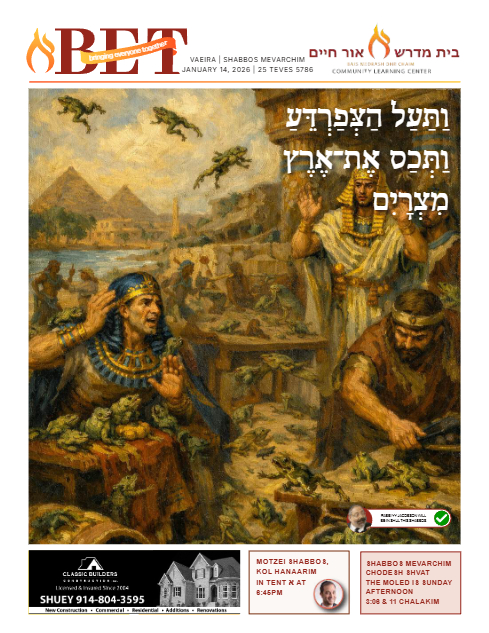
G-d spoke to Moses and to Aaron, and He commanded them to the children of Israel, and to Pharaoh the king of Egypt, to let the children of Israel out of the land of Egypt.

G-d is charging Moses with two directives: command the people of Israel, and then command Pharaoh, the king. However, the verse is ambiguous: What did G-d command Moses to instruct the people? The message for Pharaoh is clear: Let the children of Israel out of Egypt. But what is it that Moses is supposed to command the people themselves?

The Jerusalem Talmud says something profoundly enigmatic:

G-d instructed Moses to command the Jewish people the laws of freeing slaves. The Talmud is referring to a law recorded later in Exodus: If a Jew sells himself as a slave, the owner must let him go after six years. He is forbidden to hold onto the slave for longer. This was the law Moses was to share with the Israelites while they were in Egyptian bondage.

But what does the commandment to the Jewish people that they free their slaves one day in the future have to do with the mission to Pharaoh to set the Hebrews free from bondage?

Who is free?

The answer to this question is simple and moving and is vital to the understanding of liberty in Judaism.

Before Pharaoh can liberate the Jewish slaves, they must be ready to become free. You can take a man out of slavery, but it may prove more challenging to take slavery out of a man. Externally, you may be free; internally, you may still be enslaved.

What is the first and foremost symptom of being free? That you learn to confer freedom upon others.

The dictator, the control freak, or the abusive spouse or parent does not know how to give others freedom. They feel compelled to force others into the mold that they have created for them. Uncomfortable in their own skin, they are afraid that someone will overshadow them, expose their weaknesses, usurp their position, or make them feel extra in this world. Outwardly, they attempt to appear powerful, but inwardly, their power is a symptom of inner misery, insecurity, and confinement.

When I do not confront the parts in me that are wounded, my animal-soul consciousness, which has developed myriads of coping mechanisms, emotions, drives, instincts, and belief systems to keep it safe and in control, will be running my inner operating system. Without even noticing it, I am trying to control the people around me through all types of creative and sometimes brilliant ways so that I can feel superficially safe and comfortable. My relationships and emotions are shaped by my internal wounds and terror—the need to survive in a scary and unsafe world.

In such a situation, how can I give up control? How can I celebrate otherness? How can I remain vulnerable, present, regulated, feeling your heartbeat with no agenda, when I need to put my heart on lockdown in order to survive or I need to control you?

I am simply not capable of truly celebrating another person’s life and individuality because I am desperate each moment for emotional oxygen; all I can think of is how to remain protected in a world that is dangerous. I may be aware of this, but I do feel the anxiety of manipulation.

Who is powerful? He who truly knows how to empower and trust. Who is free? He who can free others. Who is a leader? He who creates other leaders.

“Nearly all men can stand adversity, but if you want to test a man’s character, give him power,“ Abraham Lincoln said. Ask yourself: Do you know how to celebrate internally the presence and heartbeat of the other? Can you enjoy the soaring success of your loved ones and constituents? Do you encourage them to spread their wings and maximize their potential? Can you allow others to shine?

Pharaoh may set you free physically. But former slaves can become present tyrants. People who were abused sometimes become abusers themselves. It is what they know about life; it is the paradigm they were raised with. They grew up in abuse and slavery, so they continue the cycle with others.

The first mitzvah the Jews had to hear from Moses before even he could go to Pharaoh to let them go free was: One day you will be free. Remember that freedom is a gift; use it to free others.

As it turns out, this is a remarkable Talmudic insight. The first commandment ever given to the Jewish people was: Don’t internalize what the Egyptians have done to you. Find the spark of freedom, the inner Divine core, that no trauma can tarnish or paralyze. That part has remained free, and you will cherish conferring it upon others.

RABBI YY JACOBSON

PDF Preview




