We Must Make Amends for Both Categories of Mitzvos before Davening Shemoneh Esrei
Shvilei Pinchas | January 10, 2024
Print This Article
View Original PDF

We Must Make Amends for Both Categories of Mitzvos before Davening Shemoneh Esrei

Shvilei Pinchas | December 10, 2025

It is with immense pleasure that I can now share with my beloved readers an explanation regarding our sages’ profound rationale for instituting eighteen Berachos in Shemoneh Esrei corresponding to the eighteen times Moshe and Aharon are addressed together by Hashem. We will begin by referring to the Gemara (Yevamos 105b): "המתפלל צריך שיתן עיניו למטה ולבו למעלה"—one who prays should direct his eyes downwards and his heart upwards. Let us propose an explanation for this directive. He should direct his eyes “downwards” to make amends for matters “bein adam l’chaveiro”; he should direct his heart “upwards” to make amends for matters “bein adam laMakom.”

The rationale for doing this is to perform teshuvah before beginning our tefilah. Just as teshuvah reaches the Kisei HaKavod, we will also merit having our tefilah ascend to the Kisei HaKavod. This is evident from what we have learned in the Mishnah (Berachos 30b): "אין עומדין להתפלל אלא מתוך כובד ראש"—one should not stand to pray (Shemoneh Esrei) except with an attitude of reverence. In Igeres HaTeshuvah (Chapter 10), the author of the Tanya explains:

Since prayer is an expression of “teshuvah ilaah,” the higher level of penitence, it must be preceded by “teshuvah tataah,” the lower level of penitence that is achieved by the contriteness of one’s heart.” This is what our blessed sages meant in the Mishnah: “One should not stand to pray except with an attitude of reverence.” Rashi explains this to mean “humility”. This is the state of “teshuvah tataah.”

Similarly, it is imperative to make amends for sins one has committed “bein adam l’chaveiro,” as explained by the Magen Avraham (O.C. 46) in the name of the Arizal in Sha’ar HaKavanos :

Before one organizes his thoughts and prepares to pray in the Beis Kenesses, it is imperative that he accept upon himself the mitzvah of “loving your fellow Jew as yourself.” Thus, one’s prayers will ascend and be included with the prayers of all of Yisrael; this ensures that they will ascend to the heavens and produce results. Especially when one is learning Torah with a group of friends, one should have in mind to love all of those participating together in Torah study, as if you are all limbs of a single body.

In a tefilah to be recited prior to one’s tefilah, Rabbi Elimelech of Lizhensk, zy”a, emphasized these two issues:

"וְאַל תִּזְכָּר לָנוּ חַטֹּאתֵינוּ וּבִפְרָט חַטֹּאת נְעוּרֵינוּ, כְּמַאֲמַר דָּוִד הַמֶּלֶךְ עָלָיו הַשָּׁלוֹם חַטֹּאת נְעוּרַי וּפְשָׁעַי אַל תִּזְכֹּר, וְתַהֲפֹךְ עֲוֹנוֹתֵינוּ וּפְשָׁעֵינוּ לִזְכוּת, וְתַשְׁפִּיעַ עָלֵינוּ מֵעוֹלָם הַתְּשׁוּבָה תָּמִיד הִרְהוּר לָשׁוּב אֵלֶיךָ בְּלֵב שָׁלֵם. וּלְתַקֵּן אֶת אֲשֶׁר פָּגַמְנוּ בִּשְׁמוֹתֶיךָ הַקְּדוֹשִׁים וְהַטְּהוֹרִים. וְתַצִּילֵנוּ מִקִּנְאַת אִישׁ מֵרֵעֵהוּ, וְלֹא יַעֲלֶה קִנְאַת אָדָם עַל לִבֵּנוּ, וְלֹא קִנְאָתֵנוּ עַל אֲחֵרִים, אַדְּרַבָּה, תֵּן בְּלִבֵּנוּ שֶׁנִּרְאֶה כָּל אֶחָד מַעֲלַת חֲבֵרֵינוּ וְלֹא חֶסְרוֹנָם, וְשֶׁנְּדַבֵּר כָּל אֶחָד אֶת חֲבֵרוֹ בַּדֶּרֶךְ הַיָּשָׁר וְהָרָצוּי לְפָנֶיךָ, וְאַל יַעֲלֶה שׁוּם שִֹנְאָה מֵאֶחָד עַל חֲבֵרוֹ חָלִילָה".

Do not remind us of our sins and especially the sins of our youth . . . and transform our iniquities and transgressions into merits and influence us constantly from the realm of teshuvah to contemplate returning to You wholeheartedly; and to correct what we impaired regarding Your sacred, pure names. Spare us from being envious of one another, so that our hearts do not envy other people, and they do not envy us. Inculcate in our hearts the attitude to see our fellows’ positive qualities and not their shortcomings; so that speak of others properly as per Your will; and one should not develop hatred for his fellow, chalilah!

In light of what we have learned, we can now suggest a reason for Chazal’s institution to pray the eighteen Berachos of Shemoneh Esrei in our synagogues corresponding to the eighteen times Moshe and Aharon are mentioned together. They are impressing upon us to combine the two attributes of Moshe and Aharon respectively in our tefilos—the kedushah of Moshe Rabeinu to perform teshuvah to make amends for our faults and wrongdoings “bein adam laMakom” and the kedushah of Aharon HaKohen to make amends for our faults and wrongdoings “bein adam l’chaveiro.”
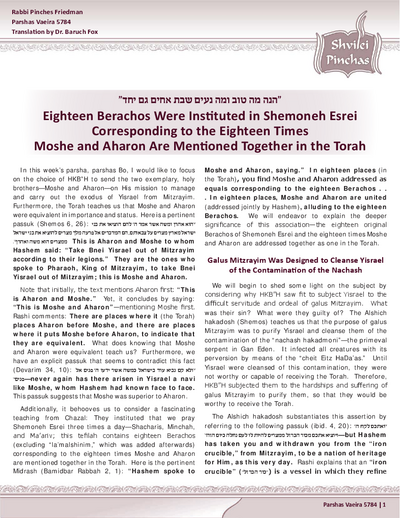
It is with immense pleasure that I can now share with my beloved readers an explanation regarding our sages’ profound rationale for instituting eighteen Berachos in Shemoneh Esrei corresponding to the eighteen times Moshe and Aharon are addressed together by Hashem. We will begin by referring to the Gemara (Yevamos 105b): "המתפלל צריך שיתן עיניו למטה ולבו למעלה"—one who prays should direct his eyes downwards and his heart upwards. Let us propose an explanation for this directive. He should direct his eyes “downwards” to make amends for matters “bein adam l’chaveiro”; he should direct his heart “upwards” to make amends for matters “bein adam laMakom.”

The rationale for doing this is to perform teshuvah before beginning our tefilah. Just as teshuvah reaches the Kisei HaKavod, we will also merit having our tefilah ascend to the Kisei HaKavod. This is evident from what we have learned in the Mishnah (Berachos 30b): "אין עומדין להתפלל אלא מתוך כובד ראש"—one should not stand to pray (Shemoneh Esrei) except with an attitude of reverence. In Igeres HaTeshuvah (Chapter 10), the author of the Tanya explains:

Since prayer is an expression of “teshuvah ilaah,” the higher level of penitence, it must be preceded by “teshuvah tataah,” the lower level of penitence that is achieved by the contriteness of one’s heart.” This is what our blessed sages meant in the Mishnah: “One should not stand to pray except with an attitude of reverence.” Rashi explains this to mean “humility”. This is the state of “teshuvah tataah.”

Similarly, it is imperative to make amends for sins one has committed “bein adam l’chaveiro,” as explained by the Magen Avraham (O.C. 46) in the name of the Arizal in Sha’ar HaKavanos :

Before one organizes his thoughts and prepares to pray in the Beis Kenesses, it is imperative that he accept upon himself the mitzvah of “loving your fellow Jew as yourself.” Thus, one’s prayers will ascend and be included with the prayers of all of Yisrael; this ensures that they will ascend to the heavens and produce results. Especially when one is learning Torah with a group of friends, one should have in mind to love all of those participating together in Torah study, as if you are all limbs of a single body.

In a tefilah to be recited prior to one’s tefilah, Rabbi Elimelech of Lizhensk, zy”a, emphasized these two issues:

"וְאַל תִּזְכָּר לָנוּ חַטֹּאתֵינוּ וּבִפְרָט חַטֹּאת נְעוּרֵינוּ, כְּמַאֲמַר דָּוִד הַמֶּלֶךְ עָלָיו הַשָּׁלוֹם חַטֹּאת נְעוּרַי וּפְשָׁעַי אַל תִּזְכֹּר, וְתַהֲפֹךְ עֲוֹנוֹתֵינוּ וּפְשָׁעֵינוּ לִזְכוּת, וְתַשְׁפִּיעַ עָלֵינוּ מֵעוֹלָם הַתְּשׁוּבָה תָּמִיד הִרְהוּר לָשׁוּב אֵלֶיךָ בְּלֵב שָׁלֵם. וּלְתַקֵּן אֶת אֲשֶׁר פָּגַמְנוּ בִּשְׁמוֹתֶיךָ הַקְּדוֹשִׁים וְהַטְּהוֹרִים. וְתַצִּילֵנוּ מִקִּנְאַת אִישׁ מֵרֵעֵהוּ, וְלֹא יַעֲלֶה קִנְאַת אָדָם עַל לִבֵּנוּ, וְלֹא קִנְאָתֵנוּ עַל אֲחֵרִים, אַדְּרַבָּה, תֵּן בְּלִבֵּנוּ שֶׁנִּרְאֶה כָּל אֶחָד מַעֲלַת חֲבֵרֵינוּ וְלֹא חֶסְרוֹנָם, וְשֶׁנְּדַבֵּר כָּל אֶחָד אֶת חֲבֵרוֹ בַּדֶּרֶךְ הַיָּשָׁר וְהָרָצוּי לְפָנֶיךָ, וְאַל יַעֲלֶה שׁוּם שִֹנְאָה מֵאֶחָד עַל חֲבֵרוֹ חָלִילָה".

Do not remind us of our sins and especially the sins of our youth . . . and transform our iniquities and transgressions into merits and influence us constantly from the realm of teshuvah to contemplate returning to You wholeheartedly; and to correct what we impaired regarding Your sacred, pure names. Spare us from being envious of one another, so that our hearts do not envy other people, and they do not envy us. Inculcate in our hearts the attitude to see our fellows’ positive qualities and not their shortcomings; so that speak of others properly as per Your will; and one should not develop hatred for his fellow, chalilah!

In light of what we have learned, we can now suggest a reason for Chazal’s institution to pray the eighteen Berachos of Shemoneh Esrei in our synagogues corresponding to the eighteen times Moshe and Aharon are mentioned together. They are impressing upon us to combine the two attributes of Moshe and Aharon respectively in our tefilos—the kedushah of Moshe Rabeinu to perform teshuvah to make amends for our faults and wrongdoings “bein adam laMakom” and the kedushah of Aharon HaKohen to make amends for our faults and wrongdoings “bein adam l’chaveiro.”

PDF Preview