A Short Vort - Va’eschanan
Print This Article
View Original PDF

A Short Vort - Va’eschanan

Michal Horowitz - Shiurim & Classes | July 19, 2026

Parshas Va'eschanan contains many of the foundational passages of our faith and practice of Torah and mitzvos. Among them are the Aseres Ha'Dibros, Krias Shema, the command to love Hashem, the obligation to teach Torah to our children, and the first appearance in the Torah of the question of the ben chacham, the wise son.

The Torah tells us: ּכִי יִׁשְאָלְָ בִנְָ מָחָר לֵאמֹר מָה הָעֵֹדת וְהַחֻּקִים וְהַּמִׁשְּפָטִים אֲׁשֶר צִּוָה ה' אֱֹלֵקינּו אֶתְכֶם - When your son asks you tomorrow, saying: "What are the testimonies, the statutes, and the laws that Hashem our G-d has commanded you?" (Devarim 6:20).

Does Moshe Rabbeinu actually mean ‘when your son asks you tomorrow’? Rashi notes: י־ִֽכּ יִׁשְאָֽלְָ בִנְָ מָחָר. יֵׁש מָחָר ׁשֶהּוא אַחַר זְמַן - there is a tomorrow which means ‘in the future.’ When, in the future, your son asks you about the laws of Pesach and the story of the Exodus, you must be prepared to enlighten, answer and educate him (Devarim 6:21-25).

At first glance, the placement in the Chumash of the wise son seems very surprising. The Torah already presented us with three other sons in Parshas Bo, the parsha of the Exodus itself, in Sefer Shemos.

The rasha, the wicked son, asks: מָה הָעֲבֹדָה הַזֹּאת לָכֶם - what is this labor to you? (Shemos 12:26). The tam, the simple son asks: מָה זֹּאת - what is this? (Shemos 13:14). And regarding the שאינו יודע לשאול - the child who does not know how to ask, the Torah instructs: וְהִגַּדְתָּ לְבִנְךָ, and you shall tell your son. (Shemos 13:8).

Why, then, is the wise son introduced only now, forty years later, as the Bnei Yisrael stand on the threshold of entering Eretz Yisrael?

Perhaps the Torah is teaching us a profound lesson about the very nature of wisdom. We often associate wisdom with having the right answers, offering insightful comments, or asking sophisticated questions. Yet genuine wisdom begins with something else entirely: the willingness to listen before speaking.

In fact, when Hashem offers to grant King Shlomo any request, Shlomo does not ask for wealth, or fame, or any other talent that may be useful. Rather, he requests of G-d: וְנָתַּתָ֨ לְעַבְּדְָ֜ לֵ֚ב ׁשֹמֵ֙עַ֙ לִׁשְּפֹ֣ט אֶֽת־עַּמְָ֔ לְהָבִ֖ין ּבֵֽין־טֹ֣וב לְָר֑ע - And You shall grant Your servant a listening heart to judge Your people, that I may discern between good and bad (Melachim I 3:9).

King Shlomo understands that the root of all wisdom is the ability to hear, to listen, to discern, to contemplate, to think, to analyze... and only then to question and ask what is still not understood.

In regard to our parsha, the wise son has spent forty years learning. He has listened to Moshe Rabbeinu teach Torah. He has witnessed the nation's triumphs and failures. He has observed the consequences of faith and of doubt, of obedience and of rebellion. He has matured through the experiences of the wilderness. Only now, after years of listening, observing, reflecting, and growing, does he ask his question.

His wisdom lies not only in what he asks, but in when he asks.

This idea is beautifully reflected in Pirkei Avos. The Mishnah teaches that one of the defining characteristics of a wise person is: אֵינֹו מְַדּבֵר לִפְנֵי מִי ׁשֶּגָדֹול מִּמֶּנּו ּבְחָכְמָה - A wise person does not speak before one who is greater than he in wisdom (Avos 5:7).

The Mishnah does not define wisdom primarily by eloquence or brilliance. Rather, it defines wisdom by humility. A truly wise person recognizes that there is always someone from whom to learn. He does not feel compelled to express an opinion immediately. He understands that listening is often the first step toward genuine understanding.

This lesson is especially relevant in our own generation. We live in a world that encourages immediate reactions. Opinions are formed instantly, shared instantly, and often defended before sufficient thought or understanding. The pressure to respond quickly can leave little room for careful listening, thoughtful reflection, or intellectual humility. Amazon Prime, the blue checks on a WhatsApp message, views on an IG reel or post, Instacart, Uber Eats - and the list goes on and on… Our world is one of little patience, an inability to listen, and the desire for immediate gratification in all matters.

The Torah presents us with a different model. The ben ha’chacham teaches us that growth takes time. Wisdom is cultivated through years of learning, careful observation, thoughtful reflection, and respect for those who came before us. The deepest questions often emerge only after a lifetime of listening.

Perhaps this is why the ben chacham appears specifically in Sefer Devarim. As Moshe prepares to leave this world, he does not seek students who merely hear his words. He seeks disciples who have internalized them. After forty years of Torah, the wise son is finally ready - not because he knows everything, but because he has learned how to listen, and how to ask.

May we merit to become true students of Torah. May we cultivate the humility to listen before we speak, the patience to grow before we judge, and the wisdom to recognize that every person can teach us something.

And in this merit, may our questions lead us to deeper understanding, stronger emunah, and ever greater closeness to Hashem.

בברכת בשורות טובות ושבת שלום
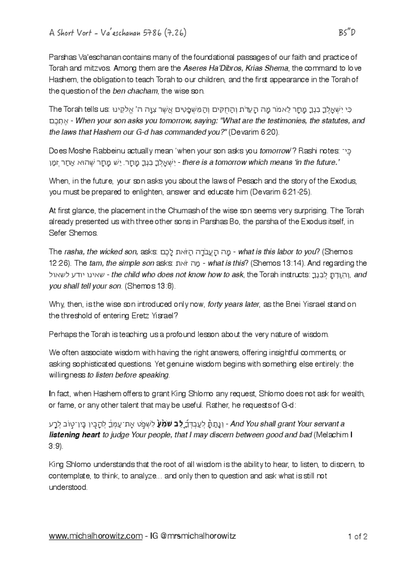
Parshas Va'eschanan contains many of the foundational passages of our faith and practice of Torah and mitzvos. Among them are the Aseres Ha'Dibros, Krias Shema, the command to love Hashem, the obligation to teach Torah to our children, and the first appearance in the Torah of the question of the ben chacham, the wise son.

The Torah tells us: ּכִי יִׁשְאָלְָ בִנְָ מָחָר לֵאמֹר מָה הָעֵֹדת וְהַחֻּקִים וְהַּמִׁשְּפָטִים אֲׁשֶר צִּוָה ה' אֱֹלֵקינּו אֶתְכֶם - When your son asks you tomorrow, saying: "What are the testimonies, the statutes, and the laws that Hashem our G-d has commanded you?" (Devarim 6:20).

Does Moshe Rabbeinu actually mean ‘when your son asks you tomorrow’? Rashi notes: י־ִֽכּ יִׁשְאָֽלְָ בִנְָ מָחָר. יֵׁש מָחָר ׁשֶהּוא אַחַר זְמַן - there is a tomorrow which means ‘in the future.’ When, in the future, your son asks you about the laws of Pesach and the story of the Exodus, you must be prepared to enlighten, answer and educate him (Devarim 6:21-25).

At first glance, the placement in the Chumash of the wise son seems very surprising. The Torah already presented us with three other sons in Parshas Bo, the parsha of the Exodus itself, in Sefer Shemos.

The rasha, the wicked son, asks: מָה הָעֲבֹדָה הַזֹּאת לָכֶם - what is this labor to you? (Shemos 12:26). The tam, the simple son asks: מָה זֹּאת - what is this? (Shemos 13:14). And regarding the שאינו יודע לשאול - the child who does not know how to ask, the Torah instructs: וְהִגַּדְתָּ לְבִנְךָ, and you shall tell your son. (Shemos 13:8).

Why, then, is the wise son introduced only now, forty years later, as the Bnei Yisrael stand on the threshold of entering Eretz Yisrael?

Perhaps the Torah is teaching us a profound lesson about the very nature of wisdom. We often associate wisdom with having the right answers, offering insightful comments, or asking sophisticated questions. Yet genuine wisdom begins with something else entirely: the willingness to listen before speaking.

In fact, when Hashem offers to grant King Shlomo any request, Shlomo does not ask for wealth, or fame, or any other talent that may be useful. Rather, he requests of G-d: וְנָתַּתָ֨ לְעַבְּדְָ֜ לֵ֚ב ׁשֹמֵ֙עַ֙ לִׁשְּפֹ֣ט אֶֽת־עַּמְָ֔ לְהָבִ֖ין ּבֵֽין־טֹ֣וב לְָר֑ע - And You shall grant Your servant a listening heart to judge Your people, that I may discern between good and bad (Melachim I 3:9).

King Shlomo understands that the root of all wisdom is the ability to hear, to listen, to discern, to contemplate, to think, to analyze... and only then to question and ask what is still not understood.

In regard to our parsha, the wise son has spent forty years learning. He has listened to Moshe Rabbeinu teach Torah. He has witnessed the nation's triumphs and failures. He has observed the consequences of faith and of doubt, of obedience and of rebellion. He has matured through the experiences of the wilderness. Only now, after years of listening, observing, reflecting, and growing, does he ask his question.

His wisdom lies not only in what he asks, but in when he asks.

This idea is beautifully reflected in Pirkei Avos. The Mishnah teaches that one of the defining characteristics of a wise person is: אֵינֹו מְַדּבֵר לִפְנֵי מִי ׁשֶּגָדֹול מִּמֶּנּו ּבְחָכְמָה - A wise person does not speak before one who is greater than he in wisdom (Avos 5:7).

The Mishnah does not define wisdom primarily by eloquence or brilliance. Rather, it defines wisdom by humility. A truly wise person recognizes that there is always someone from whom to learn. He does not feel compelled to express an opinion immediately. He understands that listening is often the first step toward genuine understanding.

This lesson is especially relevant in our own generation. We live in a world that encourages immediate reactions. Opinions are formed instantly, shared instantly, and often defended before sufficient thought or understanding. The pressure to respond quickly can leave little room for careful listening, thoughtful reflection, or intellectual humility. Amazon Prime, the blue checks on a WhatsApp message, views on an IG reel or post, Instacart, Uber Eats - and the list goes on and on… Our world is one of little patience, an inability to listen, and the desire for immediate gratification in all matters.

The Torah presents us with a different model. The ben ha’chacham teaches us that growth takes time. Wisdom is cultivated through years of learning, careful observation, thoughtful reflection, and respect for those who came before us. The deepest questions often emerge only after a lifetime of listening.

Perhaps this is why the ben chacham appears specifically in Sefer Devarim. As Moshe prepares to leave this world, he does not seek students who merely hear his words. He seeks disciples who have internalized them. After forty years of Torah, the wise son is finally ready - not because he knows everything, but because he has learned how to listen, and how to ask.

May we merit to become true students of Torah. May we cultivate the humility to listen before we speak, the patience to grow before we judge, and the wisdom to recognize that every person can teach us something.

And in this merit, may our questions lead us to deeper understanding, stronger emunah, and ever greater closeness to Hashem.

בברכת בשורות טובות ושבת שלום

PDF Preview