Story of the week By Yehuda Z Klitnick
Pardes Yehuda | August 07, 2025
Print This Article
View Original PDF

Story of the week By Yehuda Z Klitnick

Pardes Yehuda | December 10, 2025

Reb Zisha was punished because he didn’t listen to a Tzaddik

The Rebbe Reb Elimelech of Lizensk and his brother, Rebbe Reb Zusha of Honipoli, were talmidim of the Magid of Mezritch. After his passing b''lwz elqk hi the brothers commited themselves to go into exile for two years, as a way to elevate their Neshamos to a very high level. They disguised themselves as beggars. Toward the end of this period, they arrived in the city of Linsk, Poland, where the Rov was Harav Reb Menachem Mendel Horowitz, the father of Harav Naftali Tzvi of Ropshitz, author of Sefer Zera Kodesh. Reb Mendel gave them a coin as a donation. When they left his room, they noticed that the coin was a gold coin, of great value. They assumed that Reb Mendel had given it to them by mistake, instead of giving them a smaller coin of lesser value. So they returned to his room to give him back the coin. Reb Mendel said to them, “I did not make a mistake. I recognized who you were. But you should know that if I were to go into exile for two years as you two have done, I would have reached a higher level. When they heard that, they went an extra year in exile.

When they went into exile, they would often separate for Shabbos. Reb Elimelech would go to a rich man for Shabbos, so that he could honor the Shabbos properly. However, Reb Zusha would look to spend Shabbos by someone poor, someone who usually lived just outside of town. He often found hidden tzaddikim among these people. So every Erev Shabbos he would search for a poor person, someone he recognized as a hidden tzaddik, and he would stay by that man if possible.

One time, as they arrived in a town, Reb Zusha felt with his Ruach Hakoesh that a hidden tzaddik lived in a certain house. So he went there, and knocked on the door, and asked if he could stay there for Shabbos. The homeowner wasn’t at home at the time, so his wife said to Reb Zusha, “There is no room with us to stay overnight, and we don’t have enough food to offer either, because we are very poor.”

Reb Zusha didn’t give in. He said to her, “I will eat the food I brought with me, and I will sleep at the table.” He didn’t ask any more questions. He just put his small package down in the house. A short while later, the poor man, the homeowner, came home. He saw the guest, but he didn’t say a word to him. Shabbos came, and Reb Zusha ate the food he had brought with him. He waited, and watched the homeowner to see some sign of Avodas Hashem, and Kedusha, that would mark him as a hidden tzaddik. He had sensed that the man was a tzaddik, but he saw nothing on him to indicate it. The Shabbos basically passed that way.

However, after Reb Zusha davened Mincha, he set foot to the house to eat Shalosh Seudos, but, Reb Zusha suddenly saw that he suddenly was standing in a field unknown where he was. He became very sad, and broke down and cried. He had hoped to stay the entire Shabbos by that poor man, even though he could have stayed in the city in a normal house, and had regular Shabbos. But he wanted to be together with a tzaddik for Shabbos, especially for Shalosh Seudos which is a heilige time, but now, he had not done so, and he had accomplished nothing. He had no way of keeping the mitzvah of Shalosh Seudos here in the field, as he had no food and didn’t know where he was!

As he was standing there, thinking and crying, his eyes “opened.” He suddenly saw a cave. He entered the cave, and there he saw the Yid he had spent Shabbos with. He was sitting in the cave, wearing white clothes, at the head of a table full of hidden tzaddikim, learning Torah with them.

The Yid invited Reb Zusha to come and eat and sit with them. Reb Zusha had a tremendous uplifting from what he saw and heard there. When Shabbos was over, and he took leave, the hidden tzaddik warned him that he must be careful not to reveal to anyone at all what he had seen there, or he will face consequences. Reb Zusha agreed and they parted ways.

When he met with his brother Reb Elimelech, he immediately realized that Reb Zusha’s face was shining with aura, and he had a special Simchah. So he asked him, ‘What happened that was he so happy”? Reb Zusha, however, didn’t want to answer, as he promised not to tell. But Reb Elimelech nagged him a great deal, and finally Reb Zusha broke down and told him everything. Then they continued traveling. They came to a town, and they stayed in a hotel there. In the morning, after they set off traveling again, some people suddenly came after them in a wagon. A goy, a Poritz, had stayed in the same hotel they stayed in, and someone had stolen a wallet full of money from him. He suspected Reb Zusha of stealing it. He came with his servants to catch him and arrest him. They came straight up to Reb Zusha and cruelly grabbed him and tied him to their wagon, and drove off with him.

While they were driving the wagon back to the hotel, the Poritz met a friend, another Poritz. He asked our Poritz, “Why do you look so angry?” He answered, “Because the Yid who’s tied to my wagon stole my wallet.”

The other Poritz said to him, “Let me look at him.” He went and looked at Reb Zusha and thought about him. He then said to his friend, “I think you should free him. I looked at his face and I don’t see a thief. He doesn’t look like a thief.” And he had him freed. And then he went over to Reb Zusha and whispered in his ear, “I told you not to tell anyone!” Reb Zusha understood and apologized!

(Told by the Pshevorsker Rebbe in his sefer Yud-Gimel Oros.)
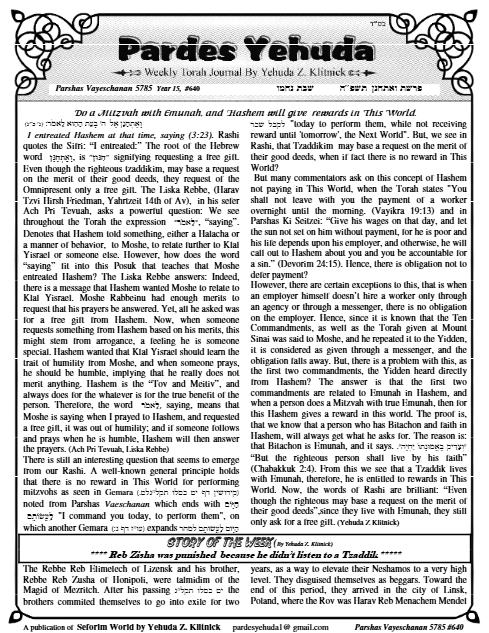
Reb Zisha was punished because he didn’t listen to a Tzaddik

The Rebbe Reb Elimelech of Lizensk and his brother, Rebbe Reb Zusha of Honipoli, were talmidim of the Magid of Mezritch. After his passing b''lwz elqk hi the brothers commited themselves to go into exile for two years, as a way to elevate their Neshamos to a very high level. They disguised themselves as beggars. Toward the end of this period, they arrived in the city of Linsk, Poland, where the Rov was Harav Reb Menachem Mendel Horowitz, the father of Harav Naftali Tzvi of Ropshitz, author of Sefer Zera Kodesh. Reb Mendel gave them a coin as a donation. When they left his room, they noticed that the coin was a gold coin, of great value. They assumed that Reb Mendel had given it to them by mistake, instead of giving them a smaller coin of lesser value. So they returned to his room to give him back the coin. Reb Mendel said to them, “I did not make a mistake. I recognized who you were. But you should know that if I were to go into exile for two years as you two have done, I would have reached a higher level. When they heard that, they went an extra year in exile.

When they went into exile, they would often separate for Shabbos. Reb Elimelech would go to a rich man for Shabbos, so that he could honor the Shabbos properly. However, Reb Zusha would look to spend Shabbos by someone poor, someone who usually lived just outside of town. He often found hidden tzaddikim among these people. So every Erev Shabbos he would search for a poor person, someone he recognized as a hidden tzaddik, and he would stay by that man if possible.

One time, as they arrived in a town, Reb Zusha felt with his Ruach Hakoesh that a hidden tzaddik lived in a certain house. So he went there, and knocked on the door, and asked if he could stay there for Shabbos. The homeowner wasn’t at home at the time, so his wife said to Reb Zusha, “There is no room with us to stay overnight, and we don’t have enough food to offer either, because we are very poor.”

Reb Zusha didn’t give in. He said to her, “I will eat the food I brought with me, and I will sleep at the table.” He didn’t ask any more questions. He just put his small package down in the house. A short while later, the poor man, the homeowner, came home. He saw the guest, but he didn’t say a word to him. Shabbos came, and Reb Zusha ate the food he had brought with him. He waited, and watched the homeowner to see some sign of Avodas Hashem, and Kedusha, that would mark him as a hidden tzaddik. He had sensed that the man was a tzaddik, but he saw nothing on him to indicate it. The Shabbos basically passed that way.

However, after Reb Zusha davened Mincha, he set foot to the house to eat Shalosh Seudos, but, Reb Zusha suddenly saw that he suddenly was standing in a field unknown where he was. He became very sad, and broke down and cried. He had hoped to stay the entire Shabbos by that poor man, even though he could have stayed in the city in a normal house, and had regular Shabbos. But he wanted to be together with a tzaddik for Shabbos, especially for Shalosh Seudos which is a heilige time, but now, he had not done so, and he had accomplished nothing. He had no way of keeping the mitzvah of Shalosh Seudos here in the field, as he had no food and didn’t know where he was!

As he was standing there, thinking and crying, his eyes “opened.” He suddenly saw a cave. He entered the cave, and there he saw the Yid he had spent Shabbos with. He was sitting in the cave, wearing white clothes, at the head of a table full of hidden tzaddikim, learning Torah with them.

The Yid invited Reb Zusha to come and eat and sit with them. Reb Zusha had a tremendous uplifting from what he saw and heard there. When Shabbos was over, and he took leave, the hidden tzaddik warned him that he must be careful not to reveal to anyone at all what he had seen there, or he will face consequences. Reb Zusha agreed and they parted ways.

When he met with his brother Reb Elimelech, he immediately realized that Reb Zusha’s face was shining with aura, and he had a special Simchah. So he asked him, ‘What happened that was he so happy”? Reb Zusha, however, didn’t want to answer, as he promised not to tell. But Reb Elimelech nagged him a great deal, and finally Reb Zusha broke down and told him everything. Then they continued traveling. They came to a town, and they stayed in a hotel there. In the morning, after they set off traveling again, some people suddenly came after them in a wagon. A goy, a Poritz, had stayed in the same hotel they stayed in, and someone had stolen a wallet full of money from him. He suspected Reb Zusha of stealing it. He came with his servants to catch him and arrest him. They came straight up to Reb Zusha and cruelly grabbed him and tied him to their wagon, and drove off with him.

While they were driving the wagon back to the hotel, the Poritz met a friend, another Poritz. He asked our Poritz, “Why do you look so angry?” He answered, “Because the Yid who’s tied to my wagon stole my wallet.”

The other Poritz said to him, “Let me look at him.” He went and looked at Reb Zusha and thought about him. He then said to his friend, “I think you should free him. I looked at his face and I don’t see a thief. He doesn’t look like a thief.” And he had him freed. And then he went over to Reb Zusha and whispered in his ear, “I told you not to tell anyone!” Reb Zusha understood and apologized!

(Told by the Pshevorsker Rebbe in his sefer Yud-Gimel Oros.)

PDF Preview