The Inner Meaning of Prayer and Its Connection to Merits
Print This Article
View Original PDF

The Inner Meaning of Prayer and Its Connection to Merits

הפצת המיינות חוצה | December 31, 2025

The inner meaning of all this is; according to the ‘Medrash Rabbah’ the actual term ‘וָאֶתְחַנַן ’ is one of the ten expressions of prayer. Prayer (the way it is supposed to be according to Torah) generally is in a manner in which it is connected with a person’s Avodah and his merits.

[Incidentally one of the translations of the expression ‘Tefillah’ comes from the word הַתּוֹפֵל meaning to connect, implying that there needs to be a connection and association between the person who is praying and the One to whom one is praying, (as in the connection that) Hashem is the craftsman who made you. It follows that (that connection gets intensified) when one has merits... (It is due to his merits that) he is suitable for his prayers to be answered. However, he is not to demand anything from Hakodosh Boruch Hu for then the request becomes contingent upon his deeds and achievements.

Hashem’s Kindness and the System of Reward

This is so because it is known that even the reward that Hashem does give is not because Hashem is obligated to give it. As the Possuk states: וּלְךָ־ה׳ חָסֶד כִי־אַתָּה תְשַלֵם לְאִיש כְמַעֲשֵהוּ “And You, Hashem, have ‘kindness’, for You repay a man according to his deed.” Even the payment for his deed is because of Hashem’s kindness.

[The reason why this is so, is because the whole system of Isarussa Dil’tatoh [and then] Isarussa Dil’eiloh is only in place because this is the way Hashem wants it to be. Even after Hashem has established the way it should work -that man’s Avodah should be the trigger- (because this is the will of Hashem blessed be He) and therefore this is how it actually is, all of this is still only due to HaShem’s kindness blessed be He].

Being that [this set up] is feasible it therefore becomes obligatory to pray to Hashem until one can pray in a manner of supplication as if he is asking for ‘Matnas Chinom’ from Hashem. (All of this occurs, despite the fact that it is not purely ‘Matnas Chinom’ because he has earned it through his Avodah and his merits).
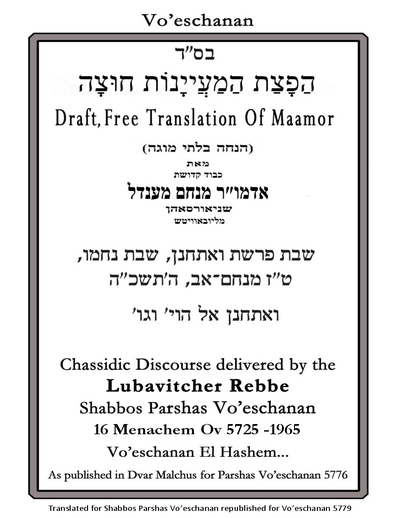
The inner meaning of all this is; according to the ‘Medrash Rabbah’ the actual term ‘וָאֶתְחַנַן ’ is one of the ten expressions of prayer. Prayer (the way it is supposed to be according to Torah) generally is in a manner in which it is connected with a person’s Avodah and his merits.

[Incidentally one of the translations of the expression ‘Tefillah’ comes from the word הַתּוֹפֵל meaning to connect, implying that there needs to be a connection and association between the person who is praying and the One to whom one is praying, (as in the connection that) Hashem is the craftsman who made you. It follows that (that connection gets intensified) when one has merits... (It is due to his merits that) he is suitable for his prayers to be answered. However, he is not to demand anything from Hakodosh Boruch Hu for then the request becomes contingent upon his deeds and achievements.

Hashem’s Kindness and the System of Reward

This is so because it is known that even the reward that Hashem does give is not because Hashem is obligated to give it. As the Possuk states: וּלְךָ־ה׳ חָסֶד כִי־אַתָּה תְשַלֵם לְאִיש כְמַעֲשֵהוּ “And You, Hashem, have ‘kindness’, for You repay a man according to his deed.” Even the payment for his deed is because of Hashem’s kindness.

[The reason why this is so, is because the whole system of Isarussa Dil’tatoh [and then] Isarussa Dil’eiloh is only in place because this is the way Hashem wants it to be. Even after Hashem has established the way it should work -that man’s Avodah should be the trigger- (because this is the will of Hashem blessed be He) and therefore this is how it actually is, all of this is still only due to HaShem’s kindness blessed be He].

Being that [this set up] is feasible it therefore becomes obligatory to pray to Hashem until one can pray in a manner of supplication as if he is asking for ‘Matnas Chinom’ from Hashem. (All of this occurs, despite the fact that it is not purely ‘Matnas Chinom’ because he has earned it through his Avodah and his merits).

PDF Preview