The Dual Nature of Azut and the Bronze Basin
Torah Papers | March 08, 2024
Print This Article
View Original PDF

The Dual Nature of Azut and the Bronze Basin

Torah Papers | June 27, 2025

That’s it for our introduction and we can now tie up our loose ends. The Shem Mishmuel says, there is an עַזּוּת of kedusha and an עַזּוּת of tumah. The Mishna in Avot teaches us to use this attribute of עַזּוּת in eliminating shame during the pursuit of mitzvot and avoidance of sin. That is the עַזּוּת of kedusha. That is שֶׁבַּשָּׁמַיִם לַעֲשׂוֹת רְצוֹן אָבִיךָ – bending to the will of our Father in Heaven.

The opposite, however, is עַזּוּת that leads us to Gehenom. Shem Mishmuel says, Korach and his entourage wanted the Kehuna – is that a good thing or bad? It’s a great thing! There was nothing wrong with that! But where did they stray? In their protest and in their methods. Have the desire and drive to elevate yourself spiritually, but do not cause conflict and strife in your pursuit of it. Where did Korach and company derive that attribute of עַזּוּת? It came from Yaacov Avinu. He was the father of עַזּוּת, and therefore their bronze pans were to sit on his מִזְבֵּחַ, serving as a constant reminder that there is נְחֹשֶׁת for both kedusha and tumah.

וַיַּעַשׂ אֵת הַכִּיּוֹר נְחֹשֶׁת וְאֵת כַּנּוֹ נְחֹשֶׁת בְּמַרְאֹת הַצֹבְאוֹת אֲשֶׁר צָבְאוּ פֶּתַח אֹהֶל מוֹעֵד׃
He made the basin out of bronze and its base out of bronze, from the mirrors of the women who had gathered at the entrance of the Tent of Meeting.

After all this, allow me to ask the very simple question: Why make the כִּיּוֹר out of נְחֹשֶׁת? Why with a reflective bronze from mirrors that represent עַזּוּת פָּנִים – brazenness? If the whole point of the מִזְבַּח הַנְּחֹשֶׁת is to atone for sins committed with עַזּוּת פָּנִים, how do you go and make the כִּיּוֹר out of that very same material?

Hakadosh Baruch Hu said, “Make the כִּיּוֹר out of נְחֹשֶׁת from the women.” Why? Because their נְחֹשֶׁת is that of kedusha! Their husbands were far away at the pyramids, buried in slave work, while the women dwelled in homes far away in Goshen. They didn’t see one another. Under those circumstances, how could they possibly produce legions of soldiers for the King of Kings in order to arrive at Har Sinai six hundred thousand strong?

The women endangered their lives to travel to Pitom and Raamses, dressed up and made up nicely, and they built huts to dwell in there all to answer those questions. They used their mirrors for the sake of kedusha and building an army that would serve Hakadosh Baruch Hu. From this exact holiness, the כִּיּוֹר needed to emerge. This is what Hakadosh Baruch Hu referred to as being חֲבִיבִין עָלַי מִן הַכֹּל – dearer to Me than all the other contributions (brought to the Mishkan).

May Hakadosh Baruch Hu bless us as we enter the month of Adar Sheini, that we merit greeting Mashiach Tzidkeinu and seeing the rebuilding of the Beit Hamikdash. ◊
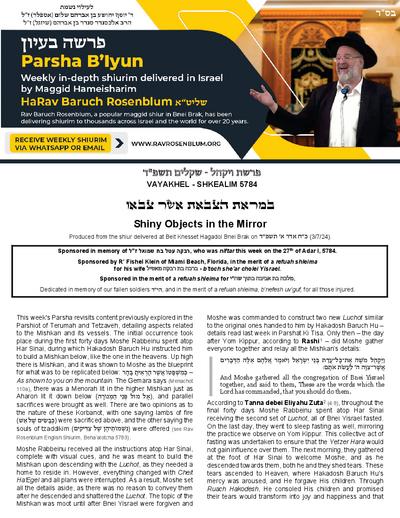
That’s it for our introduction and we can now tie up our loose ends. The Shem Mishmuel says, there is an עַזּוּת of kedusha and an עַזּוּת of tumah. The Mishna in Avot teaches us to use this attribute of עַזּוּת in eliminating shame during the pursuit of mitzvot and avoidance of sin. That is the עַזּוּת of kedusha. That is שֶׁבַּשָּׁמַיִם לַעֲשׂוֹת רְצוֹן אָבִיךָ – bending to the will of our Father in Heaven.

The opposite, however, is עַזּוּת that leads us to Gehenom. Shem Mishmuel says, Korach and his entourage wanted the Kehuna – is that a good thing or bad? It’s a great thing! There was nothing wrong with that! But where did they stray? In their protest and in their methods. Have the desire and drive to elevate yourself spiritually, but do not cause conflict and strife in your pursuit of it. Where did Korach and company derive that attribute of עַזּוּת? It came from Yaacov Avinu. He was the father of עַזּוּת, and therefore their bronze pans were to sit on his מִזְבֵּחַ, serving as a constant reminder that there is נְחֹשֶׁת for both kedusha and tumah.

וַיַּעַשׂ אֵת הַכִּיּוֹר נְחֹשֶׁת וְאֵת כַּנּוֹ נְחֹשֶׁת בְּמַרְאֹת הַצֹבְאוֹת אֲשֶׁר צָבְאוּ פֶּתַח אֹהֶל מוֹעֵד׃
He made the basin out of bronze and its base out of bronze, from the mirrors of the women who had gathered at the entrance of the Tent of Meeting.

After all this, allow me to ask the very simple question: Why make the כִּיּוֹר out of נְחֹשֶׁת? Why with a reflective bronze from mirrors that represent עַזּוּת פָּנִים – brazenness? If the whole point of the מִזְבַּח הַנְּחֹשֶׁת is to atone for sins committed with עַזּוּת פָּנִים, how do you go and make the כִּיּוֹר out of that very same material?

Hakadosh Baruch Hu said, “Make the כִּיּוֹר out of נְחֹשֶׁת from the women.” Why? Because their נְחֹשֶׁת is that of kedusha! Their husbands were far away at the pyramids, buried in slave work, while the women dwelled in homes far away in Goshen. They didn’t see one another. Under those circumstances, how could they possibly produce legions of soldiers for the King of Kings in order to arrive at Har Sinai six hundred thousand strong?

The women endangered their lives to travel to Pitom and Raamses, dressed up and made up nicely, and they built huts to dwell in there all to answer those questions. They used their mirrors for the sake of kedusha and building an army that would serve Hakadosh Baruch Hu. From this exact holiness, the כִּיּוֹר needed to emerge. This is what Hakadosh Baruch Hu referred to as being חֲבִיבִין עָלַי מִן הַכֹּל – dearer to Me than all the other contributions (brought to the Mishkan).

May Hakadosh Baruch Hu bless us as we enter the month of Adar Sheini, that we merit greeting Mashiach Tzidkeinu and seeing the rebuilding of the Beit Hamikdash. ◊

PDF Preview