Abrahams Menu
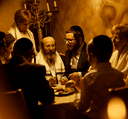
The Torah relates the meticulous order of the meal that Abraham offered his guests, recorded in the opening verses of this week's Torah portion Vayeira. First he gave them cheese and milk, and only afterward did he present them with calf's meat, consistent with Jewish dietary laws that deli products may be eaten after dairy products, but not vice versa.
Yet another point is raised among the biblical commentators as to why Abraham chose to serve his guests these particular items - milk, cheese and meat - to begin with. The choice of meat is clear, as he wished to serve his visitors a satisfactory meal. But why, from among many possible appetizers, did Abraham decide to give them milk and cheese as a prelude to the meat? Even if Abraham was compelled for whatever reason to serve his guests milk, why does the Torah make a point of sharing this apparently insignificant detail with us.
The Mystique of Nursing
The rule of thumb in our world is that sharing something with somebody else constitutes a loss for the giver. If I have it, and give it to you, I lose it; if you have it, and give it to me, you lose it. If you write a check for charity, you checking account is diminished.
An exception to this rule is the milk a mother feeds her suckling. As long as a mother continues sharing her nourishing liquid with the child, her mammary glands will keep on refilling. Furthermore, the quantity of the milk is usually dependent on her sharing it: The more a mother nurses, the greater the flow of milk her body produces. When she ceases to breastfeed, her inner production of milk ceases.
This is one of the deeper reasons why G-d created nature in a way that infants are nourished by milk.
The Secret of Giving
Through this natural process of infant nourishment, the Kabbalah teaches, a mother is given the opportunity to ingrain within her child's tender consciousness the truth about sharing: The more you give, the more you will receive. Just like the milk that you are now swallowing, my dear child, the more I share it, the more I have it.
The Gift of Love
Very often guests—particularly if they are strangers— feel uncomfortable staying in somebody else's home and eating another person's food.
Abraham, hypersensitive to the feelings of his guests, addressed this awkwardness by offering them milk and milk products at the start of the meal, reflecting the Jewish approach toward giving. Giving is like milk: you more you give, the more you get. The greatest gift we can give ourselves is a life filled with love and caring toward other human beings. More than the host does for the guest, the guest does for the host.
This is true in our marriages as well: when a husband and wife are committed to give to each other, they themselves are often surprised of how much they receive by the sheer act of giving to somebody outside of themselves. The love we give away is the only love we keep.
Or as Winston Churchill put it: We make a living by what we get, but we make a life by what we give.
Rabbi YY Jacobson
Related Articles