Angels and Mustard
BET Journal | November 07, 2025
Print This Article
View Original PDF

Angels and Mustard

BET Journal | December 08, 2025

The Chassidic masters offer a moving homiletical interpretation of the biblical episode of Abraham and his guests, the angels, as described in our parsha.

According to Jewish tradition, there exists in each generation a tzaddik, a great moral giant, who serves as the spiritual foundation of the world, as a bridge between heaven and earth. This is a human being who carries the burden of history on his shoulders and always has his finger on the pulse of the generation. While others plan their vacations and retirements, this person cannot sleep at night as long as there is one soul in G-d’s universe hurting.

In his time, Abraham served as this tzaddik, the rebbe (spiritual master) of the world. When three angels were dispatched to pay a visit to planet Earth, they were determined to visit this extraordinary human being. They longed to be touched by his soul, inspired by his spirituality, and ignited by his passion. The angels craved to encounter the majesty of holiness at its peak.

When the three angels approached Abraham’s tent, they expected to discover a soul burning with a sacred flame, steeped in heavenly meditation, melting away in infinite ecstasy. They expected to find a spirit dancing with the Divine, free of any trace of the mundane, suspended above the crassness of the physical universe and its materialistic trappings.

THE SHOCKING MOMENT

What was the reality the angels actually encountered?

“Let some water be brought and wash your feet, and recline beneath the tree,” the great rebbe, Abraham, declared. “I will fetch a morsel of bread so that you may sustain yourselves,” were the words that came out of G-d’s ambassador to planet Earth.

“Abraham rushed to the tent to Sarah [his wife] and said, ‘Hurry! Three measures of the finest flour! Knead it and make rolls!’ Then Abraham ran to the cattle, took a calf, tender and good, and gave it to the young man who rushed to prepare it. He took cottage cheese and milk and the calf that he had prepared, and placed these before them; he stood over them as they ate under the tree.”

A man of infinite ecstasy? No. A good chef who knows how to run a smooth kitchen — that is what they saw in Abraham.

“We thought we were coming to a rebbe,” they must have thought to themselves. “Instead, we ended up at a butcher.”

Instead of finding the light of the divine radiating from Abraham’s tent, they discovered an old man running around, tongue and mustard in his hands. “We must have come to the wrong location,” the angels mused.

WHAT ABOUT THE WIFE?

Then a thought came to their mind that perhaps when they heard in heaven that Abraham was the tzaddik of the generation, it was actually referring not to him but to his counterpart, Sarah. She might be the real master of the generation, and Abraham merely her attendant.

So the narrative continues: “They asked him, ‘Where is Sarah your wife?’” Perhaps we can get a glimpse of your wife, and we will finally encounter the presence of authentic holiness.

“And he said, ‘Behold — in the tent!’” What Abraham was telling the angels is that if they did not ‘get it’ henceforth, seeing Sarah wouldn’t do the job either, for she is even more concealed than Abraham. She is concealed in the tent. Her true identity is not easily appreciated.

ANGELS ENLIGHTENED

At that moment, for the first time, the angels realized how deeply they had erred. In their longing to encounter holiness, they missed the ultimate point: that the authentic majesty of human holiness consists of a person’s daily acts of love, selflessness, and graciousness performed amid the stress and lowliness of physical existence. The angels failed to recognize that the genuine experience of serving G-d means not to soar to the heavens searching for angels, but to be there for another human being in a very real and pragmatic way.

“Hurry! Three measures of the finest flour! Knead it and make rolls!” In this simple, mundane behavior, Abraham constructed a fragment of heaven on earth.

WHAT LIFE IS REALLY LIKE

“I will return to you this time next year, and your wife Sarah will have a son,” came the response of the angel. This was not merely a communication of G-d’s earlier promise to Abraham; it was also a response of an angel in awe of the revolution that Abraham introduced to the world, in which a human being, in his ordinary daily behavior, can build a home for G-d. Abraham’s revolution, the angel insisted, must have a future in the form of a family, and, ultimately, a people, charged with the mission to teach the world how to fuse heaven and earth.

The angels never forgot that visit. Abraham gave them not only a sobering lesson in what real life is like, but also a lesson in what it means to be authentically spiritual.

True spirituality, Abraham was communicating to the angels, lies not in man’s attempt to escape the trappings of the world, but rather in his commitment to drawing down light and beauty into the darkness of life. It is only here, not in Pluto, that you can create the real atmosphere.

ABOVE THE ANGELS

This explains an enigmatic change in the language of the text. At the beginning of the narrative detailing the visit of the angels, we read: “vehinei shlosha anoshim nitzavim aluv,” meaning that the angels were standing over him. Later, when the guests are being served by Abraham, we read: “vehu omed aleihem,” meaning that Abraham stood over them.

It was through this act of hospitality that Abraham rose far and beyond the angels; he was now standing over and above them. It is through simple human kindness practiced on Earth that the human being reaches far beyond the most spiritual angels.

RABBI YY JACOBSON
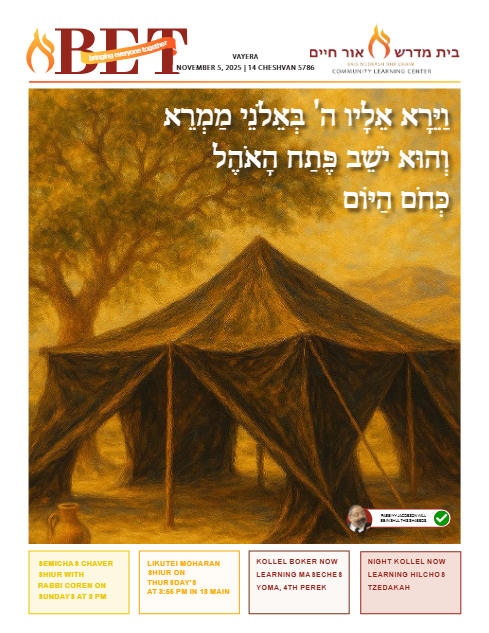
The Chassidic masters offer a moving homiletical interpretation of the biblical episode of Abraham and his guests, the angels, as described in our parsha.

According to Jewish tradition, there exists in each generation a tzaddik, a great moral giant, who serves as the spiritual foundation of the world, as a bridge between heaven and earth. This is a human being who carries the burden of history on his shoulders and always has his finger on the pulse of the generation. While others plan their vacations and retirements, this person cannot sleep at night as long as there is one soul in G-d’s universe hurting.

In his time, Abraham served as this tzaddik, the rebbe (spiritual master) of the world. When three angels were dispatched to pay a visit to planet Earth, they were determined to visit this extraordinary human being. They longed to be touched by his soul, inspired by his spirituality, and ignited by his passion. The angels craved to encounter the majesty of holiness at its peak.

When the three angels approached Abraham’s tent, they expected to discover a soul burning with a sacred flame, steeped in heavenly meditation, melting away in infinite ecstasy. They expected to find a spirit dancing with the Divine, free of any trace of the mundane, suspended above the crassness of the physical universe and its materialistic trappings.

THE SHOCKING MOMENT

What was the reality the angels actually encountered?

“Let some water be brought and wash your feet, and recline beneath the tree,” the great rebbe, Abraham, declared. “I will fetch a morsel of bread so that you may sustain yourselves,” were the words that came out of G-d’s ambassador to planet Earth.

“Abraham rushed to the tent to Sarah [his wife] and said, ‘Hurry! Three measures of the finest flour! Knead it and make rolls!’ Then Abraham ran to the cattle, took a calf, tender and good, and gave it to the young man who rushed to prepare it. He took cottage cheese and milk and the calf that he had prepared, and placed these before them; he stood over them as they ate under the tree.”

A man of infinite ecstasy? No. A good chef who knows how to run a smooth kitchen — that is what they saw in Abraham.

“We thought we were coming to a rebbe,” they must have thought to themselves. “Instead, we ended up at a butcher.”

Instead of finding the light of the divine radiating from Abraham’s tent, they discovered an old man running around, tongue and mustard in his hands. “We must have come to the wrong location,” the angels mused.

WHAT ABOUT THE WIFE?

Then a thought came to their mind that perhaps when they heard in heaven that Abraham was the tzaddik of the generation, it was actually referring not to him but to his counterpart, Sarah. She might be the real master of the generation, and Abraham merely her attendant.

So the narrative continues: “They asked him, ‘Where is Sarah your wife?’” Perhaps we can get a glimpse of your wife, and we will finally encounter the presence of authentic holiness.

“And he said, ‘Behold — in the tent!’” What Abraham was telling the angels is that if they did not ‘get it’ henceforth, seeing Sarah wouldn’t do the job either, for she is even more concealed than Abraham. She is concealed in the tent. Her true identity is not easily appreciated.

ANGELS ENLIGHTENED

At that moment, for the first time, the angels realized how deeply they had erred. In their longing to encounter holiness, they missed the ultimate point: that the authentic majesty of human holiness consists of a person’s daily acts of love, selflessness, and graciousness performed amid the stress and lowliness of physical existence. The angels failed to recognize that the genuine experience of serving G-d means not to soar to the heavens searching for angels, but to be there for another human being in a very real and pragmatic way.

“Hurry! Three measures of the finest flour! Knead it and make rolls!” In this simple, mundane behavior, Abraham constructed a fragment of heaven on earth.

WHAT LIFE IS REALLY LIKE

“I will return to you this time next year, and your wife Sarah will have a son,” came the response of the angel. This was not merely a communication of G-d’s earlier promise to Abraham; it was also a response of an angel in awe of the revolution that Abraham introduced to the world, in which a human being, in his ordinary daily behavior, can build a home for G-d. Abraham’s revolution, the angel insisted, must have a future in the form of a family, and, ultimately, a people, charged with the mission to teach the world how to fuse heaven and earth.

The angels never forgot that visit. Abraham gave them not only a sobering lesson in what real life is like, but also a lesson in what it means to be authentically spiritual.

True spirituality, Abraham was communicating to the angels, lies not in man’s attempt to escape the trappings of the world, but rather in his commitment to drawing down light and beauty into the darkness of life. It is only here, not in Pluto, that you can create the real atmosphere.

ABOVE THE ANGELS

This explains an enigmatic change in the language of the text. At the beginning of the narrative detailing the visit of the angels, we read: “vehinei shlosha anoshim nitzavim aluv,” meaning that the angels were standing over him. Later, when the guests are being served by Abraham, we read: “vehu omed aleihem,” meaning that Abraham stood over them.

It was through this act of hospitality that Abraham rose far and beyond the angels; he was now standing over and above them. It is through simple human kindness practiced on Earth that the human being reaches far beyond the most spiritual angels.

RABBI YY JACOBSON

PDF Preview