Perspectives on Yishmael in Jewish Commentary
Parsha Pages | October 30, 2023
Print This Article
View Original PDF

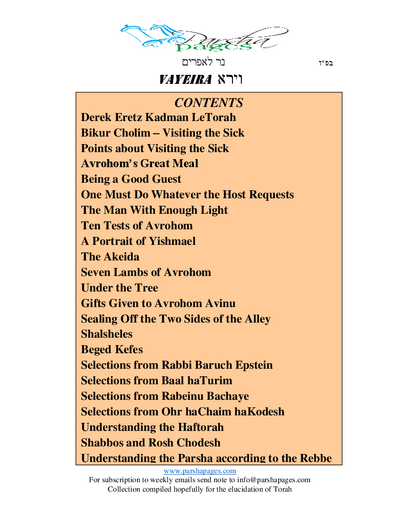
Perspectives on Yishmael in Jewish Commentary

Parsha Pages | December 31, 2025

Why is Avrohom "upset about his son"? Radak interprets that Avrohom is upset about the notion of banishing a beloved son. This reaction is completely understandable given that, according to them, Yishmael had done nothing to deserve expulsion. In addition, Radak asserts that Avrohom loved him both because he was his firstborn and because "בדרך טובה היה הולך, כי הוא גדל עמו ולמדהו דרך ה' ". He claims that given that Avrohom taught outsiders to follow in the path of HaShem, it is inconceivable that he did not do the same for his own child, Yishmael.

Why did HaShem side with Sarah? Radak and Abarbanel explain that Yitzchak alone was to inherit, as HaShem wanted the chosen line to emerge from Avrohom and Sarah. HaShem, thus, agreed with Sarah that in order to ensure this and prevent any contesting of the inheritance, Yishmael needed to be expelled from the home.

HaShem saves Yishmael

  • Deserving – According to R. Simon in Bereshis Rabbah, HaShem listened to Yishmael and saved him on his own merits. R. Simon understands the phrase "בַא שֶּר הוּא שָּם" to refer to Yishmael's present spiritual status. Though his descendants were to oppress Israel, Yishmael himself was righteous and deserving of salvation.
  • Punishment to Sarah – Tzeror HaMor suggests that it would have been better had Yishmael died from the lack of water, since then he would never have borne a nation who was to oppress the Israelites. Due to Sarah's actions, though, he was saved so that he could later punish Israel.

Yishmael after the expulsion – Radak points to Yishmael's achievements as an archer and lauds him for teaching this skill to his descendants, the Children of Keidar. He even suggests that this part of the story was written so that all can learn from Yishmael the importance of passing on skills to one's children.

Yishmael and Yitzchak – This position does not posit any active rivalry between the two brothers, presents them as together visiting their father later in life, and Abarbanel claims that Avrohom died peacefully because he saw "ישמעאל ויצחק שלמים ומוסכמים באהבה רבה".

Why is Yishmael made into a great nation? Although these commentators do not address the issue directly, they might suggest that Yishmael himself merited such a reward. Alternatively, this is part of HaShem's promise to make Avrohom himself into a great nation.

Yishmael's descendants

  • Neutral – Ibn Ezra and Radak identify Yishmael's descendants with Arav and Midyan, both of whom live in the wilderness, and as such fulfill the original prophecy to Hagar.
  • Negative – Ibn Ezra additionally suggests that the fourth beast of Daniel's vision refers to Yishmael, who will prevail over many but ultimately be vanquished. Tzeror HaMor similarly identifies Yishmael's descendants with Israel's enemies, associating them with the people of Arav in Yeshayahu 21 who refuse Israel water.

Mildly Negative

Yishmael had several negative traits, but he was not completely wicked.

SOURCES: R. Shimon b. Yochai, R. Saadia Gaon, R. Avrohom b. HaRambam, Ramban, Seforno

Prophecy to Hagar – "וְהוּא יִהְיֶה פֶרֶא אָדָם "

Both Ramban and Seforno assert that already the prophecy to Hagar forecast some of Yishmael's negative character traits:

  • Militancy – Ramban maintains that Yishmael was to become a "פֶּרֶּא אָּדָּם", a militant person always ready to pounce on and devour others. He sees in this a punishment to Avrohom and Sarah who had sinned in their harsh treatment of Hagar. They were given a measure for measure punishment, as Yishmael's descendants were to similarly oppress their offspring.
  • Donkey-like nature – According to Seforno, the dual term "פֶּרֶּא אָּדָּם" reflects the combination of what Yishmael inherited from each of his parents, a donkey-like nature from his mother, and a more human side from his father, reflected in his repentance later in life.

Avrohom's plea: "לוּ יִשְמָעֵאל יִחְיֶה לְפָנֶיך"

According to Ramban, Avrohom is praying for Yishmael's survival. Being informed that Yitzchak is to inherit alone makes Avrohom wonder whether Yishmael is destined to die early. Although Yishmael might have faults, Avrohom had always viewed him as the heir, and as his father, he was filled with love for him.

"מְצַחֵק"

All of these commentators understand the word to refer to scornful laughter or mockery:

  • Inheritance related – R. Shimon B. Yochai portrays Yishmael as laughing at the concept of Yitzchak inheriting, while Seforno has him suggest that Yitzchak was born of Avimelekh which would thereby disqualify him from inheriting.
  • Degrading Yitzchak – R. Saadia suggests that Yishmael was scornfully saying that Yitzchak would not survive to adulthood, while Ramban presents him as more simply poking fun at Yitzchak and the party made in his honor.
  • Foolish play – According to R. Avrohom b. HaRambam, Yishmael was acting foolishly, laughing, and speaking in an unbecoming manner.

Why did Sarah want Yishmael expelled?

  • Protect Yitzchak's character – According to R. Avrohom b. HaRambam, Sarah wanted to prevent Yitzchak from learning from the bad example set by Yishmael. Sarah was not worried about his sharing in a monetary inheritance, but about the two brothers inheriting identical values.
  • Prevent Yishmael's inheritance – Seforno asserts that since Hagar was trying to ensure through her son's libel that Yishmael inherit all, Sarah banished them so that they would not inherit at all.
  • Punishment – Ramban maintains that Sarah viewed Yishmael's actions as a forgetting of his rightful place as servant. Though this normally would deserve death or corporal punishment, Sarah decided instead to expel Hagar and Yishmael.

Why is Avrohom "upset about his son"? Ramban suggests that Avrohom's natural love for his son made it painful for him to banish him. Although Yishmael's actions were wrong, and Avrohom might have even understood Sarah's desire for the expulsion, they were not so terrible to prevent his anguish at the action. R. Avrohom b. HaRambam further suggests that Avrohom was oblivious to the true nature of his son, favoring him since he was the firstborn.

Why did HaShem reject Yishmael? This approach might suggest that Yishmael was rejected due to both his maternal parentage and his lesser character. R. Avrohom b. HaRambam adds that HaShem agreed with Sarah that Yishmael would be a negative influence, further justifying the banishment.

HaShem saves Yishmael – This position would probably suggest that, though the expulsion might have been justified, Yishmael's negative actions did not warrant a death sentence.

Yishmael after the expulsion – R. Avrohom b. HaRambam asserts that Yishmael's becoming an archer, or a man of war, confirmed Sarah's evaluation of his negative character and her worries over how this might affect Yitzchak.

Why is Yishmael made into a great nation? Seforno asserts that this promise was a reward to Avrohom. Yishmael himself was not worthy of such grandeur.

Yishmael and Islam – R. Avrohom b. HaRambam claims that the promise that Yishmael will become a great nation was fulfilled with the establishment of Islam. He points out how it is a second monotheistic religion, yet one which uprooted the Torah. The seeds of this religion lay already in Yishmael who believed in HaShem, having grown up in Avrohom's household, but who was never on the path of Torah observance or on the spiritual level of his brother.

Why is Avrohom "upset about his son"? Radak interprets that Avrohom is upset about the notion of banishing a beloved son. This reaction is completely understandable given that, according to them, Yishmael had done nothing to deserve expulsion. In addition, Radak asserts that Avrohom loved him both because he was his firstborn and because "בדרך טובה היה הולך, כי הוא גדל עמו ולמדהו דרך ה' ". He claims that given that Avrohom taught outsiders to follow in the path of HaShem, it is inconceivable that he did not do the same for his own child, Yishmael.

Why did HaShem side with Sarah? Radak and Abarbanel explain that Yitzchak alone was to inherit, as HaShem wanted the chosen line to emerge from Avrohom and Sarah. HaShem, thus, agreed with Sarah that in order to ensure this and prevent any contesting of the inheritance, Yishmael needed to be expelled from the home.

HaShem saves Yishmael

  • Deserving – According to R. Simon in Bereshis Rabbah, HaShem listened to Yishmael and saved him on his own merits. R. Simon understands the phrase "בַא שֶּר הוּא שָּם" to refer to Yishmael's present spiritual status. Though his descendants were to oppress Israel, Yishmael himself was righteous and deserving of salvation.
  • Punishment to Sarah – Tzeror HaMor suggests that it would have been better had Yishmael died from the lack of water, since then he would never have borne a nation who was to oppress the Israelites. Due to Sarah's actions, though, he was saved so that he could later punish Israel.

Yishmael after the expulsion – Radak points to Yishmael's achievements as an archer and lauds him for teaching this skill to his descendants, the Children of Keidar. He even suggests that this part of the story was written so that all can learn from Yishmael the importance of passing on skills to one's children.

Yishmael and Yitzchak – This position does not posit any active rivalry between the two brothers, presents them as together visiting their father later in life, and Abarbanel claims that Avrohom died peacefully because he saw "ישמעאל ויצחק שלמים ומוסכמים באהבה רבה".

Why is Yishmael made into a great nation? Although these commentators do not address the issue directly, they might suggest that Yishmael himself merited such a reward. Alternatively, this is part of HaShem's promise to make Avrohom himself into a great nation.

Yishmael's descendants

  • Neutral – Ibn Ezra and Radak identify Yishmael's descendants with Arav and Midyan, both of whom live in the wilderness, and as such fulfill the original prophecy to Hagar.
  • Negative – Ibn Ezra additionally suggests that the fourth beast of Daniel's vision refers to Yishmael, who will prevail over many but ultimately be vanquished. Tzeror HaMor similarly identifies Yishmael's descendants with Israel's enemies, associating them with the people of Arav in Yeshayahu 21 who refuse Israel water.

Mildly Negative

Yishmael had several negative traits, but he was not completely wicked.

SOURCES: R. Shimon b. Yochai, R. Saadia Gaon, R. Avrohom b. HaRambam, Ramban, Seforno

Prophecy to Hagar – "וְהוּא יִהְיֶה פֶרֶא אָדָם "

Both Ramban and Seforno assert that already the prophecy to Hagar forecast some of Yishmael's negative character traits:

  • Militancy – Ramban maintains that Yishmael was to become a "פֶּרֶּא אָּדָּם", a militant person always ready to pounce on and devour others. He sees in this a punishment to Avrohom and Sarah who had sinned in their harsh treatment of Hagar. They were given a measure for measure punishment, as Yishmael's descendants were to similarly oppress their offspring.
  • Donkey-like nature – According to Seforno, the dual term "פֶּרֶּא אָּדָּם" reflects the combination of what Yishmael inherited from each of his parents, a donkey-like nature from his mother, and a more human side from his father, reflected in his repentance later in life.

Avrohom's plea: "לוּ יִשְמָעֵאל יִחְיֶה לְפָנֶיך"

According to Ramban, Avrohom is praying for Yishmael's survival. Being informed that Yitzchak is to inherit alone makes Avrohom wonder whether Yishmael is destined to die early. Although Yishmael might have faults, Avrohom had always viewed him as the heir, and as his father, he was filled with love for him.

"מְצַחֵק"

All of these commentators understand the word to refer to scornful laughter or mockery:

  • Inheritance related – R. Shimon B. Yochai portrays Yishmael as laughing at the concept of Yitzchak inheriting, while Seforno has him suggest that Yitzchak was born of Avimelekh which would thereby disqualify him from inheriting.
  • Degrading Yitzchak – R. Saadia suggests that Yishmael was scornfully saying that Yitzchak would not survive to adulthood, while Ramban presents him as more simply poking fun at Yitzchak and the party made in his honor.
  • Foolish play – According to R. Avrohom b. HaRambam, Yishmael was acting foolishly, laughing, and speaking in an unbecoming manner.

Why did Sarah want Yishmael expelled?

  • Protect Yitzchak's character – According to R. Avrohom b. HaRambam, Sarah wanted to prevent Yitzchak from learning from the bad example set by Yishmael. Sarah was not worried about his sharing in a monetary inheritance, but about the two brothers inheriting identical values.
  • Prevent Yishmael's inheritance – Seforno asserts that since Hagar was trying to ensure through her son's libel that Yishmael inherit all, Sarah banished them so that they would not inherit at all.
  • Punishment – Ramban maintains that Sarah viewed Yishmael's actions as a forgetting of his rightful place as servant. Though this normally would deserve death or corporal punishment, Sarah decided instead to expel Hagar and Yishmael.

Why is Avrohom "upset about his son"? Ramban suggests that Avrohom's natural love for his son made it painful for him to banish him. Although Yishmael's actions were wrong, and Avrohom might have even understood Sarah's desire for the expulsion, they were not so terrible to prevent his anguish at the action. R. Avrohom b. HaRambam further suggests that Avrohom was oblivious to the true nature of his son, favoring him since he was the firstborn.

Why did HaShem reject Yishmael? This approach might suggest that Yishmael was rejected due to both his maternal parentage and his lesser character. R. Avrohom b. HaRambam adds that HaShem agreed with Sarah that Yishmael would be a negative influence, further justifying the banishment.

HaShem saves Yishmael – This position would probably suggest that, though the expulsion might have been justified, Yishmael's negative actions did not warrant a death sentence.

Yishmael after the expulsion – R. Avrohom b. HaRambam asserts that Yishmael's becoming an archer, or a man of war, confirmed Sarah's evaluation of his negative character and her worries over how this might affect Yitzchak.

Why is Yishmael made into a great nation? Seforno asserts that this promise was a reward to Avrohom. Yishmael himself was not worthy of such grandeur.

Yishmael and Islam – R. Avrohom b. HaRambam claims that the promise that Yishmael will become a great nation was fulfilled with the establishment of Islam. He points out how it is a second monotheistic religion, yet one which uprooted the Torah. The seeds of this religion lay already in Yishmael who believed in HaShem, having grown up in Avrohom's household, but who was never on the path of Torah observance or on the spiritual level of his brother.

PDF Preview