A Tremendous Difference
Hashgacha Pratis | December 08, 2025
Print This Article
View Original PDF

A Tremendous Difference

Hashgacha Pratis | December 10, 2025

They both had the same diagnosis and both suffered terribly, lo aleinu, but each of them had a completely different experience. The first sighed again and again, filled with complaints. “What did I need all of this for?” he moaned. “What wasn’t good about staying at home and going on with life? Why do I need to be here?” When someone explained that he had to be treated for his illness, he repeated and shouted that this was exactly what he was talking about. And perhaps if he would have eaten better or slept better or gone to a more expert doctor, things would have been completely different.

He was beating himself up, and others too, calling the nurses and hospital staff again and again. Every second, something else bothered him, and somehow it was also more difficult to find his vein in order to do a simple blood test. His muscles were tight and his whole posture expressed pain and suffering. He did not have one moment of calm in his world. Life was hard; day and night the situation was hard, and he was the most unfortunate and pitiful creature in the world.

His friend, on the other hand, the patient in the next bed, was also in pain. He suffered physical pain, and it was difficult for him to be far from home, but he thought to himself, “Who did this to me? My Father in Shamayim, Who loves me more than anyone, Who is more merciful than anyone, Whose ways are just. He sent me here for my good, to clean away my sins, and He does only good to me! The best! It’s not possible otherwise!

He thinks such thoughts, and deeper thoughts than these, and he strengthens himself by looking into sifrei mussar and learning about bitachon as much as he can with his limited strength. He listens to shiurim and repeats pesukim of bitachon again and again. Sometimes it’s not even possible for him to think or to look into sefarim, but he strengthens himself with songs of deveikus with healing words, songs of chizuk in emunah and bitachon. To anyone who asks how he is doing, he answers, “Baruch Hashem, all is well,” because this is the truth. It’s hard and it’s painful, but it’s good! He smiles, and he smiles to others. He submits himself to the will of Hashem, and he believes that his salvation is at hand. These feelings expand his lungs, they enable his blood to flow easily, and thus the treatment he undergoes is easier and more effective.

Dovid Hamelech expresses the difference between these two people. “Many are the pains of the wicked, but for he who trusts in Hashem, kindness will surround him” (Tehillim 32:10).

The Metzudas Dovid explains that the wicked man rebels because he is suffering and complains bitterly, so his pains increase and he ultimately suffers more than what was decreed upon him. The example we bought about the patient is only a mashal for all different types of pain and loss that people experience in life. Someone who sees anything that happens against his will as mere happenstance will blame himself or his surroundings. He will cause his own blood pressure to rise and his heartbeat to rush, and all this causes additional pain. In this way, he also losses out on the goal of his suffering, which is to bring him closer to the Creator yisbarach, and this too is cause for his salvation to be delayed. He has nothing to strengthen him because he does not have emunah.

But one who trusts in Hashem and is wise enough to know that his suffering is for his good, and that through his suffering his sins will be erased, does not rebel against his suffering. He remembers that everything comes from Hashem, everything is for the good, and on his lips constantly are words like, “There is a reason for this from Above”; “This too is for the best”; and “All His deeds are faithful.” If a person submits himself to the decree of His Creator, then Hashem’s kindness surrounds him.

First of all, he gains in that the yissurim themselves aren’t as painful. The loss or the pain itself is enough, and no added punishment is necessary, and secondly, his behavior and his mode of thought draw his yeshuah closer. The whole point of yissurim is for the person to stop and think about where they came from, so that he will submit himself to the Creator and his sins will be atoned. When a Yid agrees to Hashem’s ways and thanks Him for everything, then the yissurim have fulfilled their purpose, and all that he is going through becomes kindness, because Hashem will remove the yissurim from him and he’ll be cleansed of his sins. As is known from tzaddikim, the difficulty itself is transformed into kindness, because it is then removed from him, and he is cleansed of sin. As tzaddikim quip, “You [Hashem] said, Do good and then I will do good for you.”

May we be zocheh to see tangibly Hashem’s revealed chessed and mercy, in good health and joy; amen.
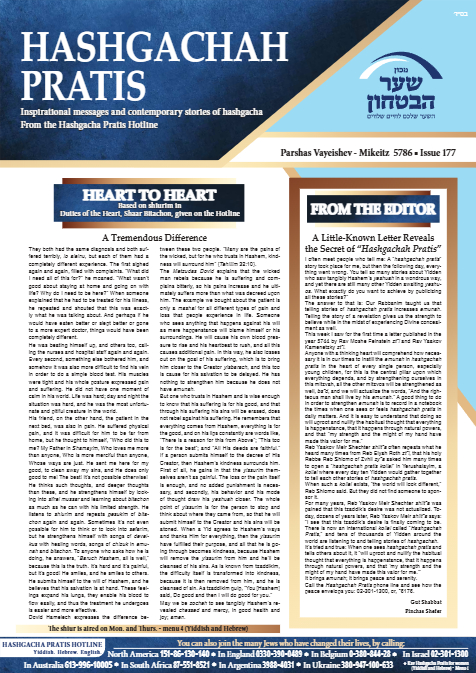
They both had the same diagnosis and both suffered terribly, lo aleinu, but each of them had a completely different experience. The first sighed again and again, filled with complaints. “What did I need all of this for?” he moaned. “What wasn’t good about staying at home and going on with life? Why do I need to be here?” When someone explained that he had to be treated for his illness, he repeated and shouted that this was exactly what he was talking about. And perhaps if he would have eaten better or slept better or gone to a more expert doctor, things would have been completely different.

He was beating himself up, and others too, calling the nurses and hospital staff again and again. Every second, something else bothered him, and somehow it was also more difficult to find his vein in order to do a simple blood test. His muscles were tight and his whole posture expressed pain and suffering. He did not have one moment of calm in his world. Life was hard; day and night the situation was hard, and he was the most unfortunate and pitiful creature in the world.

His friend, on the other hand, the patient in the next bed, was also in pain. He suffered physical pain, and it was difficult for him to be far from home, but he thought to himself, “Who did this to me? My Father in Shamayim, Who loves me more than anyone, Who is more merciful than anyone, Whose ways are just. He sent me here for my good, to clean away my sins, and He does only good to me! The best! It’s not possible otherwise!

He thinks such thoughts, and deeper thoughts than these, and he strengthens himself by looking into sifrei mussar and learning about bitachon as much as he can with his limited strength. He listens to shiurim and repeats pesukim of bitachon again and again. Sometimes it’s not even possible for him to think or to look into sefarim, but he strengthens himself with songs of deveikus with healing words, songs of chizuk in emunah and bitachon. To anyone who asks how he is doing, he answers, “Baruch Hashem, all is well,” because this is the truth. It’s hard and it’s painful, but it’s good! He smiles, and he smiles to others. He submits himself to the will of Hashem, and he believes that his salvation is at hand. These feelings expand his lungs, they enable his blood to flow easily, and thus the treatment he undergoes is easier and more effective.

Dovid Hamelech expresses the difference between these two people. “Many are the pains of the wicked, but for he who trusts in Hashem, kindness will surround him” (Tehillim 32:10).

The Metzudas Dovid explains that the wicked man rebels because he is suffering and complains bitterly, so his pains increase and he ultimately suffers more than what was decreed upon him. The example we bought about the patient is only a mashal for all different types of pain and loss that people experience in life. Someone who sees anything that happens against his will as mere happenstance will blame himself or his surroundings. He will cause his own blood pressure to rise and his heartbeat to rush, and all this causes additional pain. In this way, he also losses out on the goal of his suffering, which is to bring him closer to the Creator yisbarach, and this too is cause for his salvation to be delayed. He has nothing to strengthen him because he does not have emunah.

But one who trusts in Hashem and is wise enough to know that his suffering is for his good, and that through his suffering his sins will be erased, does not rebel against his suffering. He remembers that everything comes from Hashem, everything is for the good, and on his lips constantly are words like, “There is a reason for this from Above”; “This too is for the best”; and “All His deeds are faithful.” If a person submits himself to the decree of His Creator, then Hashem’s kindness surrounds him.

First of all, he gains in that the yissurim themselves aren’t as painful. The loss or the pain itself is enough, and no added punishment is necessary, and secondly, his behavior and his mode of thought draw his yeshuah closer. The whole point of yissurim is for the person to stop and think about where they came from, so that he will submit himself to the Creator and his sins will be atoned. When a Yid agrees to Hashem’s ways and thanks Him for everything, then the yissurim have fulfilled their purpose, and all that he is going through becomes kindness, because Hashem will remove the yissurim from him and he’ll be cleansed of his sins. As is known from tzaddikim, the difficulty itself is transformed into kindness, because it is then removed from him, and he is cleansed of sin. As tzaddikim quip, “You [Hashem] said, Do good and then I will do good for you.”

May we be zocheh to see tangibly Hashem’s revealed chessed and mercy, in good health and joy; amen.

PDF Preview