Eight Chanukah Insights from the First Gerer Rebbe
The following insights are from Rabbi Yisroel Meir Alter (1799 – 1866) of Ger, Poland, author of the Chidushei HaRim and founder of the Gerer Chassidic dynasty. These insight are printed in Torat Chidushei HaRim, a collection of Rabbi Alter’s teachings compiled by his descendant, Rabbi Yehudah Leib Levin (Jerusalem 1950).
1) Why Do We Make a Big Deal about the Miracle of the Oil?
Why do we celebrate the miracle of the oil of Chanukah lasting for eight nights? After all, in ancient times, such miracles were relatively commonplace as we find that Rabbi Chanina ben Tradyon once blessed his daughter that vinegar should make her Shabbat candles burn instead of oil and so it was.
A similar question can be asked about the splitting of the sea which we commemorate on the seventh day of Pesach. Why is this miracle so noteworthy when the Talmud recounts how Rabbi Pinchas ben Yair once split a river while he was on the way to redeem captives?
The concept is that it’s to be expected that miracles occur for Tzadikkim who serve G-d in an extraordinary manner such as Rabbi Chanina ben Dosa and Rabbi Pinchas ben Yair. This was not the case, however, regarding the Jewish people at the time of the Exodus, many of whom were idolators. The splitting of the sea was therefore a great miracle in that G-d considered their inner goodness and judged them as being deserving of a miracle.
Similarly, the lighting of the Menorah as a communal service in the Beit HaMikdash represented the entire community, many of whom had gone to the side of the Hellenists in their recent past. The fact that G-d considered the community as a whole to be righteous in consideration of the recent teshuvah awakening – that was the true miracle.
2) Why Mehadrin min HaMehadrin?
The common custom on Chanukah is to light an additional lamp (or candle) every evening. This represents the most meticulous manner of performing the mitzvah (Mehadrin Min HaMehadrin) since the basic mitzvah can be fulfilled by merely lighting one lamp per night. Why is it that this mitzvah was designed to have various levels of observance, and why is it that the accepted practice is to perform it in the most meticulous manner?
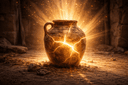
There is a famous discussion as to how the Jews lit the Menorah with the one jug of pure oil that was found. Some say that they divided the oil into eight parts as they didn’t expect to have new oil until after eight days. Rabbi Alter suggests that since one may not rely on a miracle, they used very thin wicks which would consume less oil so that the small amount of oil could last through each night. Despite this, a miracle occurred, and for all eight nights, a full-size flame burned on the thin wicks of the Menorah. According to this explanation, the miracle of the first Chanukah was one that enabled the Jewish people to do the menorah lighting in the best possible way (with a large flame). Similarly, the commemoration of that miracle was instituted to include a way to do the mitzvah in the best possible way.
3) Turning Chanukah Parties into Mitzvah Meals
There is an argument among the commentaries as to whether or not it is a mitzvah to have special meals in honor of Chanukah. In practice, it is recommended that one recite words of Torah and praises to G-d in order that these meals be considered mitzvah meals rather than ordinary parties. The Chidushei HaRim suggests that this was the original intent of our sages. They did not mandate that we have special meals on Chanukah because they wanted the meals to have the status of seudot reshut, non-sanctified meals, and that the Jewish people, through their own effort, transform them into mitzvah meals. (See the next insight.)
4) Transforming the Weekdays
Both Chanukah and Purim are on weekdays on which one may perform work as they represent the power to transform the mundane into holiness.
According to the Maharal, the word Tevet (the name of the month which begins in the middle of Chanukah) alludes to the fact that the nights begin to diminish while the daytimes start to increase. This indicates that with the power of the Chanukah miracle we can transform darkness into light.
The nights begin to get longer on the 15th of Menachem Av. Regarding this it says that the strength of the sun (which represents the nations of the world) is weakened. As such, in the month of Tevet when the power of the sun begins to increase, we have the miracle of Chanukah to temper the sun’s power and the strength of the natural world through the supernatural revelations of this holiday.
5) The Jug of Oil Represents Pure Faith
The Greeks contaminated all of the oil in the Beit HaMikadash to symbolically contaminate the intellect of all of the Jewish people and infect it with impure attitudes. The one jug that remained pure represents the power of self-sacrifice, which is based on the pure faith in G-d that we inherited from Avraham Avinu, who is called a Kohen (Gadol).
The power of this faith is such that it can illuminate “one day” – i.e., to bring about the awareness of G-d who was alone in the world on the first day of creation. Miraculously (i.e., with Divine assistance), the Jewish people utilized this power of faith to illuminate all of their seven emotional attributes and bring them in line with the values of the Torah.
6) Saying Hallel to Increase our Faith
Our sages established the days of Chanukah as holidays of praise and thanksgiving. This can be understood to mean that the days become holy through the praises we say to the Almighty. By praising G-d in the appropriate manner during these days (in Hallel, Ve’al HaNissim etc.), we elicit the spiritual revelations that are unique to this time, thus sanctifying the days.
7) Torah Study after Lighting the Candles
After lighting the Chanukah candles, one should spend time studying Torah. The verse says, “A Mitzvah is a lamp, and the Torah is light.” This alludes to the fact that by lighting the mitzvah lamp of Chanukah one merits the light of Torah. Indeed, the Talmud says that one who is careful about the lighting of the Chanukah candles will merit to have children who are Torah scholars. As such, the learning one does after the Chanukah lighting will be enhanced and enriched.
The following anecdote illustrates this: The Kozhnitzer Magid once asked someone if after their prayers they attempted to study the sections in Torah which they had difficulty understanding beforehand. The Magid went on to say, “Since you prayed and said, ‘You bestow understanding to men,’ if you don’t believe in your own prayers (and utilize the extra understanding G-d bestowed upon you), how do you expect your prayers to be effective?’”
8) Chanukah Is a Good Time for Teshuvah.
Chanukah is a good time for Teshuvah (repentance). The reason for this is that during the year, a person involved in worldly matters often finds it hard to do Teshuvah since Teshuvah preceded the world (and is therefore loftier than the world). However, on Chanukah it is a different matter. Chanukah, due to its supernatural nature, is also loftier than the natural world, like Teshuvah. Thus anyone, even someone enmeshed in worldly matters, finds it easier to access the level of Teshuva on this holiday.
May we all merit to do teshuvah and study Torah with the increased holiness of Chanukah!
Wishing you Shabbat Shalom, a Happy Chanukah, and a Chodesh Tov UMevorach!
Copyright 2023 by Rabbi Aryeh Citron