In the Paths of Our Forefathers
טיב הקהילה English | December 13, 2025
Print This Article
View Original PDF

In the Paths of Our Forefathers

טיב הקהילה English | December 31, 2025

In the Paths of Our Forefathers

Yaakov dwelt in the land of his father’s sojourning, in the land of Canaan (Bereishis 37:1).

What is the Torah teaching us here? Is it not a well-established principle in our holy Torah that “the deeds of the fathers are a sign for the children”? The Ramban z”l has already established at the beginning of Parashas Lech Lecha (12:6) that the reason the Torah relates in detail all the events and episodes of our holy forefathers is not, chas vechalilah, to tell mere stories, but to serve as a sign and a lesson for their descendants — to teach them proper traits and paths of life. As the Zohar writes (3:149a): “May the spirit of those be blasted who say that the Torah is but a collection of stories.” Accordingly, we must understand what the Torah means to teach by telling us that Yaakov dwelt in the land of his father’s sojourning.

The main lesson derived from Yaakov dwelt is as follows: Where did he find good and peaceful dwelling? — in the land of his father’s sojourning. When he lived in the land of his father, he kept to the ways and paths of his forefathers. Not so, however, in the twenty-two years he spent in the house of Lavan, for then it was not said of him, he dwelt, since his stay there was neither restful nor settled. As Yaakov himself said at the beginning of Parashas Vayishlach (32:5), עִם לָבָן גַּרְתִּי - I sojourned with Lavan, employing the language of sojourning, as the tribes later said to Pharaoh when they left their land and descended to Mitzrayim, לָגוּר בָּאָרֶץ בָּאנוּ - we have come to sojourn in the land (Bereishis 47:4) — emphasizing that they were only temporary residents there.

All this teaches that the true and fixed place of a Jew‘s residence is only in the heritage of his forefathers, following in their ways and emulating their deeds. Therefore, only when Yaakov returned to his father‘s house does the Torah use the expression, and he dwelt, meaning a settled and permanent residence — for there was his true place and inheritance, in the attachment to the house of his fathers.

Hence, the Torah precisely uses the expression, and he dwelt — a term of settlement and composure — to teach that a person finds no true rest in this world except when he follows the path of his ancestral tradition. Then it may be said of him, and he dwelt — that he sits firmly in his place, for that is his rightful station, the root of his soul and its true abode.

The holy Arizal wrote (Shaar haKavanos, Derushei Aleinu Leshabe’ach, derush 1; Pri Etz Chaim, introduction to Shaar HaTefillah) that one should not deviate from the nusach (traditional prayer liturgy) of his forefathers, for there are twelve gates in Heaven corresponding to the twelve tribes, and each tribe has its special gate through which its prayers ascend by way of its particular nusach. If one changes from the nusach of his fathers, he confuses the gate and enters through a portal that does not belong to him — for there is not his place.

(See further Shu”t Chasam Sofer, Orach Chaim 15b, and Shu”t Divrei Chaim, 2:8 — all their words burn like coals of fire.)

A wondrous story was told by one of the great rabbanim — a tale that teaches how a person must always cleave to the ways of his forefathers, and how powerful is the influence of the fathers upon their descendants and their descendants‘ descendants, even after many generations, when they continue to walk in their ways and emulate their deeds.

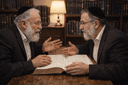
Once, while sitting in the beis hora’ah, related the rav, there entered a trustworthy Jew with a most difficult and intricate halachic question. After presenting his serious query, he made an unusual request: “I beg of the rav,” said the man, “to rule decisively and clearly according to the strict truth of the law — without seeking or finding any leniencies or dispensations at all — for I am a descendant of the gaon Rav Akiva Eiger zt”l!”

The reason he gave for his request seemed somewhat strange, and I asked him: “What connection does your illustrious lineage to the gaon Rav Akiva Eiger have to your halachic question?”

The man explained: “I have read in the chronicles, and it is a tradition in my family, that my ancestor, the gaon Rav Akiva Eiger zt”l, would weep copiously during his prayers in Birchos HaTorah when he said ‘And may we and our offspring and the offspring of our offspring — all of us — know Your Name and study Your Torah...‘ At that time, he would pour out his heart in supplication, entreating Hashem that his descendants should walk in upright and good paths, be scholars and God-fearing men. Therefore,” the man concluded, “I must be most careful to fulfill the tefillah and request of that holy ancestor, that I not, chas veshalom, stumble in any matter of sin. Thus, I ask that you not be lenient in my case nor search for any dispensation.”

In the Paths of Our Forefathers

Yaakov dwelt in the land of his father’s sojourning, in the land of Canaan (Bereishis 37:1).

What is the Torah teaching us here? Is it not a well-established principle in our holy Torah that “the deeds of the fathers are a sign for the children”? The Ramban z”l has already established at the beginning of Parashas Lech Lecha (12:6) that the reason the Torah relates in detail all the events and episodes of our holy forefathers is not, chas vechalilah, to tell mere stories, but to serve as a sign and a lesson for their descendants — to teach them proper traits and paths of life. As the Zohar writes (3:149a): “May the spirit of those be blasted who say that the Torah is but a collection of stories.” Accordingly, we must understand what the Torah means to teach by telling us that Yaakov dwelt in the land of his father’s sojourning.

The main lesson derived from Yaakov dwelt is as follows: Where did he find good and peaceful dwelling? — in the land of his father’s sojourning. When he lived in the land of his father, he kept to the ways and paths of his forefathers. Not so, however, in the twenty-two years he spent in the house of Lavan, for then it was not said of him, he dwelt, since his stay there was neither restful nor settled. As Yaakov himself said at the beginning of Parashas Vayishlach (32:5), עִם לָבָן גַּרְתִּי - I sojourned with Lavan, employing the language of sojourning, as the tribes later said to Pharaoh when they left their land and descended to Mitzrayim, לָגוּר בָּאָרֶץ בָּאנוּ - we have come to sojourn in the land (Bereishis 47:4) — emphasizing that they were only temporary residents there.

All this teaches that the true and fixed place of a Jew‘s residence is only in the heritage of his forefathers, following in their ways and emulating their deeds. Therefore, only when Yaakov returned to his father‘s house does the Torah use the expression, and he dwelt, meaning a settled and permanent residence — for there was his true place and inheritance, in the attachment to the house of his fathers.

Hence, the Torah precisely uses the expression, and he dwelt — a term of settlement and composure — to teach that a person finds no true rest in this world except when he follows the path of his ancestral tradition. Then it may be said of him, and he dwelt — that he sits firmly in his place, for that is his rightful station, the root of his soul and its true abode.

The holy Arizal wrote (Shaar haKavanos, Derushei Aleinu Leshabe’ach, derush 1; Pri Etz Chaim, introduction to Shaar HaTefillah) that one should not deviate from the nusach (traditional prayer liturgy) of his forefathers, for there are twelve gates in Heaven corresponding to the twelve tribes, and each tribe has its special gate through which its prayers ascend by way of its particular nusach. If one changes from the nusach of his fathers, he confuses the gate and enters through a portal that does not belong to him — for there is not his place.

(See further Shu”t Chasam Sofer, Orach Chaim 15b, and Shu”t Divrei Chaim, 2:8 — all their words burn like coals of fire.)

A wondrous story was told by one of the great rabbanim — a tale that teaches how a person must always cleave to the ways of his forefathers, and how powerful is the influence of the fathers upon their descendants and their descendants‘ descendants, even after many generations, when they continue to walk in their ways and emulate their deeds.

Once, while sitting in the beis hora’ah, related the rav, there entered a trustworthy Jew with a most difficult and intricate halachic question. After presenting his serious query, he made an unusual request: “I beg of the rav,” said the man, “to rule decisively and clearly according to the strict truth of the law — without seeking or finding any leniencies or dispensations at all — for I am a descendant of the gaon Rav Akiva Eiger zt”l!”

The reason he gave for his request seemed somewhat strange, and I asked him: “What connection does your illustrious lineage to the gaon Rav Akiva Eiger have to your halachic question?”

The man explained: “I have read in the chronicles, and it is a tradition in my family, that my ancestor, the gaon Rav Akiva Eiger zt”l, would weep copiously during his prayers in Birchos HaTorah when he said ‘And may we and our offspring and the offspring of our offspring — all of us — know Your Name and study Your Torah...‘ At that time, he would pour out his heart in supplication, entreating Hashem that his descendants should walk in upright and good paths, be scholars and God-fearing men. Therefore,” the man concluded, “I must be most careful to fulfill the tefillah and request of that holy ancestor, that I not, chas veshalom, stumble in any matter of sin. Thus, I ask that you not be lenient in my case nor search for any dispensation.”

PDF Preview