Or HaGanuz: The Concealed Light of Chanukah
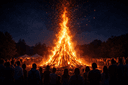
On the first day of Creation, Hashem said (Bereishis 1:3), יהי אור ויהי אור, "Let there be light, and there was light." But the sun was created on the fourth day of creation! What light shone on the first day of creation?
The Gemara (Chagigah 12.) says that a special light shone at the beginning of creation. "With the light that Hakadosh Baruch Hu created on the first day of creation, a person could see from one side of the world to the other. When Hakadosh Baruch Hu thought about the generation of the flood and the generation of dispersion (דור הפלגה), and he saw their corrupt ways, Hakadosh Baruch Hu immediately concealed the light from them. This is as it states (Iyov 38:15) וימנע מרשעים אורם, 'Their light shall be withheld from the wicked.' For whom did Hashem store the light? For the tzaddikim of the future, as it states (Bereshis 1:4) וירא אלקים את האור כי טוב, 'Hashem saw the light that it was good,' and טוב refers to a tzaddik, as it states (Yeshayah 3:10) אמרו צדיק כי טוב, 'Praise the tzaddik, for he is good.' When the light saw that it was being reserved for tzaddikim, it was happy, as it states (Mishlei 13:9) אור צדיקים ישמח, 'The light of the tzaddik will rejoice.'"
The Baal Shem Tov zt'l says that this holy, concealed light is concealed in the Torah. When one studies the Torah, he can tap into this sacred light.
Furthermore, tzaddikim say that this concealed light shines each year on Chanukah.
The Bnei Yissaschar (Kislev 2:21) states, "I have brought you the testimonies of three trustworthy witnesses that the light of Chanukah is the Or HaGanuz. They are (1) the holy tzaddik, the Rokeiach, who received his lessons from Eliyahu HaNavi z'l. (2) The Maharal of Prague. It is known that his teachings were said with ruach hakodesh, and he would use Sefer Yetzirah. (3) And the holy Rav, who lived close to our times and was renowned for his ruach hakodesh, Rebbe Pinchas of Koritz zt'l.
"Chazal hardly mention Chanukah. Also, in Mishnayos, Chanukah is mentioned only once (see Mishnayos Bava Kama 6:6) and is mentioned as a side topic. It states there, חיב החנוני מבחוץ נרו חנוני הניח, "If a storeowner leaves a candle outside, he must pay for any damages it caused. פטור חנוכה בנר אומר יהודה 'ר, Reb Yehudah says that if it is a Chanukah lecht [that was left outside], he doesn't have to pay," because he didn't do anything wrong when he placed his lamp there. This is the only place that Chanukah is mentioned in Mishnaayos, and it isn't even discussing Chanukah! It is discussing payment for damages. This is because Chanukah represents the Or HaGanuz, the concealed light, so also in the Oral Torah, it is concealed.
The Zohar mentions Chanukah once (vol.1 238:); the same is with Tikunei Zohar (29.). Even when they mention Chanukah, it is mentioned as a side topic, not the primary issue being discussed. This is because Chanukah is the concealed light, the Or HaGanuz, so it was concealed in the Oral Torah as well. But as we approach the geulah [when the Or HaGanuz will shine], tzaddikim began to speak about the mitzvah of Chanukah lecht, ideas that gedolim of previous generations didn't imagine...."
Related Articles