Parshas Vayeishev Chanukah A Yids Power of Od
The gemara in Shabbos says "Haragil b’ner havin banim talimidei chachomim" – one who is cautious with lighting neiros will have children who are talmidei chachomim. What is the connection between lighting neiros to your sons being Torah scholars?
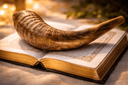
Another question: One of the decrees the Greeks tried to enforce was that we should write on a horn of an ox that we don’t have a chelek in Hashem of Yisroel. What’s the purpose of writing these words specifically on a horn of an ox?
In order to understand the answer to these questions, let's backtrack a bit to Parshas Vayishlach. Rav Gedalia Schorr writes in the name of the Sfas Emes, the pasuk says Hashem appeared to Yaakov, "od"-, again and he called him Yisroel. What is the significance of the word "od"- again? Says Rashi, Hashem appeared to Yaakov when he left the house of Lavan and again when he came back. The Sfas Emes says another peshat; Yaakov fulfilled his purpose with the name of "Yaakov" and was now zoche to a new name, Yisroel. You see, the name of a person is not just a name to label a person. Rather, a name tells the identity and the essence of a person. A person’s name signifies what he has to live up to. The Be’er Mayim Chaim says that when Adam Harishon named the animals, he had to know the essence of each animal in order to give it a proper name. Adam Harishon indeed understood the essence of each animal and that's why he was able to name them appropriately. He goes on to say in the name of his rebbe R’ Mechel m’Zlotchiv that it’s dangerous to change a name of a sick person because a name gives chiyus to a person. Sometimes, its' the name of a person that's keeping him alive, and if you don’t have ruach hakodesh, you might make things worse.
Rav Chaim Shmuelevitz says that Moshe Rabeinu had ten names because he was so multi-faceted that one name couldn’t describe his essence; he needed ten names to define his essence.
Back to our question about Hashem appearing to Yaakov "od" and calling him Yisroel - Says the Sfas Emes, his name was Yaakov, but at that point in time Yaakov Avinu finished what he had to do with that name. He was mesaken everything with the name "Yaakov" so now he merited a new name - Yisroel. Hashem gave him a new avoda and that’s why the pasuk says the lashon of “od”, meaning that Hashem gave him more beyond his original name.
Yaakov teaches us that no matter how much a yid does there is always more for him to do. The name of Yisroel emphasizes the power of "od", which means that a yid has the koach to expand the boundaries of kedusha for himself even more than originally what was intended.
We find twice that Yaakov Avinu was given the name Yisroel. The first time was after the confrontation with the malach of Eisav, the malach told him (Bereishis 32:29) "Your name will not be Yaakov anymore rather Yisroel". The second time (Bereishis 35:9) was when Hashem appeared to him and gave him the name. Why do we need the name change twice? My Father shlita explains that a yid has two avodos; "Sur m'ra", turning away from evil, and "aseh tov", doing the good. The malach, we know, was the sar of Esav and also the Yetzer Hara. After winning over the malach, the malach renamed Yaakov as Yisroel, saying you were successful in the aspect of sur m'ra, distancing yourself from evil and overcoming the tumah represented by the sar of Eisav. That's the meaning of "ki sarisa" – you are a sar – you won over my kochos hatumah. That's the name Yisroel from the malach's point of view.
However, Hashem renamed Yaakov as Yisroel because of the aspect of "aseh tov". In calling him Yisroel, Hashem was in essence giving Yaakov extra kochos, which are called "kochos odiyos".
Rav Gedalia Schorr at the end of Parsha Miketz
Rav Gedalia Schorr at the end of Parsha Miketz brings in the name of Rav Leibele Eiger (Rav Akiva Eiger’s grandson) an explanation of the words of the malach "ki sariss im Elokim v'im anashim vatuchal". You were able to overpower a malach, people, and then it says “vatuchal” you became kol – everything. Yaakov Avinu had the mida of shleimus which is the mida of kol. That was how Yaakov Avinu was able to say “yesh li kol” – for he truly had everything, the midah of "kol". And now, the name Yisroel gives Yaakov Avinu the koach of "od", which means no matter how much a yid accomplishes, he always has to add more – and more – and more.
Parshas Vayeishev begins with the words "Eleh toldos Yaakov Yosef" – what is the meaning of toldos? Rashi says in Parshas Noach that the toldos of tzadikim are their good deeds; that's their main "offsprings". Rav Mendel m'Riminov says that since "toldos" refers to good deeds, we can explain the pasuk as follows: "Eleh toldos Yaakov" – these are the good deeds of Yaakov, "Yosef", meaning, to keep on adding. This is the avodah of a yid, to keep on adding to his avodas Hashem, to keep on reaching higher and never being satisfied with his current madreigah.
Rav Gedalia Schorr says that now in Parshas Vayeishev, "bikesh Yaakov leshev b’shalva"- Yaakov thought that he already completed his avoda and can now relax. He accomplished the ultimate - he won over the yetzer hara - so he thought that now he won't have to exert himself anymore, but just maintain his madreigah. But no, "kafatz olav rugzo shel Yosef" – a brand new challenge arose, the challenge of "Yosef". Again, we have the lashon of "Yosef", more, hinting out that it's not enough that he accomplished so much until now. Rather, he has to continue to rise even more. A yid can never just "relax"; there's always more to do in avodas Hashem.
Says my Father shlita, that’s why by Chanukah there is a mitzva of "mosif v’holech", which means even though according to halacha you should be yotze with one candle, we don't do that on Chanukah. On Chanukah we must be "mosif", we must add, we must keep on growing. The Greeks wanted to kill this drive that a yid has, the ambition to keep on growing and rising higher. That's why they forbade specifically the three mitzvos of Shabbos, Bris Milah, and Rosh Chodesh. These three mitzvos symbolize that a yid is always seeking to do "more", to add in avodas Hashem. Hashem created a person with an arla; comes a yid and says "I want to add, I want to do more" and he removes the arla to perfect himself. Shabbos and Rosh Chodesh are days that a yid adds kedusha. He isn't satisfied with ordinary days – he elevates the days by adding more holiness. The Yevanim couldn't stand that. They couldn't tolerate the fact that yidden elevate the ordinary and keep on adding holiness.
And now, finally, we can understand why the Greeks insisted that we write on the horns of ox "we have no portion in Elokei Yisroel". They were stressing that we have no chelek in the name "Yisroel", the name that gives the koach of "od". Even though Yaakov finished his tafkid, Yisroel represents that there is more to do. The Greeks wanted to be mevatel that victory Yaakov had over the malach. Yevanim are of the opinion that man is not capable to improve in the perfection of creation. Now, why on a horn of an ox? When an ox is born, it isn't complete; it doesn’t have any horns yet. But when the ox grows up and develops horns, then it reaches perfection. There's no more shleimus for the ox. The Greeks wanted to point out that you are not any different than the ox. "Kisvu lachem al keren hashor" – write it on the horn of an ox that you have no connection to the name Yisroel. Just like an ox, you are what you are and cannot grow further. You cannot add to who you are. That's the message that the Yevanim were telling us.
"Melech Yavan" is gematria Yosef. Also, Antiochus is gematria Yosef. That's because Yosef is the opposite of Yavan, as Yosef means to add in avodas Hashem.
So, what does it mean that "Haragil b’ner havin banim talimidei chachomim"? One who is "ragil b'ner" is one who lives his life as a "mosif v'holech", one who always seeks to add to his avodas Hashem. Such a person has children who see a father full of passion for avodas Hashem. His children see how their father is never satisfied to just be "yotzei" a mitzvah. Rather, he is full of excitement for Torah and Mitzvos, always seeking to do more and more and add to his avodas Hashem. No wonder, then, that these children will grow up to be talmidei chachamim.
Let's take this beautiful message and live our life by it. Take the passion of "mosif v'holech" and light up not just your Chanukah, but the entire year.

Related Articles