The Yevonim Today Focusing Only on the Outside
SWEETER THAN HONEY | December 11, 2025
Print This Article
View Original PDF

The Yevonim Today Focusing Only on the Outside

SWEETER THAN HONEY | December 31, 2025

Everyone was getting angry.

R’ Gavriel Tauber ztl was once asked to fly into America to be the main speaker and inspire a big crowd.

As he was waiting to go on the plane, they said it was delayed by 3 hours. People started getting upset because they would miss business meetings and appointments.

R’ Tauber was also going to miss his big speech, but he didn’t go to scream at anyone but sat relaxed in his seat.

A Jewish professor went over to R’ Tauber and said, “Do you mind if I ask you a question? Almost everyone is upset, and you seem to be so relaxed. What is that?”

R’ Tauber smiled and said, “I believe in Hashem, and I trust that He knows what is best for me. If I am not supposed to go on yet, then this is for my best. I also have an important speech to give. But if Hashem decides otherwise, then I accept and trust that it’s all for the good.”

11 years later, R’ Tauber ran into someone and asked, “Do you remember me? I am the professor who met you at the airport, and you missed your big speech then.”

R’ Tauber said, “Of course, I remember.”

The professor said, “R’ Tauber, because of how I saw you react, I decided to look into Yiddishkeit, and now I am completely frum.”

That’s the lesson: Everything in life is for the good. The next time something doesn’t work out. Say I trust you Hashem.

This Connects To Chanukah:

On Chanukah, we found a small bottle of oil to light the Menorah.

The Menorah was lit every single day, but that day, we refreshed our love and appreciation for the mitzvah. We must refresh ourselves in emunah every day.

In the early 1900s, people were being fired from their jobs for not coming to work on Shabbos.

There was once a Yid who kept getting fired from job to job because he wasn’t coming to work on Shabbos.

One Sukkos, he wanted to show how much he loved Hashem and the Shabbos He gave us. He hung up in his sukkah all the papers that said “You Are Fired.” He told his kids it’s worth it to be a Yid and keep Shabbos. (The nicest Sukkah Decoration in the world.)

That’s the lesson: This type of decoration you can’t buy in a store. This is real beauty. Certain things money can’t buy.

In life, especially these days, there are so many Yidden who can hang up so many different tests they overcame.

This connects to Chanukah:

The Yevonim were very into beauty and looks; their focus was only on the outside. Today, everything must be “picture perfect” and look perfect on the outside—even if in real life it isn’t. The non-Jewish houses today are decorated with “colorful lights.” They have “fake beauty;” also only focused in the outside looks.

We have the real beauty and a more meaning life; an inner beauty that one can’t buy. It’s geshmak to be a Yid and it’s beautiful to be a Yid. If you don’t feel that, then maybe it’s time to learn what you are missing out on, how beautiful Yiddishkeit really is.

Someone called R’ Zechariah Wallerstein ztl and said there was a 3-year-old girl who was very sick with cancer and needed chizuk. “Can you speak to the girl and her mother?” “Yes, give them my number so they can call me.” They met, and R’ Wallerstein felt so bad for this little girl, a cute little 3-year-old girl with blonde hair and blue eyes.

“Hi, R’ Wallerstein,” the little girl said.

“Hi, how are you?” R’ Wallerstein asked gently.

“Not so good,” she said. “I’m not feeling so good today.”

R’ Wallerstein realized she wouldn’t understand or appreciate the words of chizuk because she was too young. So he said to her, “I have something special for you.”

R’ Wallerstein went to bring it; he told her that there is a big tzaddik, the Tosher Rebbe ztl, who personally sent me a blessed amulet in the shape of the Hebrew letter ‘hei’. It is very special to me, and I’m happy to give it to you as a gift. Please wear it as a necklace.

“What does the letter hei stand for?” she asked.

“It stands for Hashem…” R’ Wallerstein said. “Wear this, and it will remind you that Hashem is always watching over you.”

She put it on and gave R’ Wallerstein a big smile, and they left.

A short time later, the mother called R’ Wallerstein and said she just had to go through an operation, and they asked her to take off the amulet, but she said “No. Because R’ Wallerstein said I should always wear this.”

“She put her to sleep, took it off, and put it back before she woke up.” The mother continued saying, “The first thing she did when she woke up was check if she had her necklace.”

“R’ Wallerstein, when she was in the hospital and felt scared, she always thought about what you said and felt that Hashem was watching over her.”

Over time the treatments made her uncomfortable, she would hold onto the necklace and beg, “Hashem, please take away the pain.”

I called you today because, thank you, Hashem, the results just came in, and she is completely healthy!”

That’s the lesson: 1) We don’t understand why some have to go through such painful situations, but we must remember Hashem is watching over us. You are never alone. 2) There are so many people who just need a few words of hope, of chizuk, and you can literally help them through their challenges. You just have to want to help, and Hashem will give you the right words.

This connects to Chanukah:

Chanukah is a time when one realizes that just a little light pushes away the darkness. One small candle brings so much light.

One can face so many challenges, but the second they remember (and remind themselves by listening to a shiur in chizuk on emunah or a sefer/book about emunah) that Hashem is involved in their life, just a little spark of emunah – this chases away all the negativity.

Please Take Away The Pain.
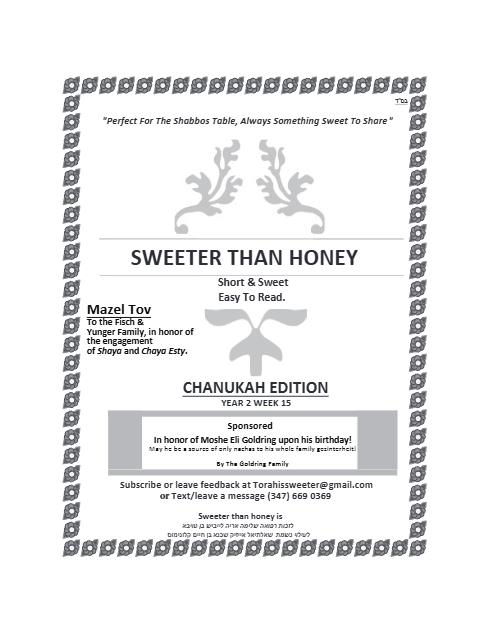
Everyone was getting angry.

R’ Gavriel Tauber ztl was once asked to fly into America to be the main speaker and inspire a big crowd.

As he was waiting to go on the plane, they said it was delayed by 3 hours. People started getting upset because they would miss business meetings and appointments.

R’ Tauber was also going to miss his big speech, but he didn’t go to scream at anyone but sat relaxed in his seat.

A Jewish professor went over to R’ Tauber and said, “Do you mind if I ask you a question? Almost everyone is upset, and you seem to be so relaxed. What is that?”

R’ Tauber smiled and said, “I believe in Hashem, and I trust that He knows what is best for me. If I am not supposed to go on yet, then this is for my best. I also have an important speech to give. But if Hashem decides otherwise, then I accept and trust that it’s all for the good.”

11 years later, R’ Tauber ran into someone and asked, “Do you remember me? I am the professor who met you at the airport, and you missed your big speech then.”

R’ Tauber said, “Of course, I remember.”

The professor said, “R’ Tauber, because of how I saw you react, I decided to look into Yiddishkeit, and now I am completely frum.”

That’s the lesson: Everything in life is for the good. The next time something doesn’t work out. Say I trust you Hashem.

This Connects To Chanukah:

On Chanukah, we found a small bottle of oil to light the Menorah.

The Menorah was lit every single day, but that day, we refreshed our love and appreciation for the mitzvah. We must refresh ourselves in emunah every day.

In the early 1900s, people were being fired from their jobs for not coming to work on Shabbos.

There was once a Yid who kept getting fired from job to job because he wasn’t coming to work on Shabbos.

One Sukkos, he wanted to show how much he loved Hashem and the Shabbos He gave us. He hung up in his sukkah all the papers that said “You Are Fired.” He told his kids it’s worth it to be a Yid and keep Shabbos. (The nicest Sukkah Decoration in the world.)

That’s the lesson: This type of decoration you can’t buy in a store. This is real beauty. Certain things money can’t buy.

In life, especially these days, there are so many Yidden who can hang up so many different tests they overcame.

This connects to Chanukah:

The Yevonim were very into beauty and looks; their focus was only on the outside. Today, everything must be “picture perfect” and look perfect on the outside—even if in real life it isn’t. The non-Jewish houses today are decorated with “colorful lights.” They have “fake beauty;” also only focused in the outside looks.

We have the real beauty and a more meaning life; an inner beauty that one can’t buy. It’s geshmak to be a Yid and it’s beautiful to be a Yid. If you don’t feel that, then maybe it’s time to learn what you are missing out on, how beautiful Yiddishkeit really is.

Someone called R’ Zechariah Wallerstein ztl and said there was a 3-year-old girl who was very sick with cancer and needed chizuk. “Can you speak to the girl and her mother?” “Yes, give them my number so they can call me.” They met, and R’ Wallerstein felt so bad for this little girl, a cute little 3-year-old girl with blonde hair and blue eyes.

“Hi, R’ Wallerstein,” the little girl said.

“Hi, how are you?” R’ Wallerstein asked gently.

“Not so good,” she said. “I’m not feeling so good today.”

R’ Wallerstein realized she wouldn’t understand or appreciate the words of chizuk because she was too young. So he said to her, “I have something special for you.”

R’ Wallerstein went to bring it; he told her that there is a big tzaddik, the Tosher Rebbe ztl, who personally sent me a blessed amulet in the shape of the Hebrew letter ‘hei’. It is very special to me, and I’m happy to give it to you as a gift. Please wear it as a necklace.

“What does the letter hei stand for?” she asked.

“It stands for Hashem…” R’ Wallerstein said. “Wear this, and it will remind you that Hashem is always watching over you.”

She put it on and gave R’ Wallerstein a big smile, and they left.

A short time later, the mother called R’ Wallerstein and said she just had to go through an operation, and they asked her to take off the amulet, but she said “No. Because R’ Wallerstein said I should always wear this.”

“She put her to sleep, took it off, and put it back before she woke up.” The mother continued saying, “The first thing she did when she woke up was check if she had her necklace.”

“R’ Wallerstein, when she was in the hospital and felt scared, she always thought about what you said and felt that Hashem was watching over her.”

Over time the treatments made her uncomfortable, she would hold onto the necklace and beg, “Hashem, please take away the pain.”

I called you today because, thank you, Hashem, the results just came in, and she is completely healthy!”

That’s the lesson: 1) We don’t understand why some have to go through such painful situations, but we must remember Hashem is watching over us. You are never alone. 2) There are so many people who just need a few words of hope, of chizuk, and you can literally help them through their challenges. You just have to want to help, and Hashem will give you the right words.

This connects to Chanukah:

Chanukah is a time when one realizes that just a little light pushes away the darkness. One small candle brings so much light.

One can face so many challenges, but the second they remember (and remind themselves by listening to a shiur in chizuk on emunah or a sefer/book about emunah) that Hashem is involved in their life, just a little spark of emunah – this chases away all the negativity.

Please Take Away The Pain.

PDF Preview