A New Language
Hashgacha Pratis | November 24, 2023
Print This Article
View Original PDF

A New Language

Hashgacha Pratis | December 31, 2025

I have a blessed home, bli ayin hara, filled with sweet, adorable children. Whoever sees them in the street will be sure their father is the happiest person in the world. They even learn well. What more can a Yid ask for?

No one can imagine what “bitter herbs” they feed me. Their voices and cries drown each other out and have gone way too far. One brings home a small prize from Avos Uvanim, and everyone starts crying – “How come only he got this?” When someone has a party or a trip or a siyum, it’s a great tzarah for both them and me. Their crying and the complaints rise to the heavens, and each one recalls all the injustices that were done to him from the day he was born up to this day, including the dreams he dreamed at night about how someone took something from him. The language in the house is embittered. “He took...he did...he got...,” not to mention what happens when someone makes a mistake or ruins something. I come home and am greeted by one of my children with a red face and terrible cries. “Did you get hurt?” I ask him. “Did something scare you?” and he answers, “Itzik spilled water on me!”

I become the “judge” and call over Itzik to find out what happened. Itzik claims that he didn’t spill anything, while Ari proves emphatically, with all sorts of osos umofsim, that no one but Itzik got his shirt wet. When I finally figure out that Itzik poured himself a cup of water, and some water dripped onto his brother’s shirt in the process, I calm down. “He didn’t do it on purpose,” I try to tell the “victim,” but he starts recalling all the things that were done intentionally. Itzik, on the other hand, recalls everything that was done to him. Sisu V’simchu....

When I subscribed to the Hashgachah Pratis Magazine, I wasn’t expecting much. My hope was that they would fight less when they had something to occupy them, but a surprise awaited me. Of course they fought plenty over who would get to read the comics first and who would solve the riddle first, but in time their fights became less frequent. They read the magazine voraciously and started saying things like, “It’s hashgachah pratis,” or, “If they give it to you, it’s min haShamayim,” and most amazingly, “It’s not your fault. What happened was because that was what Hashem wanted.”

I can’t say they’ve stopped fighting altogether, but I can say that the atmosphere in the house has changed completely. I’ve learned the “language” as well. Instead of being busy with exhausting “court cases” between plaintiff and defendant, we quickly come to the conclusions that “This is bashert.” The talk in the house has become uplifted, happy, enlightened. No longer am I greeted by red-faced, angry looks. The children are able to play more pleasantly, to praise more, to enjoy more, to hear, to calm down. There is serenity in the house. Nachas.

I attribute this change completely to the “Hashgachah Pratis Magazine for the home and family.”
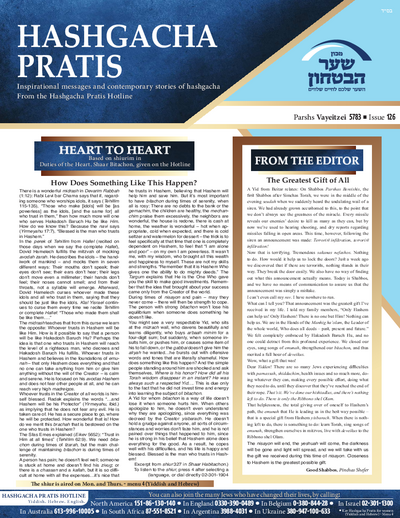
I have a blessed home, bli ayin hara, filled with sweet, adorable children. Whoever sees them in the street will be sure their father is the happiest person in the world. They even learn well. What more can a Yid ask for?

No one can imagine what “bitter herbs” they feed me. Their voices and cries drown each other out and have gone way too far. One brings home a small prize from Avos Uvanim, and everyone starts crying – “How come only he got this?” When someone has a party or a trip or a siyum, it’s a great tzarah for both them and me. Their crying and the complaints rise to the heavens, and each one recalls all the injustices that were done to him from the day he was born up to this day, including the dreams he dreamed at night about how someone took something from him. The language in the house is embittered. “He took...he did...he got...,” not to mention what happens when someone makes a mistake or ruins something. I come home and am greeted by one of my children with a red face and terrible cries. “Did you get hurt?” I ask him. “Did something scare you?” and he answers, “Itzik spilled water on me!”

I become the “judge” and call over Itzik to find out what happened. Itzik claims that he didn’t spill anything, while Ari proves emphatically, with all sorts of osos umofsim, that no one but Itzik got his shirt wet. When I finally figure out that Itzik poured himself a cup of water, and some water dripped onto his brother’s shirt in the process, I calm down. “He didn’t do it on purpose,” I try to tell the “victim,” but he starts recalling all the things that were done intentionally. Itzik, on the other hand, recalls everything that was done to him. Sisu V’simchu....

When I subscribed to the Hashgachah Pratis Magazine, I wasn’t expecting much. My hope was that they would fight less when they had something to occupy them, but a surprise awaited me. Of course they fought plenty over who would get to read the comics first and who would solve the riddle first, but in time their fights became less frequent. They read the magazine voraciously and started saying things like, “It’s hashgachah pratis,” or, “If they give it to you, it’s min haShamayim,” and most amazingly, “It’s not your fault. What happened was because that was what Hashem wanted.”

I can’t say they’ve stopped fighting altogether, but I can say that the atmosphere in the house has changed completely. I’ve learned the “language” as well. Instead of being busy with exhausting “court cases” between plaintiff and defendant, we quickly come to the conclusions that “This is bashert.” The talk in the house has become uplifted, happy, enlightened. No longer am I greeted by red-faced, angry looks. The children are able to play more pleasantly, to praise more, to enjoy more, to hear, to calm down. There is serenity in the house. Nachas.

I attribute this change completely to the “Hashgachah Pratis Magazine for the home and family.”

PDF Preview