Now You Know
מגדל אור | November 26, 2025
Print This Article
View Original PDF

Now You Know

מגדל אור | December 07, 2025

The Torah tells us that Hashem saw Leah was “despised,” so He opened her womb while Rachel remained barren. What exactly is meant by the word despised is the subject of much discussion.

Whether she was despised for going along with her father’s plan and didn’t reveal her identity to Yaakov, or whether she actually despised the actions of Esav and therefore truly desired to marry the tzaddik, Yaakov, there was some distance in the relationship.

Hashem saw her pain and opened her womb, while Rachel remained barren. Certainly, Yaakov and Rachel must have prayed mightily for Rachel to conceive, as did Yitzchak and Rivka. And yet, for Leah, it happened, but not for Rachel.

We see from here that though a person might pray and hope and believe in Hashem, sometimes their salvation comes through other means.

The suffering a person goes through, not just because of their actual situation, but because of the treatment they receive from others, can be more powerful than the prayers.

Though Leah felt unloved, she didn’t speak of her pain. Instead, she swallowed it and continued with her life. This is why Hashem “saw” her pain, and didn’t “hear” it.

This was a great merit for her and she was blessed with children.

When we go through difficult circumstances and sorrow, we should be comforted in the knowledge that this may well be the key to ending our pain.
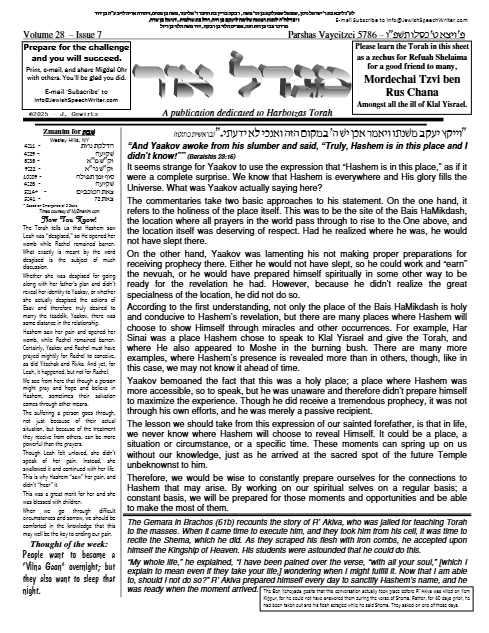

The Torah tells us that Hashem saw Leah was “despised,” so He opened her womb while Rachel remained barren. What exactly is meant by the word despised is the subject of much discussion.

Whether she was despised for going along with her father’s plan and didn’t reveal her identity to Yaakov, or whether she actually despised the actions of Esav and therefore truly desired to marry the tzaddik, Yaakov, there was some distance in the relationship.

Hashem saw her pain and opened her womb, while Rachel remained barren. Certainly, Yaakov and Rachel must have prayed mightily for Rachel to conceive, as did Yitzchak and Rivka. And yet, for Leah, it happened, but not for Rachel.

We see from here that though a person might pray and hope and believe in Hashem, sometimes their salvation comes through other means.

The suffering a person goes through, not just because of their actual situation, but because of the treatment they receive from others, can be more powerful than the prayers.

Though Leah felt unloved, she didn’t speak of her pain. Instead, she swallowed it and continued with her life. This is why Hashem “saw” her pain, and didn’t “hear” it.

This was a great merit for her and she was blessed with children.

When we go through difficult circumstances and sorrow, we should be comforted in the knowledge that this may well be the key to ending our pain.

PDF Preview