Plants Places and Animals in the Parsha Vayeitzei
Parsha Pages Youth | November 19, 2023
Print This Article
View Original PDF

Plants Places and Animals in the Parsha Vayeitzei

Parsha Pages Youth | December 31, 2025

In the Parsha VaYeitzei

Plants

Mandrake דודאים
The mandrake is mentioned is Genesis 30:14 as a plant with which Reuven brought home for his mother, Leah. Denoting passion or increased fertility. (Sanhedrin 99a) dispute as to whether Reuven brought home a plant, fruit, or roots.
Mandrake is a herb with violet flowers, yellow fruits and a forked root which belongs to the nightshade family.
Habitat: Mount Hermon, Mount Carmel and Gilboa.

Plane ערמון
The plane is mentioned in Genesis 30:37 as a plant with which Jacob tried to enlist the help of supernatural forces. He hoped that this would bring about a more just resolution of the conflict between himself and Laban.
The plane can grow up to a height of 20m/70ft and can support a trunk diameter as wide as 3m/9ft or more. It cyclically peels its trunk to expose new areas of the trunk.
Habitat: The plane can be found for example in the forests of Carmel.

Poplar לבנה
The Hebrew term livneh of Genesis 30:37 means a “white tree” (possible allusion to Lavan). It is considered by some translators to be a reference to a storax (or styrax in other sources) which has white blossoms. Some scholars dispute this and suggest instead that the word should be viewed as a reference to the white poplar.
The poplar is a white-barked tall tree with a pleasant fragrance.
Habitat: Middle East.

Places

Bethel בית א -ל
A town to the north of Jerusalem, where Jacob had the vision of the ladder (Genesis 28:11-22). It was after this vision that he gave it the name Beth El (House of G-d), it having previously been called Luz. He later built an altar there (Genesis 35:1-15). Others say the reference is to the spot of the Holy of Holies, which is truly to Gate to Heaven.

Charan חרן
A city in north-west Mesopotamia (now Altinbashak, near Urfa in modern Turkey) situated on a tributary of the Euphrates river. Terach and Abraham settled in Charan after leaving Ur Casdim (Genesis 11:31).
Charan was home to Isaac's bride Rebecca.Jacob fled to Charan to escape the wrath of Esau (Genesis 29:4) and married Laban's daughters Rachel and Leah. All of Jacob's children with the exception of Benjamin were born in Charan (Genesis 29:32-32:24). Known in classical times as Carrhae, it later became the headquarters of the Sabbean religion (Maimonides.)

Gal'ed גלעד
The name given by Jacob to the pillar erected in Transjordania (modern Jordan) by him and Laban to seal their agreement (Genesis 31:47-48). The name is explained as meaning 'Witness Mound', and was called by Lavan “Yegar Sahardutha”, which has the same meaning in Aramaic.
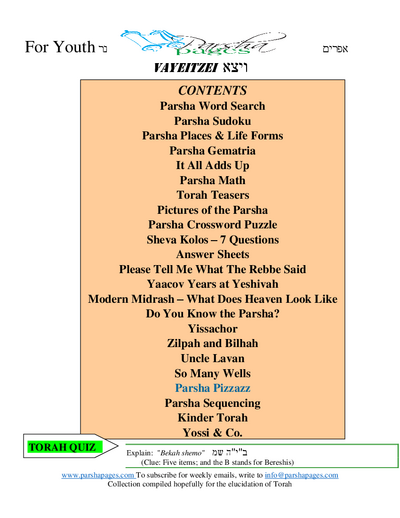
In the Parsha VaYeitzei

Plants

Mandrake דודאים
The mandrake is mentioned is Genesis 30:14 as a plant with which Reuven brought home for his mother, Leah. Denoting passion or increased fertility. (Sanhedrin 99a) dispute as to whether Reuven brought home a plant, fruit, or roots.
Mandrake is a herb with violet flowers, yellow fruits and a forked root which belongs to the nightshade family.
Habitat: Mount Hermon, Mount Carmel and Gilboa.

Plane ערמון
The plane is mentioned in Genesis 30:37 as a plant with which Jacob tried to enlist the help of supernatural forces. He hoped that this would bring about a more just resolution of the conflict between himself and Laban.
The plane can grow up to a height of 20m/70ft and can support a trunk diameter as wide as 3m/9ft or more. It cyclically peels its trunk to expose new areas of the trunk.
Habitat: The plane can be found for example in the forests of Carmel.

Poplar לבנה
The Hebrew term livneh of Genesis 30:37 means a “white tree” (possible allusion to Lavan). It is considered by some translators to be a reference to a storax (or styrax in other sources) which has white blossoms. Some scholars dispute this and suggest instead that the word should be viewed as a reference to the white poplar.
The poplar is a white-barked tall tree with a pleasant fragrance.
Habitat: Middle East.

Places

Bethel בית א -ל
A town to the north of Jerusalem, where Jacob had the vision of the ladder (Genesis 28:11-22). It was after this vision that he gave it the name Beth El (House of G-d), it having previously been called Luz. He later built an altar there (Genesis 35:1-15). Others say the reference is to the spot of the Holy of Holies, which is truly to Gate to Heaven.

Charan חרן
A city in north-west Mesopotamia (now Altinbashak, near Urfa in modern Turkey) situated on a tributary of the Euphrates river. Terach and Abraham settled in Charan after leaving Ur Casdim (Genesis 11:31).
Charan was home to Isaac's bride Rebecca.Jacob fled to Charan to escape the wrath of Esau (Genesis 29:4) and married Laban's daughters Rachel and Leah. All of Jacob's children with the exception of Benjamin were born in Charan (Genesis 29:32-32:24). Known in classical times as Carrhae, it later became the headquarters of the Sabbean religion (Maimonides.)

Gal'ed גלעד
The name given by Jacob to the pillar erected in Transjordania (modern Jordan) by him and Laban to seal their agreement (Genesis 31:47-48). The name is explained as meaning 'Witness Mound', and was called by Lavan “Yegar Sahardutha”, which has the same meaning in Aramaic.

PDF Preview