Yaakov's Realization of Yosef's Righteousness
Zera Shimshon | January 02, 2025
Print This Article
View Original PDF

Yaakov's Realization of Yosef's Righteousness

Zera Shimshon | June 27, 2025

“When they recounted all that Yosef had said to them, and when he saw the wagons (ahgahlos) that Yosef had sent to transport him, the spirit of their father Yaakov revived. “Great! (rav)” said Yisroel. “My son Yosef is still alive! I must go and see him before I die.”

The Medrash (Yalkut Shemoni Vayigash remez 152) explains the word Great (rav); My son Yosef is very strong (rav kocho) even though he went through many tribulations he remained righteous. However, I sinned when I said, "my ways are hidden from Hashem". However, I feel confident that I still have a portion in, "How abundant (rav) is the goodness that You have stored for those who fear You..." (Tehilim 31/20).

In other words, the Medrash explains that when Yaakov uttered the word, "Rav", Great!, he was not only expressing his joy that Yosef was still physically alive but also that Yosef fought to stay on his high spiritual level that he had attained before he was sold as a slave and brought to Mitzrayim.

Zera Shimshon asks how did Yaakov actually know this to be true? From the fact that Yaakov expressed his excitement of this implies that there was a reason to believe that Yosef wasn't strong enough to maintain his level of righteousness. If so what happened to convince Yosef that Yosef was still righteous?

Zera Shimshon gives two answers to this question. The first one is built on two other Midrashim.

Storing Torah and Mitzvos

Yalkut Shemoni (Tehilim 717) on the possuk "How abundant is the goodness that You have stored for those who fear You" explains; Rebbi Abba the son of Kahana said; Hakodesh Baruch Hue said to Yisroel; You stored Torah and Mitzvos in your hearts while you were in this world, as it is written (Tehillim 119/11), In my heart I stored Your words... I am storing that goodness for tzaddikim in the World To Come.

From this Medrash we learn the tremendous pleasure tzaddikim enjoy in the World to Come is a result of the Torah and mitzvos that they stored in their hearts when they were alive in this world.

It is written in the second Medrash, which Rashi quotes (Bereishis 45/27), the reason Yosef sent the wagons to Yaakov from Mitzrayim was to hint to Yaakov that the last subject they learnt together before he searched for his brothers was; the parsha of "Egla arufah" – the parsha of axing a young cow if a corpse is found between two cities and it is unknown who killed him.(Egla-calf and agalah-wagon are written with the same letters, only the vowels are different).

According to this, the way Yaakov knew that Yosef was still a tzaddik was that when Yaakov saw that Yosef still remembered what they learned together right before he left and he had stored it in his heart Yaakov was sure that goodness was also being stored for him in Olam Habah and consequently he knew that Yosef was still a tzaddik.

However, if Yosef's intent for sending the wagons (ahgahlos) was to show Yaakov that he still remembered what he had learned with Yaakov, Yosef should have chosen something that he learned with him previously which would show that he remembered even longer.

Rather Zera Shimshon suggests another way to understand how Yaakov understood that Yosef was still a tzaddik from the halachos of eglah aruffah.

The Mitzvah of Escorting

It is written in Mesechta Sotah that before the bais din of the closest city to where the corpse was found axes the neck of the young cow bais din proclaims that no one from their city saw the traveler who was murdered and therefore the city dwellers did not provide the traveler with food or an escort out of the city. The reason why they proclaimed this is that to escort a traveler even a short distance out of the city is a protection for the one traveling. Therefore, if they would have seen him and not escorted him they would be responsible for his death by not providing him with the protection he needed.

According to this, Yaakov saw the wagons and was reminded of the mitzvah of eglahah arufah (since they are spelled with the same letters) which in turn reminded him of the way that escorting someone a little of the way of his journey protects him. Since Yaakov knew that he escorted Yosef when he sent him to his other sons he reached the conclusion that Yosef was surely protected from any danger. This being so he concluded the reason Yosef suffered all of his tribulation was because he was a tzaddik and Hashem tests and torments tzaddikim in order to make them great like Chazal say in Berachos 5a; Rava said that Rav Seḥora said that Rav Huna said: Anyone in whom Hakodesh Baruch Hue delights, He oppresses him with suffering!
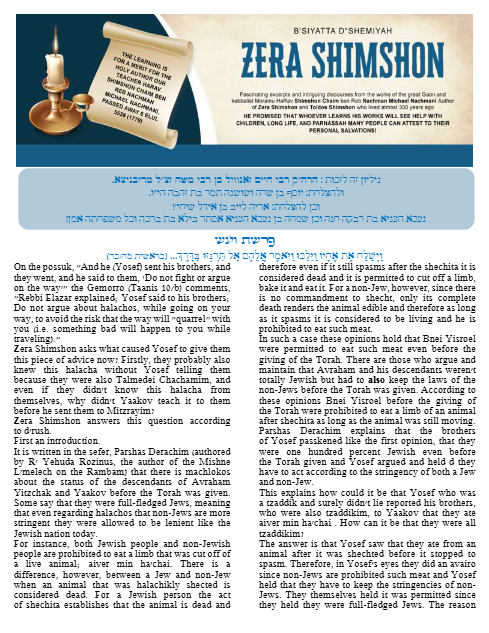
“When they recounted all that Yosef had said to them, and when he saw the wagons (ahgahlos) that Yosef had sent to transport him, the spirit of their father Yaakov revived. “Great! (rav)” said Yisroel. “My son Yosef is still alive! I must go and see him before I die.”

The Medrash (Yalkut Shemoni Vayigash remez 152) explains the word Great (rav); My son Yosef is very strong (rav kocho) even though he went through many tribulations he remained righteous. However, I sinned when I said, "my ways are hidden from Hashem". However, I feel confident that I still have a portion in, "How abundant (rav) is the goodness that You have stored for those who fear You..." (Tehilim 31/20).

In other words, the Medrash explains that when Yaakov uttered the word, "Rav", Great!, he was not only expressing his joy that Yosef was still physically alive but also that Yosef fought to stay on his high spiritual level that he had attained before he was sold as a slave and brought to Mitzrayim.

Zera Shimshon asks how did Yaakov actually know this to be true? From the fact that Yaakov expressed his excitement of this implies that there was a reason to believe that Yosef wasn't strong enough to maintain his level of righteousness. If so what happened to convince Yosef that Yosef was still righteous?

Zera Shimshon gives two answers to this question. The first one is built on two other Midrashim.

Storing Torah and Mitzvos

Yalkut Shemoni (Tehilim 717) on the possuk "How abundant is the goodness that You have stored for those who fear You" explains; Rebbi Abba the son of Kahana said; Hakodesh Baruch Hue said to Yisroel; You stored Torah and Mitzvos in your hearts while you were in this world, as it is written (Tehillim 119/11), In my heart I stored Your words... I am storing that goodness for tzaddikim in the World To Come.

From this Medrash we learn the tremendous pleasure tzaddikim enjoy in the World to Come is a result of the Torah and mitzvos that they stored in their hearts when they were alive in this world.

It is written in the second Medrash, which Rashi quotes (Bereishis 45/27), the reason Yosef sent the wagons to Yaakov from Mitzrayim was to hint to Yaakov that the last subject they learnt together before he searched for his brothers was; the parsha of "Egla arufah" – the parsha of axing a young cow if a corpse is found between two cities and it is unknown who killed him.(Egla-calf and agalah-wagon are written with the same letters, only the vowels are different).

According to this, the way Yaakov knew that Yosef was still a tzaddik was that when Yaakov saw that Yosef still remembered what they learned together right before he left and he had stored it in his heart Yaakov was sure that goodness was also being stored for him in Olam Habah and consequently he knew that Yosef was still a tzaddik.

However, if Yosef's intent for sending the wagons (ahgahlos) was to show Yaakov that he still remembered what he had learned with Yaakov, Yosef should have chosen something that he learned with him previously which would show that he remembered even longer.

Rather Zera Shimshon suggests another way to understand how Yaakov understood that Yosef was still a tzaddik from the halachos of eglah aruffah.

The Mitzvah of Escorting

It is written in Mesechta Sotah that before the bais din of the closest city to where the corpse was found axes the neck of the young cow bais din proclaims that no one from their city saw the traveler who was murdered and therefore the city dwellers did not provide the traveler with food or an escort out of the city. The reason why they proclaimed this is that to escort a traveler even a short distance out of the city is a protection for the one traveling. Therefore, if they would have seen him and not escorted him they would be responsible for his death by not providing him with the protection he needed.

According to this, Yaakov saw the wagons and was reminded of the mitzvah of eglahah arufah (since they are spelled with the same letters) which in turn reminded him of the way that escorting someone a little of the way of his journey protects him. Since Yaakov knew that he escorted Yosef when he sent him to his other sons he reached the conclusion that Yosef was surely protected from any danger. This being so he concluded the reason Yosef suffered all of his tribulation was because he was a tzaddik and Hashem tests and torments tzaddikim in order to make them great like Chazal say in Berachos 5a; Rava said that Rav Seḥora said that Rav Huna said: Anyone in whom Hakodesh Baruch Hue delights, He oppresses him with suffering!

PDF Preview