Chasidic Insights on Sacrifices and Divine Will
Torah Papers | March 30, 2025
Print This Article
View Original PDF

Chasidic Insights on Sacrifices and Divine Will

Torah Papers | June 27, 2025

Torah ask us to take valuable property and burn it, or at least part of it, for no apparent benefit? With regard to the sacrifices that the ancients offered up before the Giving of the Torah, we can assume that this was their way of expressing their indebtedness or submission to God. But here, we find God not only accepting sacrifices but explicitly legislating a sophisticated complex of procedures around the ritual of sacrifice, giving every indication that He not only accepts it but wants it. How does this mesh with the obvious truths that God values life and property, and does not at all need to “consume” our sacrifices?

The answer to this is to be found in the fact that the Torah characterizes only the sacrifices—to the exclusion of any other type of commandment—as being “pleasing” to God, the literal idioms used being the daring anthropomorphisms of their being “a pleasing odor to God” or His “food” or “bread.”

Why should this be? Certainly God is pleased when we perform any commandment, not only when we offer sacrifices.

Rashi describes the pleasure that God derives from the sacrifices as being the sheer pleasure that “I said [something] and My will was implemented.” In other words, it is precisely because apparently nothing is accomplished through the sacrifices (and even loss of life and/or property is incurred), other than the pure fulfillment of God’s will, that the sacrifices please God in the most unadulterated, unmediated way.

This is not to deny that there are many allegorical and even mystical explanations and expositions of the great, positive spiritual effects of the sacrificial rites; we will explore some of these explanations presently. But on the most basic, contextual level of understanding the Torah, the only explanation for the seemingly anomalous ritual of the sacrifices is that it is meant to express our unswerving devotion to God’s will.

Now, we have already seen that the commandments may be divided into three categories based on our ability to understand them, and one of these categories is that of the chukim, simple “rules” that defy rationalization. It would therefore seem that it is not just the sacrifices but all chukim that express our unswerving devotion to God’s will.

The difference, however, is that while we indeed fulfill chukim purely out of obedience to God’s will (inasmuch as they by definition have no apparent explanation), there is nothing in the chukim that contravenes logic; the reasons behind them may be inscrutable to us, but there is no reason not to assume that they do make sense on some plane of understanding beyond our ken. Thus, performing the chukim inculcates in us unquestioning devotion to God’s will, but this devotion does not preclude us from understanding that there is indeed some positive reason for these commandments, not the least of which is our very submission to His will and the self-discipline we gain thereby.
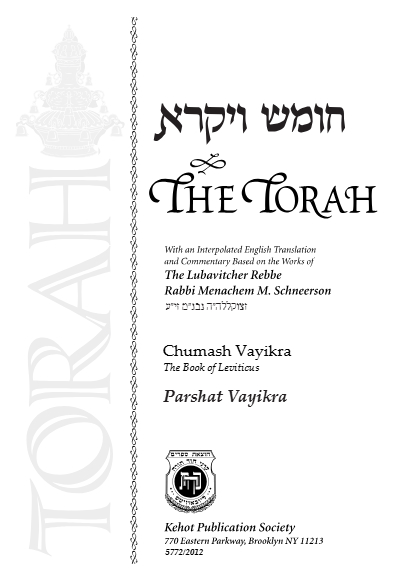

Torah ask us to take valuable property and burn it, or at least part of it, for no apparent benefit? With regard to the sacrifices that the ancients offered up before the Giving of the Torah, we can assume that this was their way of expressing their indebtedness or submission to God. But here, we find God not only accepting sacrifices but explicitly legislating a sophisticated complex of procedures around the ritual of sacrifice, giving every indication that He not only accepts it but wants it. How does this mesh with the obvious truths that God values life and property, and does not at all need to “consume” our sacrifices?

The answer to this is to be found in the fact that the Torah characterizes only the sacrifices—to the exclusion of any other type of commandment—as being “pleasing” to God, the literal idioms used being the daring anthropomorphisms of their being “a pleasing odor to God” or His “food” or “bread.”

Why should this be? Certainly God is pleased when we perform any commandment, not only when we offer sacrifices.

Rashi describes the pleasure that God derives from the sacrifices as being the sheer pleasure that “I said [something] and My will was implemented.” In other words, it is precisely because apparently nothing is accomplished through the sacrifices (and even loss of life and/or property is incurred), other than the pure fulfillment of God’s will, that the sacrifices please God in the most unadulterated, unmediated way.

This is not to deny that there are many allegorical and even mystical explanations and expositions of the great, positive spiritual effects of the sacrificial rites; we will explore some of these explanations presently. But on the most basic, contextual level of understanding the Torah, the only explanation for the seemingly anomalous ritual of the sacrifices is that it is meant to express our unswerving devotion to God’s will.

Now, we have already seen that the commandments may be divided into three categories based on our ability to understand them, and one of these categories is that of the chukim, simple “rules” that defy rationalization. It would therefore seem that it is not just the sacrifices but all chukim that express our unswerving devotion to God’s will.

The difference, however, is that while we indeed fulfill chukim purely out of obedience to God’s will (inasmuch as they by definition have no apparent explanation), there is nothing in the chukim that contravenes logic; the reasons behind them may be inscrutable to us, but there is no reason not to assume that they do make sense on some plane of understanding beyond our ken. Thus, performing the chukim inculcates in us unquestioning devotion to God’s will, but this devotion does not preclude us from understanding that there is indeed some positive reason for these commandments, not the least of which is our very submission to His will and the self-discipline we gain thereby.

PDF Preview