Grain Offerings and Their Preparation
Torah Papers | March 30, 2025
Print This Article
View Original PDF

Grain Offerings and Their Preparation

Torah Papers | June 27, 2025

If a grain-offering fried in a shallow frying pan is your sacrifice, it must be made of one-tenth of an ephah of fine wheat flour. The flour is first placed in a vessel containing some of the required log of oil; it is then mixed with some more of this oil and kneaded into ten loaves. It is then baked in the frying pan. Since the pan is shallow, the oil will burn up before it can soften the dough, so the resulting loaves will be crisp. The flour must be unleavened.

Leviticus 2:2-5

2 He must then bring the grain-offering to Aaron’s descendants, the priests, because from this point on, the sacrificial procedures are to be performed by them. As will be described presently, the priest must bring the grain-offering to the Altar. After having done this, and while standing anywhere in the Forecourt, or even from outside it—there where the offerer first gave him the grain-offering—the priest must scoop out a precise fistful of the mixture of the grain-offering’s fine flour and oil. He does this by inserting his open hand into the mixture, closing his middle three fingers on the palm of his hand, and removing the excess by running his two outer fingers down the sides of his closed three fingers. We will presently see that salt must be added to all grain-offerings when they are burned up on the Altar, but this fistful must consist only of the grain-offering’s flour and oil, apart from all its frankincense or any salt. The priest should therefore be careful not to collect any frankincense in his fistful. However, after removing the fistful and placing it in a vessel, he must gather all the frankincense and place it on top of the fistful. The priest must then bring the fistful with its frankincense to the top of the Altar, salt it, and then burn up the whole combination as the grain-offering’s memorial portion on the Altar. These ingredients are together termed the grain-offering’s “memorial portion” since it causes the offerer to be remembered, so to speak, on High. Removing the memorial portion from the main mixture must be performed with the intention that it be a fire-offering, i.e., destined to be consumed by fire, and that it be pleasing to God.

3 The remainder of the grain-offering will belong to the priests: first Aaron (or after him, the high priest then in office) must take whatever portion of it he chooses, and then his sons (or after them, the officiating priests) must take whatever is left, dividing it up among them. The priests must then bake the mixture any way they like, but their portion is still considered an offering of superior holiness, and therefore they may only eat it from the point in time when the memorial portion has been burned up on the Altar as one of the fire-offerings of God. If, however, the offerer is himself a priest, then no “memorial portion” is removed from his grain-offering, for it must be burned up in its entirety; none of it may be eaten. It does, however, still require oil and frankincense.

4 If you declare your intention to bring a grain-offering baked in an oven, it must consist of either ten unleavened loaves made out of one-tenth of an ephah of fine wheat flour mixed with a log of oil, or of ten flat unleavened cakes made out of one-tenth of an ephah of fine flour smeared with a log of oil. Either keep smearing them with oil until the log is used up, or smear them with the oil in the form of the Greek letter lambda (Λ)—which is an angular form of the Hebrew letter kaf (כ), the initial letter of the word for “priest” (kohen, כהן)—and give the rest of the log to the priests to consume separately. After baking the dough (and, in the case of the flat cakes, after applying the oil), break each of the ten loaves in two and then each half in two, so the priest will later be able to easily remove the memorial portion.
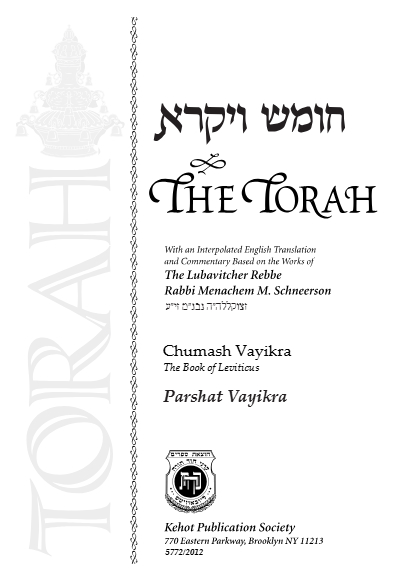

If a grain-offering fried in a shallow frying pan is your sacrifice, it must be made of one-tenth of an ephah of fine wheat flour. The flour is first placed in a vessel containing some of the required log of oil; it is then mixed with some more of this oil and kneaded into ten loaves. It is then baked in the frying pan. Since the pan is shallow, the oil will burn up before it can soften the dough, so the resulting loaves will be crisp. The flour must be unleavened.

Leviticus 2:2-5

2 He must then bring the grain-offering to Aaron’s descendants, the priests, because from this point on, the sacrificial procedures are to be performed by them. As will be described presently, the priest must bring the grain-offering to the Altar. After having done this, and while standing anywhere in the Forecourt, or even from outside it—there where the offerer first gave him the grain-offering—the priest must scoop out a precise fistful of the mixture of the grain-offering’s fine flour and oil. He does this by inserting his open hand into the mixture, closing his middle three fingers on the palm of his hand, and removing the excess by running his two outer fingers down the sides of his closed three fingers. We will presently see that salt must be added to all grain-offerings when they are burned up on the Altar, but this fistful must consist only of the grain-offering’s flour and oil, apart from all its frankincense or any salt. The priest should therefore be careful not to collect any frankincense in his fistful. However, after removing the fistful and placing it in a vessel, he must gather all the frankincense and place it on top of the fistful. The priest must then bring the fistful with its frankincense to the top of the Altar, salt it, and then burn up the whole combination as the grain-offering’s memorial portion on the Altar. These ingredients are together termed the grain-offering’s “memorial portion” since it causes the offerer to be remembered, so to speak, on High. Removing the memorial portion from the main mixture must be performed with the intention that it be a fire-offering, i.e., destined to be consumed by fire, and that it be pleasing to God.

3 The remainder of the grain-offering will belong to the priests: first Aaron (or after him, the high priest then in office) must take whatever portion of it he chooses, and then his sons (or after them, the officiating priests) must take whatever is left, dividing it up among them. The priests must then bake the mixture any way they like, but their portion is still considered an offering of superior holiness, and therefore they may only eat it from the point in time when the memorial portion has been burned up on the Altar as one of the fire-offerings of God. If, however, the offerer is himself a priest, then no “memorial portion” is removed from his grain-offering, for it must be burned up in its entirety; none of it may be eaten. It does, however, still require oil and frankincense.

4 If you declare your intention to bring a grain-offering baked in an oven, it must consist of either ten unleavened loaves made out of one-tenth of an ephah of fine wheat flour mixed with a log of oil, or of ten flat unleavened cakes made out of one-tenth of an ephah of fine flour smeared with a log of oil. Either keep smearing them with oil until the log is used up, or smear them with the oil in the form of the Greek letter lambda (Λ)—which is an angular form of the Hebrew letter kaf (כ), the initial letter of the word for “priest” (kohen, כהן)—and give the rest of the log to the priests to consume separately. After baking the dough (and, in the case of the flat cakes, after applying the oil), break each of the ten loaves in two and then each half in two, so the priest will later be able to easily remove the memorial portion.

PDF Preview