Hashgochah Pratis in Sifrei Kodesh
Hashgacha Pratis | March 21, 2024
Print This Article
View Original PDF

Hashgochah Pratis in Sifrei Kodesh

Hashgacha Pratis | June 27, 2025

Hashgachah Pratis in the Sefarim Hakedoshim

Excerpts from the popular shiur by Harav Yehuda Mandel shlit”a from Lakewood

Be Mordechai Hayehudi!

In Novaradok they said that every person needs to be like Mordechai. Mordechai symbolizes the total ba’al bitachon who was not intimidated by anyone. “And Mordechai would not kneel and would not bow.” So great was his bitachon that he did not rise, nor was he moved or impressed by the sight of Haman. He did not even sense that Haman was standing before him, for his menuchas hanefesh was complete. This is our life’s work – not to be moved or intimidated by anyone!

Sometimes it happens that we are together with many people, and we sit quietly. We are afraid that perhaps we will say something unsuitable. Under such circumstances, we need to break the ice, not to be intimidated or awestruck by the others, but rather to speak up. It is better to say something significant, such as a dvar Torah. And if there is nothing to say, then we should even say something insignificant, such as, “Can you please pass me the soda?” The point is to get rid of our tendency to be intimidated by people. The more you accustom yourself to doing so, the closer you’ll be to conquering your weakness, and before long you’ll be a new person, ready to conquer the world!

Both Mordechai Hayehudi and Esther Hamalkah were not intimidated by anyone. When they knew the correctness of their path, they did what they had to do. When Mordechai did not bow to Haman, everyone was angry and hated him – not only the Gentiles but the Jews as well. They claimed that Mordechai had caused the terrible decree against them because he did not bow to Haman. But Mordechai had the strength to stand up to their protests. Likewise, the Gemara (Megillah 15b) states that one of the reasons Esther invited Haman to the seudah with Achashveirosh was so that Am Yisrael would not assume that they had a sister in the king’s palace to depend on, and thus lose their focus in beseeching Hashem for His mercy. She was prepared to risk her own reputation so that everyone would think she had teamed up with Haman and abandoned her brethren. What was most important was that they would exert themselves to daven to Hashem.

Chovos Halevavos explains that this is the most desirable madreigah, termed hishtavus – equalization, meaning that it makes no difference to the person who is on this madreigah whether people praise him or curse him.

Never be afraid to do what you need to do!
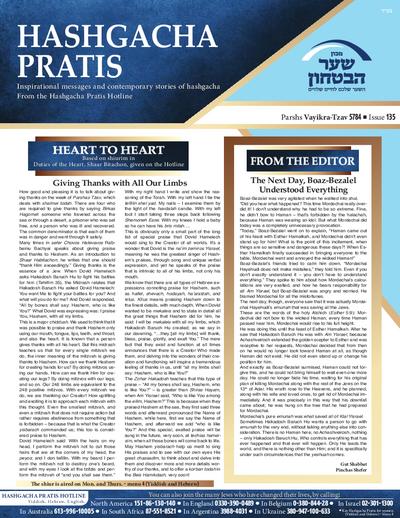
Hashgachah Pratis in the Sefarim Hakedoshim

Excerpts from the popular shiur by Harav Yehuda Mandel shlit”a from Lakewood

Be Mordechai Hayehudi!

In Novaradok they said that every person needs to be like Mordechai. Mordechai symbolizes the total ba’al bitachon who was not intimidated by anyone. “And Mordechai would not kneel and would not bow.” So great was his bitachon that he did not rise, nor was he moved or impressed by the sight of Haman. He did not even sense that Haman was standing before him, for his menuchas hanefesh was complete. This is our life’s work – not to be moved or intimidated by anyone!

Sometimes it happens that we are together with many people, and we sit quietly. We are afraid that perhaps we will say something unsuitable. Under such circumstances, we need to break the ice, not to be intimidated or awestruck by the others, but rather to speak up. It is better to say something significant, such as a dvar Torah. And if there is nothing to say, then we should even say something insignificant, such as, “Can you please pass me the soda?” The point is to get rid of our tendency to be intimidated by people. The more you accustom yourself to doing so, the closer you’ll be to conquering your weakness, and before long you’ll be a new person, ready to conquer the world!

Both Mordechai Hayehudi and Esther Hamalkah were not intimidated by anyone. When they knew the correctness of their path, they did what they had to do. When Mordechai did not bow to Haman, everyone was angry and hated him – not only the Gentiles but the Jews as well. They claimed that Mordechai had caused the terrible decree against them because he did not bow to Haman. But Mordechai had the strength to stand up to their protests. Likewise, the Gemara (Megillah 15b) states that one of the reasons Esther invited Haman to the seudah with Achashveirosh was so that Am Yisrael would not assume that they had a sister in the king’s palace to depend on, and thus lose their focus in beseeching Hashem for His mercy. She was prepared to risk her own reputation so that everyone would think she had teamed up with Haman and abandoned her brethren. What was most important was that they would exert themselves to daven to Hashem.

Chovos Halevavos explains that this is the most desirable madreigah, termed hishtavus – equalization, meaning that it makes no difference to the person who is on this madreigah whether people praise him or curse him.

Never be afraid to do what you need to do!
PDF Preview