The Sin Offering of the High Priest
Torah Papers | March 30, 2025
Print This Article
View Original PDF

The Sin Offering of the High Priest

Torah Papers | June 27, 2025

His sin that he has unwittingly committed, he must bring an unblemished young bull (i.e., between one and three years old) as a sin-offering to God. However, if the high priest knew that the act was forbidden but simply committed it unintentionally, he is not required to bring a sin-offering at all, unlike the leader or a lay person, who are required to bring a sin-offering when they either (a) did not know that the act is forbidden, or (b) knew that the act is forbidden but did not realize that what they were doing was the forbidden act, or (c) knew that the act is forbidden but did not know that it is punishable by excision.

If, however, they concluded erroneously that a specific act is permitted when in fact it is forbidden, and then committed the act relying on their erroneous conclusion, they are not liable to bring a sin-offering.

When the anointed high priest sins, it reinforces the people’s guilt, since, as will be explained later, they rely on him to atone for them by performing the Yom Kippur rites, and he lacks the merit to do so if he himself is tainted by sin. In contrast, since he represents the notion of atonement for sin, when the people see him atoning for his inadvertent sin, it impresses them with the necessity to atone for their own sins, even their inadvertent ones, and, following his example, they will not be ashamed to do so.

4 He must bring the bull to the entrance of the Tent of Meeting, thus being considered to have presented it before God. He must lean his hand forcefully upon the bull’s head and slaughter the bull before God, i.e., within the precincts of the Courtyard of the Tabernacle.

5 The anointed high priest must receive the blood in a consecrated vessel, and take some of the bull’s blood and bring it into the Tent of Meeting.

6 Standing inside the Sanctuary (the outer chamber of the Tabernacle) and facing the Curtain that divides the Sanctuary from the Holy of Holies (the inner chamber), the priest must dip his finger into the blood and sprinkle some of the blood seven times before God, toward the holy part of the Curtain, i.e., the part directly in front of the Ark, this being the two-and-a-half-cubit space between the slight protrusions in the Curtain caused by the Ark’s two poles. The blood does not have to reach the Curtain, but if some of it does, it does not thereby invalidate the procedure.

7 The priest must then place some of the blood on the four protrusions of the incense Altar, which is located inside the Tent of Meeting directly in front of the place where God’s Presence is revealed, i.e., directly in front of the Ark. (If he omits one of these blood-applications, intentionally or inadvertently, the rite is invalidated.) He must then exit the Tent of Meeting and pour all the rest of the bull’s blood onto the base of the Altar used for ascent-offerings, i.e., the Outer Altar—specifically, onto the side of the base that faces the entrance of the Tent of Meeting, i.e., the west side.

A Closer Look

The person intended to write “Reuben” and only wrote “Re,” he or she is exempt from having to bring a sin-offering, since “Re” is not a word. (By rabbinic prohibition, even writing a non-word is forbidden, but transgressing a rabbinic prohibition does not obligate the transgressor to bring a sin-offering.)
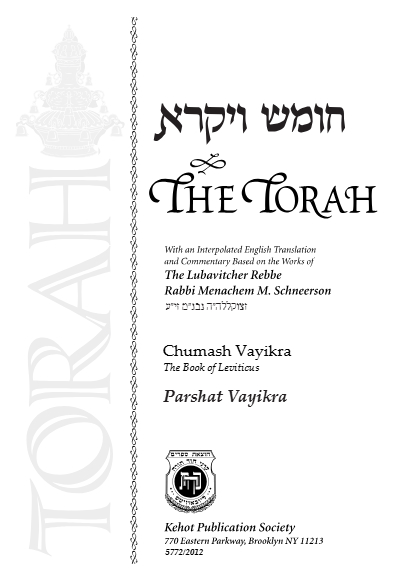
His sin that he has unwittingly committed, he must bring an unblemished young bull (i.e., between one and three years old) as a sin-offering to God. However, if the high priest knew that the act was forbidden but simply committed it unintentionally, he is not required to bring a sin-offering at all, unlike the leader or a lay person, who are required to bring a sin-offering when they either (a) did not know that the act is forbidden, or (b) knew that the act is forbidden but did not realize that what they were doing was the forbidden act, or (c) knew that the act is forbidden but did not know that it is punishable by excision.

If, however, they concluded erroneously that a specific act is permitted when in fact it is forbidden, and then committed the act relying on their erroneous conclusion, they are not liable to bring a sin-offering.

When the anointed high priest sins, it reinforces the people’s guilt, since, as will be explained later, they rely on him to atone for them by performing the Yom Kippur rites, and he lacks the merit to do so if he himself is tainted by sin. In contrast, since he represents the notion of atonement for sin, when the people see him atoning for his inadvertent sin, it impresses them with the necessity to atone for their own sins, even their inadvertent ones, and, following his example, they will not be ashamed to do so.

4 He must bring the bull to the entrance of the Tent of Meeting, thus being considered to have presented it before God. He must lean his hand forcefully upon the bull’s head and slaughter the bull before God, i.e., within the precincts of the Courtyard of the Tabernacle.

5 The anointed high priest must receive the blood in a consecrated vessel, and take some of the bull’s blood and bring it into the Tent of Meeting.

6 Standing inside the Sanctuary (the outer chamber of the Tabernacle) and facing the Curtain that divides the Sanctuary from the Holy of Holies (the inner chamber), the priest must dip his finger into the blood and sprinkle some of the blood seven times before God, toward the holy part of the Curtain, i.e., the part directly in front of the Ark, this being the two-and-a-half-cubit space between the slight protrusions in the Curtain caused by the Ark’s two poles. The blood does not have to reach the Curtain, but if some of it does, it does not thereby invalidate the procedure.

7 The priest must then place some of the blood on the four protrusions of the incense Altar, which is located inside the Tent of Meeting directly in front of the place where God’s Presence is revealed, i.e., directly in front of the Ark. (If he omits one of these blood-applications, intentionally or inadvertently, the rite is invalidated.) He must then exit the Tent of Meeting and pour all the rest of the bull’s blood onto the base of the Altar used for ascent-offerings, i.e., the Outer Altar—specifically, onto the side of the base that faces the entrance of the Tent of Meeting, i.e., the west side.

A Closer Look

The person intended to write “Reuben” and only wrote “Re,” he or she is exempt from having to bring a sin-offering, since “Re” is not a word. (By rabbinic prohibition, even writing a non-word is forbidden, but transgressing a rabbinic prohibition does not obligate the transgressor to bring a sin-offering.)

PDF Preview