The Sprinkler System
Toras Avigdor | April 04, 2025
Print This Article
View Original PDF

The Sprinkler System

Toras Avigdor | June 27, 2025

We begin with a possuk in our sedrah, י≈נּ¿בּיבוƒר¿ ̃ƒה¿ו יבƒבָס ַחּ≈ב¿זּƒמַה לַﬠ םָּ„ַה ̇∆‡ּו ̃¿רָז¿ו םָּ„ַה ̇∆‡ יםƒנֲהֹּכַה ןֹרֲהַ‡ – and the kohanim should bring the blood to the mizbeach and sprinkle it on its corners (Vayikra 1:5). When a korban was brought, the kohen would catch the blood in a basin and sprinkle it on the mizbeach. But the possuk is telling us that before the actual sprinkling of the blood, there was another avodah that had to be performed: יבוƒר¿ ̃ƒה¿ו – The kohanim should bring the blood. In Gemara parlance it’s called ‘holacha, walking’ and it means that there was a special procedure of walking towards the mizbeach in order to sprinkle the blood.

And it was an essential part of the avodah; in most cases if it wasn’t done the entire korban would be rendered possul and unacceptable. Even if they would find a solution to avoid the walking – imagine they make an assembly line and a line of kohanim are standing from the place where the blood was caught all the way to the mizbeach, and they’re handing it one to the other until the last kohen who’s standing near the mizbeach sprinkles the blood; it’s no good. Even though the sprinkling is done it’s not a kosher korban because it omits holacha – it lacks the procedure of walking towards the altar and the essential lesson that holacha is coming to teach us.
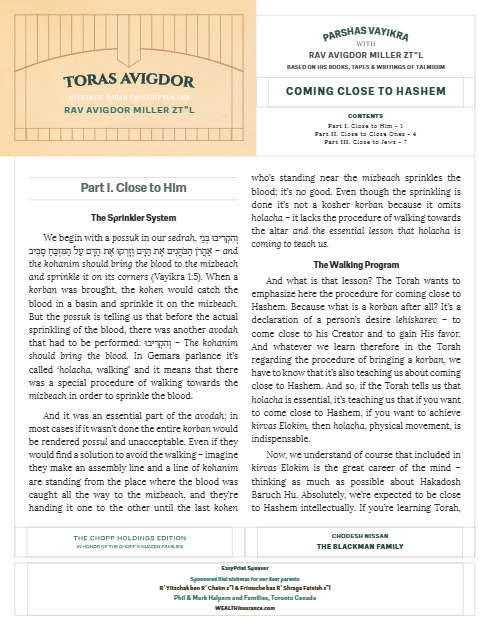
We begin with a possuk in our sedrah, י≈נּ¿בּיבוƒר¿ ̃ƒה¿ו יבƒבָס ַחּ≈ב¿זּƒמַה לַﬠ םָּ„ַה ̇∆‡ּו ̃¿רָז¿ו םָּ„ַה ̇∆‡ יםƒנֲהֹּכַה ןֹרֲהַ‡ – and the kohanim should bring the blood to the mizbeach and sprinkle it on its corners (Vayikra 1:5). When a korban was brought, the kohen would catch the blood in a basin and sprinkle it on the mizbeach. But the possuk is telling us that before the actual sprinkling of the blood, there was another avodah that had to be performed: יבוƒר¿ ̃ƒה¿ו – The kohanim should bring the blood. In Gemara parlance it’s called ‘holacha, walking’ and it means that there was a special procedure of walking towards the mizbeach in order to sprinkle the blood.

And it was an essential part of the avodah; in most cases if it wasn’t done the entire korban would be rendered possul and unacceptable. Even if they would find a solution to avoid the walking – imagine they make an assembly line and a line of kohanim are standing from the place where the blood was caught all the way to the mizbeach, and they’re handing it one to the other until the last kohen who’s standing near the mizbeach sprinkles the blood; it’s no good. Even though the sprinkling is done it’s not a kosher korban because it omits holacha – it lacks the procedure of walking towards the altar and the essential lesson that holacha is coming to teach us.

PDF Preview