Opposition to the Chasidic Movement and the Imprisonment of the Rebbe
L’Chaim | December 12, 2024
Print This Article
View Original PDF

Opposition to the Chasidic Movement and the Imprisonment of the Rebbe

L’Chaim | June 27, 2025

As the Chasidic Movement grew in popularity and expanded, opposition to its teachings and practices increased. Particularly in the scholarly circles of Lithuania, antagonism toward the movement intensified. The battle continued over the next twenty years. After the passing of the saintly leader, the movement faced even greater challenges, but it also gained strength under new leadership. Perhaps the strongest reason for the violent feelings was the publication of the seminal work, the Tanya. A special committee was formed with the express purpose of destroying Chasidism. It was decided to use the power of the central government in Russia to suppress the movement.

Because the Rebbe had established a fund for aiding the indigent of the Holy Land, which was then under the sovereignty of Turkey and an enemy of Russia, the opponents accused him of disbursing funds to a foreign power. They also added the charge that in his teachings he denigrated the importance of kingship.

The Rebbe was arrested and transported in a special vehicle reserved for the transport of the worst criminals, to the frightful Peter-Paul Fortress. He was endlessly interrogated regarding the charges and other matters of the Jewish faith in which the government interested itself.

Despite the harsh conditions, the Rebbe preserved his composure in the most trying of circumstances, and answered their inquiries with extraordinary wisdom. Even in matters totally divorced from the charges, the Rebbe's saintliness was evident. Once, the Rebbe was interred in a room which was pitch black, as dark in the day as in the night. His only source of light was a small lamp. One day, at about two o'clock in the afternoon, the Rebbe was told that it was time for Mincha, the afternoon prayer. The astonished jailers asked him how he could possibly know that, to which he replied that just as the day is illuminated by the four-letter Name (Tetragrammaton), while the night is illuminated by the twelve forms of the Divine Name, so too could he sense the time. The jailers were amazed at his wisdom and saintliness.

During the term of the Rebbe's imprisonment, the Chief of Police discussed the case with the Czar, telling him that he perceived the prisoner to be a saintly individual who was the victim of false charges stemming from jealousy and hatred. The Czar became curious to meet such an extraordinary person and decided to draw his own conclusions. He disguised himself as an ordinary clerk of the court and went to see the Rebbe for himself. But as soon as he entered the cell, the Rebbe rose and uttered the blessing which is recited before royalty. The disguised Czar asked him in surprise why he stood and appeared to accord him such great honor, as he was a mere clerk. The Rebbe replied that just as he experienced an unusual sense of awe when the Czar entered, so too did he sense the presence of royalty now. The Czar was deeply impressed by the Rebbe's wisdom and composure.

Throughout his terrible ordeal the Rebbe never doubted his salvation. When the time came for the Rebbe to be brought to court for an important interrogation, he was led from his underground cell out into the cold night air. He was seated on the deck of a ferry which was to bring him across the river to the Imperial Court. The Rebbe suddenly saw emerging from behind a cloud the sliver of a new moon. He requested that the boat stop so that he could recite the blessing upon seeing the new moon. The words had hardly left his lips when the boat stopped of its own accord. The Rebbe recited the Psalm which precedes the blessing, and the boat continued across the river. A few seconds later the Rebbe repeated his request to halt the boat. The attendant, seeing the saintly rabbi's devotion, asked for a blessing, which the Rebbe wrote on a piece of paper. The attendant stopped the boat while the Rebbe completed the blessing, and kept the note inscribed with the blessing in an ornate golden frame, which was passed as an inheritance to his descendants.

In the end, the Rebbe was released from prison, and the Chasidic Movement continued to flourish.
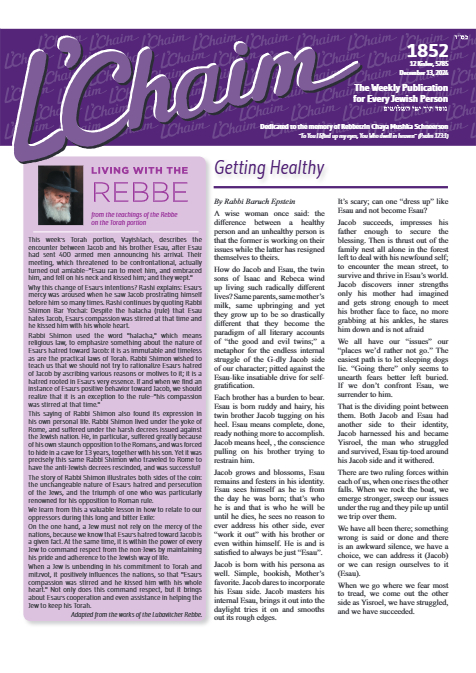
As the Chasidic Movement grew in popularity and expanded, opposition to its teachings and practices increased. Particularly in the scholarly circles of Lithuania, antagonism toward the movement intensified. The battle continued over the next twenty years. After the passing of the saintly leader, the movement faced even greater challenges, but it also gained strength under new leadership. Perhaps the strongest reason for the violent feelings was the publication of the seminal work, the Tanya. A special committee was formed with the express purpose of destroying Chasidism. It was decided to use the power of the central government in Russia to suppress the movement.

Because the Rebbe had established a fund for aiding the indigent of the Holy Land, which was then under the sovereignty of Turkey and an enemy of Russia, the opponents accused him of disbursing funds to a foreign power. They also added the charge that in his teachings he denigrated the importance of kingship.

The Rebbe was arrested and transported in a special vehicle reserved for the transport of the worst criminals, to the frightful Peter-Paul Fortress. He was endlessly interrogated regarding the charges and other matters of the Jewish faith in which the government interested itself.

Despite the harsh conditions, the Rebbe preserved his composure in the most trying of circumstances, and answered their inquiries with extraordinary wisdom. Even in matters totally divorced from the charges, the Rebbe's saintliness was evident. Once, the Rebbe was interred in a room which was pitch black, as dark in the day as in the night. His only source of light was a small lamp. One day, at about two o'clock in the afternoon, the Rebbe was told that it was time for Mincha, the afternoon prayer. The astonished jailers asked him how he could possibly know that, to which he replied that just as the day is illuminated by the four-letter Name (Tetragrammaton), while the night is illuminated by the twelve forms of the Divine Name, so too could he sense the time. The jailers were amazed at his wisdom and saintliness.

During the term of the Rebbe's imprisonment, the Chief of Police discussed the case with the Czar, telling him that he perceived the prisoner to be a saintly individual who was the victim of false charges stemming from jealousy and hatred. The Czar became curious to meet such an extraordinary person and decided to draw his own conclusions. He disguised himself as an ordinary clerk of the court and went to see the Rebbe for himself. But as soon as he entered the cell, the Rebbe rose and uttered the blessing which is recited before royalty. The disguised Czar asked him in surprise why he stood and appeared to accord him such great honor, as he was a mere clerk. The Rebbe replied that just as he experienced an unusual sense of awe when the Czar entered, so too did he sense the presence of royalty now. The Czar was deeply impressed by the Rebbe's wisdom and composure.

Throughout his terrible ordeal the Rebbe never doubted his salvation. When the time came for the Rebbe to be brought to court for an important interrogation, he was led from his underground cell out into the cold night air. He was seated on the deck of a ferry which was to bring him across the river to the Imperial Court. The Rebbe suddenly saw emerging from behind a cloud the sliver of a new moon. He requested that the boat stop so that he could recite the blessing upon seeing the new moon. The words had hardly left his lips when the boat stopped of its own accord. The Rebbe recited the Psalm which precedes the blessing, and the boat continued across the river. A few seconds later the Rebbe repeated his request to halt the boat. The attendant, seeing the saintly rabbi's devotion, asked for a blessing, which the Rebbe wrote on a piece of paper. The attendant stopped the boat while the Rebbe completed the blessing, and kept the note inscribed with the blessing in an ornate golden frame, which was passed as an inheritance to his descendants.

In the end, the Rebbe was released from prison, and the Chasidic Movement continued to flourish.

PDF Preview