The Boat-Stopping Kiddush Levana
Lamplighter | November 29, 2023
Print This Article
View Original PDF

The Boat-Stopping Kiddush Levana

Lamplighter | December 31, 2025

During Autumn of 1798, Rabbi Schneur Zalman was arrested on charges that his teachings and activities threatened the imperial authority of the Czar, and was subsequently imprisoned in an island fortress in the Neva River in Petersburg. During his interrogations, he was compelled to expose to the Czar's ministers the basic tenets of Judaism, and explain various points of Chassidic philosophy and practice. After 52 days, he was exonerated of all charges and released.

We present you with a story which took place during that time.

After his arrest, Rabbi Shneur Zalman was at once escorted to the secret cells of the dreaded Peter-Paul fortress in St. Petersburg. There he was to spend over seven weeks, until his miraculous release on Yud-Tes (19) Kislev 1798. For the first three weeks he was held under severe conditions which were reserved for those imprisoned for rebelling against the Czar. The rationale for this was simple. One of the principal charges against the Rebbe was that he had raised funds for Russia's traditional enemy, the Turkish sultan. (He had actually collected money through the charity of Rabbi Meir Baal Haness to Fund and support his Chassidim in the Holy Land, which then happened to be under Turkish rule!)

This interrogation took place not there, but in the headquarters of the Tainy Soviet, the Secret Council on the other side of the Neva River, so that the Rebbe had to be taken across back and forth each time by ferry.

On one such occasion the Rebbe asked the captain to stop the ferry so that he could recite the Kiddush Levana prayer-the blessing recited over the New Moon, in a stationary position, The captain refused, whereupon the Rebbe said: "If I want to, I can arrange for it to stop against your will!"

And indeed, after the man again refused to oblige, the boat suddenly stopped on its own in the middle of the river! The Rebbe then recited the verses of Psalm 148 which are said prior to the blessing over the moon, but did not begin recitation of the blessing itself. The ferryman realized that unusual forces were at work. He begged the Rebbe to release the boat. The ferry then proceeded on its way.

The Rebbe then again repeated his request for the captain to stop the boat, and the captain then asked: "What will you give me in exchange for this favour?"

In reply, Rabbi Shneur Zalman gave him a blessing. The man then demanded it in writing, and the Rebbe recorded it on a note in his own handwriting.

In later years, when that official rose to a position of power and enjoyed an old age of honour and prosperity, he treasured that note, which he kept under glass in a heavy gold frame. Indeed, it was seen and read by a renowned Chassid by the name of Rabbi Dov Ze'ev who, before he was appointed rabbi of the Chassidic community in Yekatrinoslav, lived in Stradov. There he was the community's mashpia - that is, the elder Chassid charged with the teaching of Chassidic philosophy and the guidance of the brotherhood in observance and self-refinement. He had heard from an aged Chassid that there lived a gentile squire not too far from Stradov, who was the son of the official who had received that written blessing from Reb Shneur Zalman halfway across the River Neva. The son too revered the note in the frame, he said. Hearing this, Rabbi Dov Ze'ev made it his business to locate that nobleman, and was thus able to see the note.

One Yud-Tes Kislev, on the anniversary of Rabbi Shneur Zalman's release, Rabbi Yosef Yitzchak (The Previous Rebbe), related the above episode and added that as a boy he had been left with a question upon hearing this story. Since the Rebbe had already stopped the boat the first time, why did he not recite the blessing as well? Why did he have to depend on the captain to do it for him in order to recite the blessing? When he had grown older, he continued, and had a deeper understanding of Chabad Chassidic philosophy, he understood the fundamental principle involved. The Rebbe had been obliged to act as he did, for a mitzvah is meant to be performed in a natural manner and not via supernatural means.
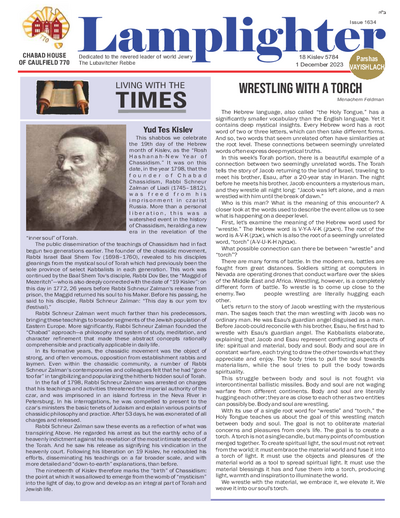
During Autumn of 1798, Rabbi Schneur Zalman was arrested on charges that his teachings and activities threatened the imperial authority of the Czar, and was subsequently imprisoned in an island fortress in the Neva River in Petersburg. During his interrogations, he was compelled to expose to the Czar's ministers the basic tenets of Judaism, and explain various points of Chassidic philosophy and practice. After 52 days, he was exonerated of all charges and released.

We present you with a story which took place during that time.

After his arrest, Rabbi Shneur Zalman was at once escorted to the secret cells of the dreaded Peter-Paul fortress in St. Petersburg. There he was to spend over seven weeks, until his miraculous release on Yud-Tes (19) Kislev 1798. For the first three weeks he was held under severe conditions which were reserved for those imprisoned for rebelling against the Czar. The rationale for this was simple. One of the principal charges against the Rebbe was that he had raised funds for Russia's traditional enemy, the Turkish sultan. (He had actually collected money through the charity of Rabbi Meir Baal Haness to Fund and support his Chassidim in the Holy Land, which then happened to be under Turkish rule!)

This interrogation took place not there, but in the headquarters of the Tainy Soviet, the Secret Council on the other side of the Neva River, so that the Rebbe had to be taken across back and forth each time by ferry.

On one such occasion the Rebbe asked the captain to stop the ferry so that he could recite the Kiddush Levana prayer-the blessing recited over the New Moon, in a stationary position, The captain refused, whereupon the Rebbe said: "If I want to, I can arrange for it to stop against your will!"

And indeed, after the man again refused to oblige, the boat suddenly stopped on its own in the middle of the river! The Rebbe then recited the verses of Psalm 148 which are said prior to the blessing over the moon, but did not begin recitation of the blessing itself. The ferryman realized that unusual forces were at work. He begged the Rebbe to release the boat. The ferry then proceeded on its way.

The Rebbe then again repeated his request for the captain to stop the boat, and the captain then asked: "What will you give me in exchange for this favour?"

In reply, Rabbi Shneur Zalman gave him a blessing. The man then demanded it in writing, and the Rebbe recorded it on a note in his own handwriting.

In later years, when that official rose to a position of power and enjoyed an old age of honour and prosperity, he treasured that note, which he kept under glass in a heavy gold frame. Indeed, it was seen and read by a renowned Chassid by the name of Rabbi Dov Ze'ev who, before he was appointed rabbi of the Chassidic community in Yekatrinoslav, lived in Stradov. There he was the community's mashpia - that is, the elder Chassid charged with the teaching of Chassidic philosophy and the guidance of the brotherhood in observance and self-refinement. He had heard from an aged Chassid that there lived a gentile squire not too far from Stradov, who was the son of the official who had received that written blessing from Reb Shneur Zalman halfway across the River Neva. The son too revered the note in the frame, he said. Hearing this, Rabbi Dov Ze'ev made it his business to locate that nobleman, and was thus able to see the note.

One Yud-Tes Kislev, on the anniversary of Rabbi Shneur Zalman's release, Rabbi Yosef Yitzchak (The Previous Rebbe), related the above episode and added that as a boy he had been left with a question upon hearing this story. Since the Rebbe had already stopped the boat the first time, why did he not recite the blessing as well? Why did he have to depend on the captain to do it for him in order to recite the blessing? When he had grown older, he continued, and had a deeper understanding of Chabad Chassidic philosophy, he understood the fundamental principle involved. The Rebbe had been obliged to act as he did, for a mitzvah is meant to be performed in a natural manner and not via supernatural means.

PDF Preview