The Prayer of Moshe and the "Flow" of Tefillah
Pardes Yehuda | July 22, 2026
Print This Article
View Original PDF

The Prayer of Moshe and the "Flow" of Tefillah

Pardes Yehuda | July 19, 2026

"I entreated the Lord at that time, saying, אֶתְחַנַּן אֶל ה' בָּעֵת הַהִוא לֵאמֹר: (ג כד) אֶעְבְּרָה נָּא וְאֶרְאֶה אֶת הָאָרֶץ הַטּוֹבָה אֲשֶׁר בְּעֵבֶר הַיַּרְדֵּן 'Let me cross over and see the good land that is on the other side of the Jordan.'"

This teaching touches on the spiritual reality of tefillah. The Gemara (Berachos 34b) states that when a Tzaddik’s prayer flows fluently and effortlessly from their mouth, שגורה בפיו, it is a divine sign that the prayer has been accepted. The heilige Rebbe of Barditchov, Harav Levi Yitzchok, uses this concept to explain Moshe Rabbeinu’s experience. Moshe prayed 515 prayers (ואתחנן equals 515 in gematria) to enter the Land of Israel. Yet, Hashem had already decreed that Moshe would not cross the Jordan. Because the answer was ultimately "no," the spiritual prayer lines were restricted. Moshe felt the resistance in his speech; the words did not flow with their usual smoothness. Moshe wasn't just begging to enter the land; he was begging for the connection of the prayer in itself. He prayed that his words should flow freely, because to a Tzaddik, the agony of a blocked prayer is worse than not getting what they asked for.

This teaches us that when we find it incredibly difficult to pray or express our hearts to Hashem, it isn't necessarily a personal failure—it is a reflection of divine hiddenness הסתר פנים at that specific moment. But! Never give up, as Moshe never gave up on his prayers—all 515 of them—until Hashem told him clearly, "רַב לָךְ אַל תּוֹסֶף דַּבֵּר אֵלַי עוֹד בַּדָּבָר הַזֶּה It is enough for you; speak to Me no more regarding this matter". Dovid Hamelech teaches us this concept in Chapter 27:14 of Tehillim: "קַוֵּה אֶל ה' חֲזַק וְיַאֲמֵץ לִבֶּךָ וְקַוֵּה אֶל ה' Hope for the Lord, be strong and He will give your heart courage, and hope for the Lord". See Rashi on the Pasuk, which explains the word “Hope” as prayer. If your prayer is not accepted, keep on praying. We trust and have faith in Hashem that no prayer goes unanswered. Yet, we must pray: הַרְאֵנוּ ה' חַסְדֶּךָ וְיֶשְׁעֲךָ תִּתֶּן לָנוּ (Tehillim 85) — "Show us, O Lord, Your kindness, and Your salvation You shall give to us."
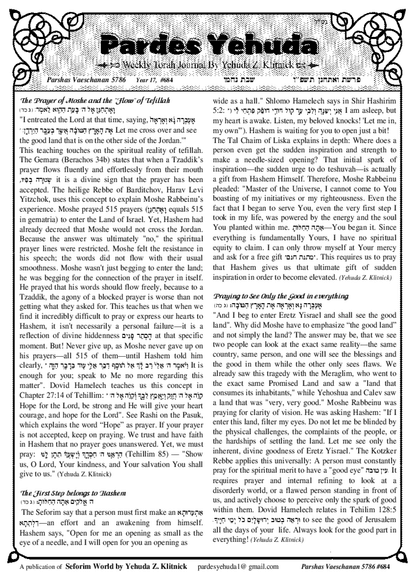
"I entreated the Lord at that time, saying, אֶתְחַנַּן אֶל ה' בָּעֵת הַהִוא לֵאמֹר: (ג כד) אֶעְבְּרָה נָּא וְאֶרְאֶה אֶת הָאָרֶץ הַטּוֹבָה אֲשֶׁר בְּעֵבֶר הַיַּרְדֵּן 'Let me cross over and see the good land that is on the other side of the Jordan.'"

This teaching touches on the spiritual reality of tefillah. The Gemara (Berachos 34b) states that when a Tzaddik’s prayer flows fluently and effortlessly from their mouth, שגורה בפיו, it is a divine sign that the prayer has been accepted. The heilige Rebbe of Barditchov, Harav Levi Yitzchok, uses this concept to explain Moshe Rabbeinu’s experience. Moshe prayed 515 prayers (ואתחנן equals 515 in gematria) to enter the Land of Israel. Yet, Hashem had already decreed that Moshe would not cross the Jordan. Because the answer was ultimately "no," the spiritual prayer lines were restricted. Moshe felt the resistance in his speech; the words did not flow with their usual smoothness. Moshe wasn't just begging to enter the land; he was begging for the connection of the prayer in itself. He prayed that his words should flow freely, because to a Tzaddik, the agony of a blocked prayer is worse than not getting what they asked for.

This teaches us that when we find it incredibly difficult to pray or express our hearts to Hashem, it isn't necessarily a personal failure—it is a reflection of divine hiddenness הסתר פנים at that specific moment. But! Never give up, as Moshe never gave up on his prayers—all 515 of them—until Hashem told him clearly, "רַב לָךְ אַל תּוֹסֶף דַּבֵּר אֵלַי עוֹד בַּדָּבָר הַזֶּה It is enough for you; speak to Me no more regarding this matter". Dovid Hamelech teaches us this concept in Chapter 27:14 of Tehillim: "קַוֵּה אֶל ה' חֲזַק וְיַאֲמֵץ לִבֶּךָ וְקַוֵּה אֶל ה' Hope for the Lord, be strong and He will give your heart courage, and hope for the Lord". See Rashi on the Pasuk, which explains the word “Hope” as prayer. If your prayer is not accepted, keep on praying. We trust and have faith in Hashem that no prayer goes unanswered. Yet, we must pray: הַרְאֵנוּ ה' חַסְדֶּךָ וְיֶשְׁעֲךָ תִּתֶּן לָנוּ (Tehillim 85) — "Show us, O Lord, Your kindness, and Your salvation You shall give to us."

PDF Preview