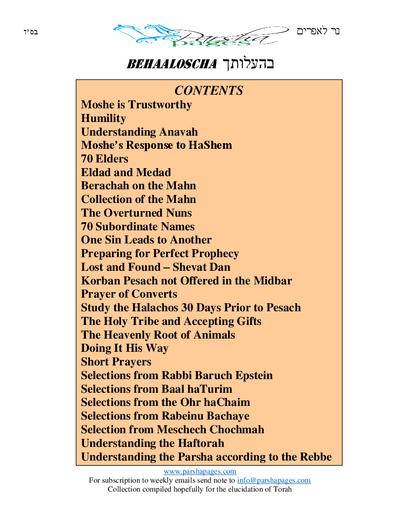
What is the Halacha about Receiving Gifts
What is the halacha about receiving gifts?
When does the principle of “he who hates gifts lives” apply? When is there no problem of receiving gifts? Why are we instructed to despise gifts, and what is the practical approach to the issue?
One who Wishes to Derive Benefit
וְּשוֹנֵא מַתָּנֹּת יִחְּיֶׁה He who hates gifts shall live
From this pasuk in Mishlei (15:27) Chazal deride the idea of receiving gifts, such as (Sotah 47b) “When those who receive gifts became numerous, the days became few and years short, as it is written, ‘he who hates gifts shall live.'” Likewise, several Talmudic sources indicate that one must be careful not to receive gifts.
Yet, Chazal also make the following statement (Berachos 10b): “One who wishes to derive benefit should do so like Elisha; one who wishes to refrain from deriving benefit should refrain as Shmuel.” The dictum implies that Elisha and Shmuel represent two different view on the issue of accepting gifts: Is this worthy practice, or not?
Commenting on the first half of the Talmudic teaching, Rashi explains that there is no prohibition in receiving gifts: “One who wishes to derive benefit from others should do so, and there is no prohibition in this matter.” The Maharsha finds this comment of Rashi difficult: Surely, Chazal clarified their negative position on receiving gifts in several places, relying on the passage “he who hates gifts shall live”?
Because of his question, the Maharsha interprets the teaching of the Gemara in a different light. Rather than sanctioning the receipt of gifts, the meaning of the statement is that even somebody who wishes to derive benefit from others, should only do so as Elisha, who only derived benefit as a guest while journeying—and in no other way.
Two Ways of Elisha and Shmuel
The Divrei Shalom (Vol. 1, no. 37) explains that the two approaches presented above concerning receipt of gifts can be traced to the two ways of understanding the precept of hating gifts.
Elisha understood the concept of hating gifts as meaning to distance negative traits, such as theft and coveting. Based on this understanding, he reasoned that the negative aspect of accepting gifts applies only to somebody who takes concrete items into his property, which raises concern of theft, flattery, and coveting, but not to somebody who merely accepts an invitation. Elisha saw no flaw in Emunah to accepting gifts, attributing the gift itself to the hand of HaShem.
The prophet Shmuel, however, believed that the principle of hating gifts reflects a flaw in one’s faith in HaShem, and therefore applies even to deriving benefit by being somebody’s guest. Indeed, we find in the Gemara (Chulin 44b) that Rabbi Eliezer was not only careful to refrain from receiving gifts from Bnei Nesiah (the ruling family), but even avoided their invitation, because “he who hates gifts shall live.”
Perhaps a person has the right to choose either way, and it is possible that the matter depends on individual circumstances: If accepting a gift will imply a flaw in one’s faith in HaShem, he should refrain from accepting it; if, however, one feels no such flaw, but perceives Divine Providence in the gift itself, he does not have to reject it.
Why We Should Hate Gifts
In the question of why we ought to hate gifts, we find a dispute among rishonim, which possible has halachic ramifications. Rashi writes, commenting on the verse in Mishlei, that “if he hates gifts, all the more so will he hate theft.” Rabbienu Yonah (Mishlei 16:27) writes similarly that “this disposition is a fence to distance coveting and saves one from the pitfalls of flattery.”
A similar interpretation emerges from the words of the Sema (249:4), who explains that the problem of receiving gifts is that those who receive gifts must flatter those who give them. Because of this, the receiver is unable to chastise the giver and point out his crooked ways.
According to these opinions, it appears that there is nothing wrong with receiving gifts per se; the problem is only that those who receive gifts can be easily led negative traits and dispositions, or to a position in which the receiver is unable to admonish the giver. For these reasons, the verse states that “he who hates gifts shall live.”
By contrast with this position, the Metzudos David (Mishlei loc. cit.) explains that hating gifts is an expression of a person’s trust in HaShem. HaShem gives life to those who demonstrate their faith in Him by shunning gifts. A similar interpretation is given by Rabbeinu Bachya (Kad Ha-Kemach, Chanufah), who explains that disdain for gifts is reached by means of strengthening one’s faith in HaShem.
This interpretation is also implied by the wording of the Tur (Choshen Mishpat 249) and the Shulchan Aruch (249:5), who write that “It is midas chasidus (the ways of the pious) to refrain from receiving any gifts, but rather to trust HaShem in providing one’s sustenance, as it is written, ‘he who hates gifts shall live.'” According to these opinions, there is an inherent flaw in accepting gifts, which demonstrate a certain lack of faith in Divine providence.
Halachic Considerations
There are a number of possible halachic ramifications that emerge from the explanations above:
- Receiving gifts when the identity of the giver is unknown: If the rationale behind “hating gifts” is that the receiver will be unable to admonish the giver, it follows that where the identity of the giver is unknown, there is no concern. However, if the rationale is related to the negative traits of theft and coveting, or a lack of faith in HaShem, the principle will apply equally to an unknown giver. Imrei Yaakov (1:9) writes that one can act leniently in this case, and this is also implied by the Gemara (Chulin 134b), which states that when a monetary donation was sent to the Beis Midrash, Rabbi Ami took the money for himself. The Gemara does not raise the issue of receiving gifts.
- Receiving grants from corporations or the government: The Shoshana Ha’amakim (Rafo Yerafei 57) addresses a question of parents to newborn triplets, who are able to send in requests to various stores and companies with a copy of the birth certificate, and receive free gifts of food, clothing, diapers, and so on. Is doing so proper practice? In response to the question, Rabbi Yitzchak Zilberstein stated that although the rationale of flattery and future admonition will not apply here, the concern for coveting, and the question of faith in HaShem, applies equally to corporations.
It is worth noting in this respect that Rav Yaakov Kaminetzky advised a Kolel-man to avoid making use of the vouchers allocated by U.S. Welfare, counseling him to work for a short time (verifying the kashrus of mezuzos) each day instead. The rationale behind the advice was the verse “he who hates gifts shall live,” Rav Yaakov explaining that if a person will become accustomed to keeping things that are not his in his property, he will ultimately be drawn to the prohibition of theft. - Gifts from non-Jews: Orchos Matanah (Chap. 14) writes that according to the rationale mentioned by the Sema (gifts will prevent the receiver from admonishing the giver), it follows that the principle will not apply to non-Jews. Likewise, it is possible that the concern for coveting will not apply, for the prohibition of coveting is stated specifically concerning “your fellow’s house”—though it is possible that the concern is not for the prohibition, but for the negative trait of coveting others’ property. Certainly, the rationale of concern for theft, or reliance on HaShem, will apply even to gifts from non-Jews.
Related Articles