The Story is Quite Different
Shabbos Stories | January 25, 2026
Print This Article
View Original PDF

The Story is Quite Different

Shabbos Stories | January 30, 2026

"But, in fact, that is not what happened. The story is quite different. The motive in killing him was much more positive." The Rebbe looked at the crazy man and then at his family to make sure they were listening and continued. "The fact is that only a few men stoned Zechariah and they were tzadikim-- totally righteous Jews--perhaps the only Jews that had not sinned in those days. And they stoned him in order to save everyone else.

The fact is, he did not anger anyone; he didn't even speak. As soon as he stood before the crowd, these holy men understood what he was about to say. They knew that he was about to prophesize the destruction of the Temple and the exile of the Jews to Babylon. And they also knew that because his words were prophesy, as soon as they would be uttered the decree would be sealed unless the Jews repented. But they were aware that the Jews weren't ready to change their ways.

So, they decided that they had to make the ultimate sacrifice even if it would cost them both this world and the next! They knew that by killing him they would die as sinners ... but so great was their brotherly love that they didn't care about themselves; only about stopping that prophesy and possibly averting the decree of death and destruction.

Shabbos Stories for Parshas Beshalach 5786

"But perhaps you will ask why didn't the prophet Zacharia himself refuse to make his prophesy? Certainly, he had no less love for his fellow Jews than those who killed him. Why didn't he just keep quiet?

If you try to explain that if he did so he would be punishable by death [which is the law regarding a prophet that refuses to prophesize]. If so, then why didn't he give his life as those who killed him were willing to do?

The Mistake of Jonah the Prophet

"The answer is that a true prophet is nothing more than a conduit for G-d's messages and he knows that G-d is good. In other words, his entire essence exists only to give over his prophesy with no worry of its repercussions [which was the mistake of Jonah the prophet].

But those who killed him did worry and they felt they had no choice but to make a desperate attempt to save the Jewish people from tragedy and exile. So, they murdered him.

Now, the tortured souls of those Tzadikim who ‘executed’ Zechariah have been in limbo for almost 2500 years; they couldn't enter heaven because of their sin of murder. And the gates of hell also would not admit them because of their pure intentions. So, they have been waiting to be rectified

The Rebbe’s Tikun

"That is why you came to me." The Rebbe concluded. "These souls entered your father's body and made him insane in the hope that someone could find some redeeming quality in their sin and free them. And that is what I did. "When I presented a zechut (merit) on their deed, I made a 'Tikun' (rectification) on their souls and now both they and your father are released."

Suddenly the insane man closed his eyes briefly, smiled with relief and began to breathe easily. He was cured!

Source: Modified and supplemented by Yerachmiel Tilles from the free translation of R. Tuvia Bolton from Ma Sheseepere li HaRebbe (vol. 2 pg. 32), based on the telling by the Lubavitcher Rebbe in Tishrei 5735 (Oct. 1976), as posted on lchaimweekly.org in 5770 (2010).

Biographic note: Rabbi Shneur-Zalman [18 Elul 1745-24 Tevet 1812], one of the main disciples of the Maggid of Mezritch, is the founder of the Chabad-Chassidic movement. He is the author of Shulchan Aruch HaRav and Tanya as well as many other major works in both Jewish law and the mystical teachings.

Reprinted from the Parashat Va’iera 5786 email of KabbalaOnline.org, a project of Ascent of Safed in Israel.
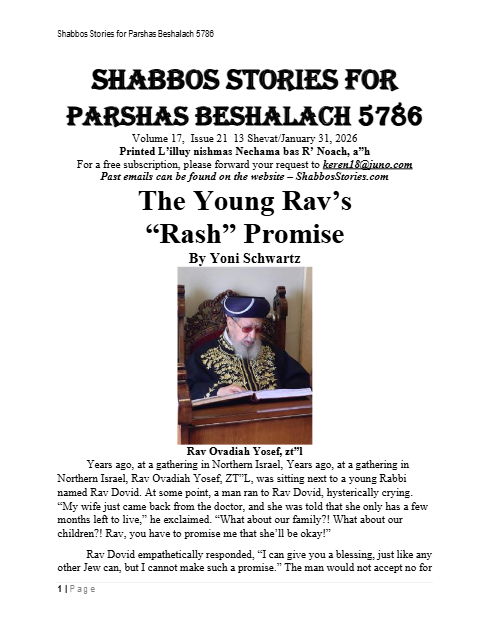

"But, in fact, that is not what happened. The story is quite different. The motive in killing him was much more positive." The Rebbe looked at the crazy man and then at his family to make sure they were listening and continued. "The fact is that only a few men stoned Zechariah and they were tzadikim-- totally righteous Jews--perhaps the only Jews that had not sinned in those days. And they stoned him in order to save everyone else.

The fact is, he did not anger anyone; he didn't even speak. As soon as he stood before the crowd, these holy men understood what he was about to say. They knew that he was about to prophesize the destruction of the Temple and the exile of the Jews to Babylon. And they also knew that because his words were prophesy, as soon as they would be uttered the decree would be sealed unless the Jews repented. But they were aware that the Jews weren't ready to change their ways.

So, they decided that they had to make the ultimate sacrifice even if it would cost them both this world and the next! They knew that by killing him they would die as sinners ... but so great was their brotherly love that they didn't care about themselves; only about stopping that prophesy and possibly averting the decree of death and destruction.

Shabbos Stories for Parshas Beshalach 5786

"But perhaps you will ask why didn't the prophet Zacharia himself refuse to make his prophesy? Certainly, he had no less love for his fellow Jews than those who killed him. Why didn't he just keep quiet?

If you try to explain that if he did so he would be punishable by death [which is the law regarding a prophet that refuses to prophesize]. If so, then why didn't he give his life as those who killed him were willing to do?

The Mistake of Jonah the Prophet

"The answer is that a true prophet is nothing more than a conduit for G-d's messages and he knows that G-d is good. In other words, his entire essence exists only to give over his prophesy with no worry of its repercussions [which was the mistake of Jonah the prophet].

But those who killed him did worry and they felt they had no choice but to make a desperate attempt to save the Jewish people from tragedy and exile. So, they murdered him.

Now, the tortured souls of those Tzadikim who ‘executed’ Zechariah have been in limbo for almost 2500 years; they couldn't enter heaven because of their sin of murder. And the gates of hell also would not admit them because of their pure intentions. So, they have been waiting to be rectified

The Rebbe’s Tikun

"That is why you came to me." The Rebbe concluded. "These souls entered your father's body and made him insane in the hope that someone could find some redeeming quality in their sin and free them. And that is what I did. "When I presented a zechut (merit) on their deed, I made a 'Tikun' (rectification) on their souls and now both they and your father are released."

Suddenly the insane man closed his eyes briefly, smiled with relief and began to breathe easily. He was cured!

Source: Modified and supplemented by Yerachmiel Tilles from the free translation of R. Tuvia Bolton from Ma Sheseepere li HaRebbe (vol. 2 pg. 32), based on the telling by the Lubavitcher Rebbe in Tishrei 5735 (Oct. 1976), as posted on lchaimweekly.org in 5770 (2010).

Biographic note: Rabbi Shneur-Zalman [18 Elul 1745-24 Tevet 1812], one of the main disciples of the Maggid of Mezritch, is the founder of the Chabad-Chassidic movement. He is the author of Shulchan Aruch HaRav and Tanya as well as many other major works in both Jewish law and the mystical teachings.

Reprinted from the Parashat Va’iera 5786 email of KabbalaOnline.org, a project of Ascent of Safed in Israel.

PDF Preview