The Tzedokim
Parsha Pages | May 13, 2024
The Tzedokim were students of Tzadok, and the Beitusim were students of Beitus. Both of these individuals rejected the authority of the Oral Torah (Avos d'Rebbi Nasan 5:2). However, like other groups throughout history, the rejection of the authority of the Oral Torah, was just a screen for their rejection of the divinity of the entire Torah.
Perversions of the Tzedokim
Their rejection of the authority of the rabbinical mesorah, lead to multiple disputes, including:
- The Setting of the Festival of Shavous: The Tzedokim understood the verse ממחרת השבת as the first day of Pesach after Shabbos Bereshis (Sunday) and Shavous was always on Sunday; the Chachamim explained it to be the day after the initial day of Pesach and Shavous 50 days later.
- Korban Tamid: The Tzedokim held that an individual could offer this Korban from their individual funds; the Chachamim maintained that the funds for this Korban came from the communal funds.
- Mitzvah of Nesachim (Libations that Accompany a Korban): The Tzedokim held that the nesachim were not poured on the Altar but eaten by the Cohanim; the Chachamim maintained it was offered on the Altar.
- Ketores (Incense) on Yom Kippur: The Tzedokim maintained that the Cohen Gadol would first make the cloud of Ketores and then enter the Kodesh haKedoshim; the Chachamim held that the Cohen Gadol first entered the Kodesh haKedoshim and then make the cloud of the Ketores.
- Seven Days of Melu’im (Dedication): The Tzedokim set seven days of dedication every year; the Chachamim held that the Melu’im was a one-time event during the first year in the desert by Moshe and not done thereafter.
- Nisuch (pouring) of the Waters: The Tzedokim did not believe in this action during the festival of Sukkos; the Chachamim maintained this was one of the oral commandments to be done in the Bais haMikdash.
- Parah Adumah: The Tzedokim, understood that a tevul yom cannot perform the para aduma, that the kohen must be completely tahor; the Chachamim, however, have a tradition from Moshe Rabbeinu that a tevul yom could engage in the para aduma activities (more lenient); consequently, prior to the kohen performing the activity, the Chachamim would make him tameh, then immerse in the mikvah, making him a tevul yom to emphasize with their opinion.
- Beating of the Aravah on Hoshana Rabbah: The Tzedokim did not do this action; the Chachamim did this mitzvah each year in the Bais haMikdash.
- Tefillin for the Head: The Tzedokim placed their tefillin literally between the eyes (some say they also made round Tefillin); according to the Chachamim the placement of the Tefillin was at the beginning of the hair line above the place between the eyes.
- Tevilah Decreed by Ezra: The Tzedokim do not observe this decree; the Chachamim made this decree and were strict about the decree.
- Chalitzah: The Tzedokim required the woman to actually spit onto the Yavam; the Chachamim held that the lady spit opposite the Yavam.
- Punishment of Damagers: The Tzedokim understand the text of “an eye for an eye” as literal; the Chachamim explained it means monetary compensation for the damages.
- Eidem Zomamim (false witnesses): The Tzedokim held that the witnesses are only punished if the judgment had already occurred; the Chachamim stated that the false witnesses are only punished if their planning led to conviction but judgment was not yet carried out.
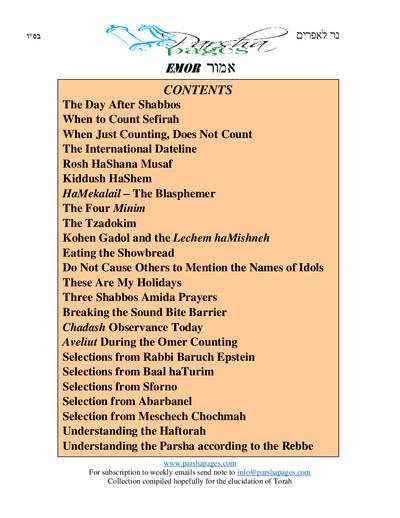
View The Full Article (PDF)