Ayekah and the Teshuvah Tefillah Tzedakah Process
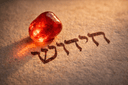
The Mishnah in Bikkurim says that when one sees that a fig matured and ripened he ties a reed around it and declares this to be part of his Bikkurim. The meforshim ask why did the Mishnah choose a fig specifically from the seven fruits that are obligated to bring to Yerushalayim to fulfill the mitzvah of Bikkurim? They answer that the inner purpose of this mitzvah is to rectify the sin of Adam Harishon that caused his downfall. Chazal say that the fruit of the Aitz Hadaas was a fig and that is the reason why Adam and Chava covered themselves with its leaves as a reminder. With the mitzvah of Bikkurim, Am Yisrael comes to rectify the sin of Adam. On that sixth day of creation all the neshamos of Am Yisrael were contained in the body of Adam. Therefore in a way we all sinned against Hashem. By controlling our desires to eat from our first ripened fruits we are repairing the shortcoming and failure of Adam in the same scenario.
Every Rosh Hashanah we also strive to achieve the same goal. Chazal say that every Rosh Hashanah which is the sixth day of creation we experience the sin of the Aitz Hadaas and we are on trial whether or not during the past year we strove to correct that what he wronged. On that very same day Hashem addressed Adam with the question הכיא where are you? Look at your spiritual decline and see where you are holding in relationship to My expectations from you. So too on every Rosh Hashanah Hashem asks us the same question where are you spiritually in relationship to where you are supposed to be standing?
How do we fix the chait of Adam Harishon? We say in the Yomim Noraim davening תשובה הריזגה עור תא ןיריבעמ הקדצו הלפת that repentance davening and tzedakah remove the evil decree (Bereishis Rabba 44,13, Rosh Hashanah 16b). From where did Chazal know that these three acts achieve this goal? Secondly, the passuk (Tehillim 25,8) says טוב וישר ה' על כן יורה חטאים בדרך Hashem is good and straight who directs sinners on the correct path. Why then is there no directive coming from Hashem to Adam to do teshuvah in the form of toiling on these three tikkunim?
The answer to these questions is that Hashem did communicate to Adam the pathway to repair himself and the world through these three avenues. In reprimanding Adam for his transgression Hashem was also asking him where are you? Why are you hiding? You should have immediately responded after your falling from Me with davening, giving tzedakah, and doing teshuvah regret and remorse.
All three of these pathways are hinted and can be derived from the passuk (Bereishis 3,9) ויקרא ה' אלקים אל האדם ויאמר לו איכה. The ingredient of teshuvah in the tikkun process in hinted in the word איכה in the letter ה for Chazal say that this world was created with the letter ה. The form of this letter conveys that one can have a fall out in this world by sinning against Hashem but nevertheless Hashem opens a window at the top left through which one can climb back and return to his creator. With the power of teshuvah by going around the hey and ascending to the top opening, one can emerge on a higher level in the hey space than where he was before the fall. The sefarim also explain that the word תשובה means בושת return the letter ה which is the last letter in the name of יהו'. The Kabbalists write that the last letter ה symbolizes Hashem's malchus His kingdom. By transgressing His will and decrees, we separated ourselves from His malchus by rebelling against Him. Teshuvah means that we return the letter hey to its proper place to reconnect with the other letters of the Hashem's-Name.
The passuk writes that Hashem called to אדם which hints to the necessity of tefillah. The sefarim write that the inner letters of םדא spell א פלד תלממ which spell the word מתפלל. Man has this unique power to daven and effect the world through it. Chazal explain this by interpreting the passuk (Bereishis 2,5 Rashi) that the grass and trees did not grow until man was created for only then he would daven for rain and the vegetation could grow. ול רמאיו Hashem said to him. The word לו is gematriah 36 which also symbolizes tefillah becasue Shemoneh Esrai originally possessed 18 berachos, and together with the Chazaras Hashatz one has 36 berachos. In the word הכיא is the letters כה gematriah twenty five which hints to the twenty five letters in the שמע ישראל הויה אלקינו הויה אחד the םימש תוכלמ לוע תלבק which one must recite and commit to daily. Hashem was calling Adam to take the avenue of tefillah which parallels our שמע ושמונה עשרה.
The ingredient of tzedakah is hinted in the word איכה which unscrambled presents כ היא where is your כף which means palm alluding to charity. The passuk describes tzedakah with the body part of the palm as the passuk says כפה פרשה לעני that she stretched her palm to a poor person. When Adam was decreed with a death sentence he was directed to do teshuvah via tzedaka for the passuk says (Mishlei 10,2) צדקה תציל ממות
With the explanation above we can understand a Medrash which comments on the passuk (Mishlei 24,30) יתרבע לצע שיא הדש לע On a field of a lazy person I passed over. Chazal comment that this lazy person is referring to Adam Harishon and the chait of Aitz Hadaas. This begs the question where do we see that Adam was lazy concerning the chait of the Aitz Hadaas? According to our explanation of "Ayekah" Hashem was reprimanding Adam why is he procrastinating from doing teshuvah. You know you sinned and you have already experienced the repercussions of your actions. You should have responded immediately to your failure with teshuvah, tefillah, and tzedakah which are all hinted in the passuk above. An allusion to this interpretation is the gematriah of the inner letters of איכה which are ף דו פל א 201 the same gematriah as עצלי עה"כ a lazy person.
This lesson to be learned is that when we fail morally, whether םדא ןיב וא וריבחל םדא ןיב למקום we should apologize immediately and do the process of teshuvah sooner than later (see Shaarei Teshuva from Rabbeinu Yonah at the beginning of the sefer). Rosh Hashana is right around the corner. Let us start the process of teshuvah in all three components ASAP thereby giving us promise הריזגה עור תא ןיריבעמ
Gut Shabbos
Rav Brazil