Shabbos Halachos and Minhagim for Parshas Ki Savo
Chabad.org Luach | September 12, 2025
Print This Article
View Original PDF

Shabbos Halachos and Minhagim for Parshas Ki Savo

Chabad.org Luach | December 10, 2025

At the end of the second aliyah, it is customary for the baal korei to raise his voice when reading the possuk of Hashkifah.

The baal korei receives the sixth aliyah (which contains the tochachah) without being called up by name. He recites the berachos before and after the aliyah, as usual.

It is customary for the baal korei to lower his voice when reading the tochachah, and to read it a bit quicker than usual. When reaching the last possuk of the aliyah (“Eileh divrei habris”), the baal korei resumes the regular tone.

Participate in a farbrengen (today and/or tonight), in preparation for selichos.

After Minchah, we read the third and fourth chapters of Pirkei Avos. See note regarding whether Kol Yisroel and Rabbi Chananya ben Akashya should be said before and after both chapters, or just once (before the third chapter and after the fourth chapter).
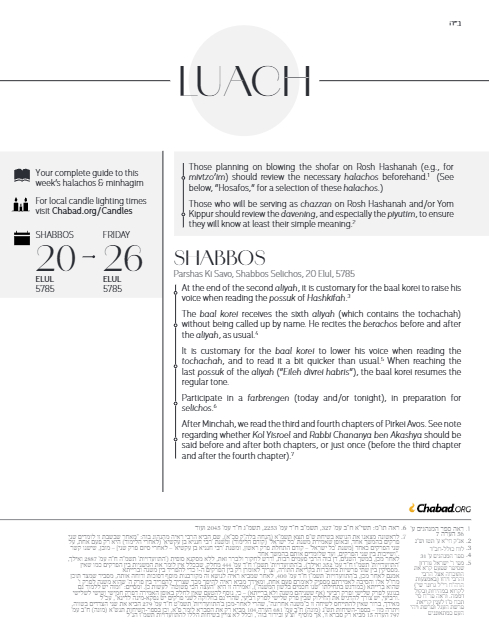

At the end of the second aliyah, it is customary for the baal korei to raise his voice when reading the possuk of Hashkifah.

The baal korei receives the sixth aliyah (which contains the tochachah) without being called up by name. He recites the berachos before and after the aliyah, as usual.

It is customary for the baal korei to lower his voice when reading the tochachah, and to read it a bit quicker than usual. When reaching the last possuk of the aliyah (“Eileh divrei habris”), the baal korei resumes the regular tone.

Participate in a farbrengen (today and/or tonight), in preparation for selichos.

After Minchah, we read the third and fourth chapters of Pirkei Avos. See note regarding whether Kol Yisroel and Rabbi Chananya ben Akashya should be said before and after both chapters, or just once (before the third chapter and after the fourth chapter).

PDF Preview
