The Mysterious Life and Death of Hur
זכרון יעקב | March 01, 2024
Print This Article
View Original PDF

The Mysterious Life and Death of Hur

זכרון יעקב | December 10, 2025

RABBI LEVI AVTZON (Chabad.org)

The story of Hur is one of heroism, tragedy and, ultimately, redemption.

Let us start from the beginning.

According to tradition, Moshe’s older sister, Miriam, married Caleb, son of Yefuneh. Miriam and Caleb had a son, whose name was Hur.

The first time we meet Hur is during the war with Amalek. It was very soon after the Exodus, and the nation of Amalek aimed to poke a hole in the invincibility of this newborn nation:

Moshe said to Yehoshua, “Pick men for us, and go out and fight against Amalek. Tomorrow I will stand on top of the hill with the staff of G‑d in my hand.” Yehoshua did as Moshe had told him, to fight against Amalek; and Moshe, Aaron, and Hur ascended to the top of the hill.

It came to pass that when Moshe would raise his hand, Israel would prevail, and when he would lay down his hand, Amalek would prevail. Now, Moshe’s hands were heavy; so they took a stone and placed it under him, and he sat on it. Aaron and Hur supported his hands, one from this [side], and one from that [side]; so he was with his hands in faith until sunset . . .

Hur, one of the three people who went up the hill to pray for salvation, was obviously a man of stature who was close to his venerated uncle Moshe.

The next time we meet him is when Moshe is climbing Mount Sinai for a 40-day learning session with the Divine, and tells the elders, “Wait for us here until we return to you, and here Aaron and Hur are with you; whoever has a case, let him go to them.”

At the most important junctures of Jewish life in the desert, Hur was there, together with his uncle Aaron.

The subsequent—and final—time we meet Hur is just a few weeks later. Moshe had told the Jews that he would ascend the mountain and remain up there for 40 days. The Jews miscalculated, and when Moshe did not descend the mountain by the deadline, they decided to create a Golden Calf.

Just 40 days after hearing the words “Thou shall have no other god,” they danced and celebrated before a Calf of Gold. And just twoscore after saying yes to “Don’t commit adultery,” they broke that cardinal rule as well.

Idolatry, adultery—and murder. They also committed murder at the scene of the Golden Calf.

Says the Midrash:

The sixth hour of the day arrived, and Moshe had not descended from the heaven . . . They immediately gathered around Aaron. At that time Satan took advantage of the opportunity and made an image of Moshe visible suspended lifeless between heaven and earth. The Jews pointed to the image with their fingers and said, “For this is the man Moshe . . .”

At that moment, Hur arose against them and said, “You severed necks! Do you not remember the miracle that our G‑d did for you?” Immediately, they arose against him and killed him.

You read that right. It was six weeks after “Thou shall not murder,” and there they were, murdering Moshe’s own nephew!

At the foot of Sinai, the Jews committed the three cardinal prohibitions. Moshe would break the Tablets and beseech G‑d for mercy, and history would be
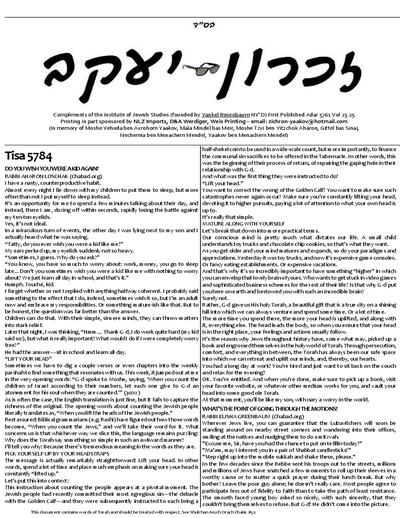
RABBI LEVI AVTZON (Chabad.org)

The story of Hur is one of heroism, tragedy and, ultimately, redemption.

Let us start from the beginning.

According to tradition, Moshe’s older sister, Miriam, married Caleb, son of Yefuneh. Miriam and Caleb had a son, whose name was Hur.

The first time we meet Hur is during the war with Amalek. It was very soon after the Exodus, and the nation of Amalek aimed to poke a hole in the invincibility of this newborn nation:

Moshe said to Yehoshua, “Pick men for us, and go out and fight against Amalek. Tomorrow I will stand on top of the hill with the staff of G‑d in my hand.” Yehoshua did as Moshe had told him, to fight against Amalek; and Moshe, Aaron, and Hur ascended to the top of the hill.

It came to pass that when Moshe would raise his hand, Israel would prevail, and when he would lay down his hand, Amalek would prevail. Now, Moshe’s hands were heavy; so they took a stone and placed it under him, and he sat on it. Aaron and Hur supported his hands, one from this [side], and one from that [side]; so he was with his hands in faith until sunset . . .

Hur, one of the three people who went up the hill to pray for salvation, was obviously a man of stature who was close to his venerated uncle Moshe.

The next time we meet him is when Moshe is climbing Mount Sinai for a 40-day learning session with the Divine, and tells the elders, “Wait for us here until we return to you, and here Aaron and Hur are with you; whoever has a case, let him go to them.”

At the most important junctures of Jewish life in the desert, Hur was there, together with his uncle Aaron.

The subsequent—and final—time we meet Hur is just a few weeks later. Moshe had told the Jews that he would ascend the mountain and remain up there for 40 days. The Jews miscalculated, and when Moshe did not descend the mountain by the deadline, they decided to create a Golden Calf.

Just 40 days after hearing the words “Thou shall have no other god,” they danced and celebrated before a Calf of Gold. And just twoscore after saying yes to “Don’t commit adultery,” they broke that cardinal rule as well.

Idolatry, adultery—and murder. They also committed murder at the scene of the Golden Calf.

Says the Midrash:

The sixth hour of the day arrived, and Moshe had not descended from the heaven . . . They immediately gathered around Aaron. At that time Satan took advantage of the opportunity and made an image of Moshe visible suspended lifeless between heaven and earth. The Jews pointed to the image with their fingers and said, “For this is the man Moshe . . .”

At that moment, Hur arose against them and said, “You severed necks! Do you not remember the miracle that our G‑d did for you?” Immediately, they arose against him and killed him.

You read that right. It was six weeks after “Thou shall not murder,” and there they were, murdering Moshe’s own nephew!

At the foot of Sinai, the Jews committed the three cardinal prohibitions. Moshe would break the Tablets and beseech G‑d for mercy, and history would be

PDF Preview