Transformed by Haman
Toras Avigdor | March 10, 2025
Print This Article
View Original PDF

Transformed by Haman

Toras Avigdor | June 27, 2025

The Gemara (Shabbos 88a) says that when the Am Yisroel experienced the neis of Purim, so רָב¿ּכּלו¿ּבƒּ̃∆ּׁ̆ הַמּימו¿ּיƒ̃ – they accepted the whole Torah again only this time it was accepted willingly (Shabbos 88a). Does that mean that the generation in the time of Mordechai actually became better than our forefathers were at Matan Torah?

The answer is no.

But you have to understand that the difference is as follows: There is no question that the generation of Matan Torah was far superior to any generation that ever existed – don’t make any mistake about that. The generation that went out of Mitzrayim was the best generation that ever lived. Moshe Rabbeinu had a tremendous influence on them and so did Aharon. And Miriam was the teacher of the women and יםƒָׁ̆נּ̇כו¿זƒּבםƒיַר¿ˆƒּמּינו≈ֹ̇בוֲ‡ּלוֲ‡¿‚ƒנֹ̇וּיƒנָ̃¿„ƒˆ – the women were very great in Mitzrayim.

And so when we went out of Mitzrayim, it was a generation that knew Hashem! They were the Dor Deiah – what they learned when they saw the makkos transformed their minds; they became so elevated. 'ה̇∆‡םָﬠָהּו‡¿ירƒּיַו – They feared Hashem. 'הַּבּינוƒמֲ‡ַּיַו – They had full belief in Hashem, ה∆ֹׁ̆מ¿בּוֹוּ„¿בַﬠ – and in His servant Moshe (Shemos 14:31).

And at Har Sinai they were so elevated that הָ‡ּבו¿ּנַה ל∆‡ יםƒיעƒּ‚ַמ םׇּבּרו – most of them became Neviim at that moment when they heard Word of Hashem (Kuzari 1:109). We have no concept of the greatness of that generation! It may seem like an exaggeration to you because you’ve been taught in cheder to despise that generation. “ּעו¿„ָי ‡ֹל ם≈ה¿ויָכָר¿„”, you say, “They didn’t know the ways of Hashem.” No. Don’t make any mistake about it; they were ones who knew darkei Hashem more than anyone. Only they were criticized because they should have known more according to their opportunities. But they were extremely great.

However, as great as they were, no experience in history equaled that of the Jews in the time of Haman because they were sentenced to certain death. That’s a big difference. In Mitzrayim they weren’t sentenced to death. “הָ‚ָּ„ַה̇∆‡ּנו¿רַכָז”, they said. It means they lived, they survived. It wasn’t the very best form of existence, but they lived. But here, by Haman, they knew that imminent death was waiting for them. And there was no way out! יבƒָׁ̆ה¿ל ין≈‡! You cannot turn back the king’s decree. They were finished!

And therefore the change that took place in them was more fundamental – not because afterwards they became more pure and more noble than the generation that listened to Moshe Rabbeinu’s words. No; the people who saw Moshe Rabbeinu were unequaled. But the transformation in the days of Haman was so immediate that nothing compared to it.

I’ll give you a mashal. Let’s say somebody lives a normal life and he lives with the rules of health; he eats properly, he exercises properly, he takes care of his body. So this man is a model of perfect health. Now suppose somebody else neglects his health and now he becomes deadly ill. And in order to save his life the physician gives him an injection of a very extreme medicine and he saves his life. Now he’s back to life again! So the experience is unequaled; he was on the verge of death and now he was brought back to life. But in the end he is not healthier than the other party.

The first one who lived a normal existence is much more sound in body than the second one.

And therefore although after the story of Purim our generation was rejuvenated – we had a shot, a real shot in the arm, and we were reborn – but in no way did we resemble the dor that received the Torah; no question about that.

March 1989
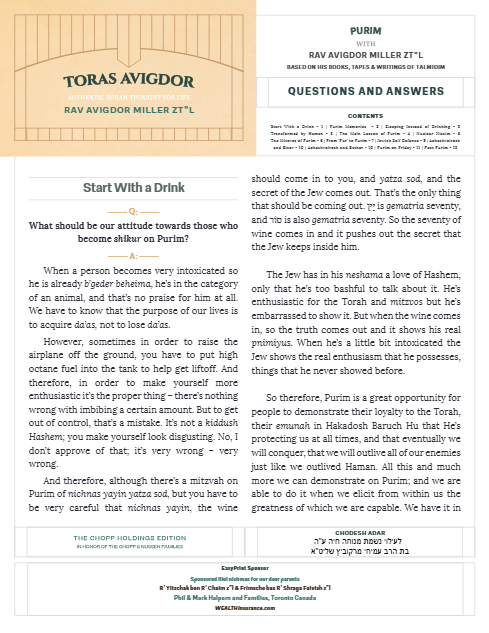
The Gemara (Shabbos 88a) says that when the Am Yisroel experienced the neis of Purim, so רָב¿ּכּלו¿ּבƒּ̃∆ּׁ̆ הַמּימו¿ּיƒ̃ – they accepted the whole Torah again only this time it was accepted willingly (Shabbos 88a). Does that mean that the generation in the time of Mordechai actually became better than our forefathers were at Matan Torah?

The answer is no.

But you have to understand that the difference is as follows: There is no question that the generation of Matan Torah was far superior to any generation that ever existed – don’t make any mistake about that. The generation that went out of Mitzrayim was the best generation that ever lived. Moshe Rabbeinu had a tremendous influence on them and so did Aharon. And Miriam was the teacher of the women and יםƒָׁ̆נּ̇כו¿זƒּבםƒיַר¿ˆƒּמּינו≈ֹ̇בוֲ‡ּלוֲ‡¿‚ƒנֹ̇וּיƒנָ̃¿„ƒˆ – the women were very great in Mitzrayim.

And so when we went out of Mitzrayim, it was a generation that knew Hashem! They were the Dor Deiah – what they learned when they saw the makkos transformed their minds; they became so elevated. 'ה̇∆‡םָﬠָהּו‡¿ירƒּיַו – They feared Hashem. 'הַּבּינוƒמֲ‡ַּיַו – They had full belief in Hashem, ה∆ֹׁ̆מ¿בּוֹוּ„¿בַﬠ – and in His servant Moshe (Shemos 14:31).

And at Har Sinai they were so elevated that הָ‡ּבו¿ּנַה ל∆‡ יםƒיעƒּ‚ַמ םׇּבּרו – most of them became Neviim at that moment when they heard Word of Hashem (Kuzari 1:109). We have no concept of the greatness of that generation! It may seem like an exaggeration to you because you’ve been taught in cheder to despise that generation. “ּעו¿„ָי ‡ֹל ם≈ה¿ויָכָר¿„”, you say, “They didn’t know the ways of Hashem.” No. Don’t make any mistake about it; they were ones who knew darkei Hashem more than anyone. Only they were criticized because they should have known more according to their opportunities. But they were extremely great.

However, as great as they were, no experience in history equaled that of the Jews in the time of Haman because they were sentenced to certain death. That’s a big difference. In Mitzrayim they weren’t sentenced to death. “הָ‚ָּ„ַה̇∆‡ּנו¿רַכָז”, they said. It means they lived, they survived. It wasn’t the very best form of existence, but they lived. But here, by Haman, they knew that imminent death was waiting for them. And there was no way out! יבƒָׁ̆ה¿ל ין≈‡! You cannot turn back the king’s decree. They were finished!

And therefore the change that took place in them was more fundamental – not because afterwards they became more pure and more noble than the generation that listened to Moshe Rabbeinu’s words. No; the people who saw Moshe Rabbeinu were unequaled. But the transformation in the days of Haman was so immediate that nothing compared to it.

I’ll give you a mashal. Let’s say somebody lives a normal life and he lives with the rules of health; he eats properly, he exercises properly, he takes care of his body. So this man is a model of perfect health. Now suppose somebody else neglects his health and now he becomes deadly ill. And in order to save his life the physician gives him an injection of a very extreme medicine and he saves his life. Now he’s back to life again! So the experience is unequaled; he was on the verge of death and now he was brought back to life. But in the end he is not healthier than the other party.

The first one who lived a normal existence is much more sound in body than the second one.

And therefore although after the story of Purim our generation was rejuvenated – we had a shot, a real shot in the arm, and we were reborn – but in no way did we resemble the dor that received the Torah; no question about that.

March 1989

PDF Preview